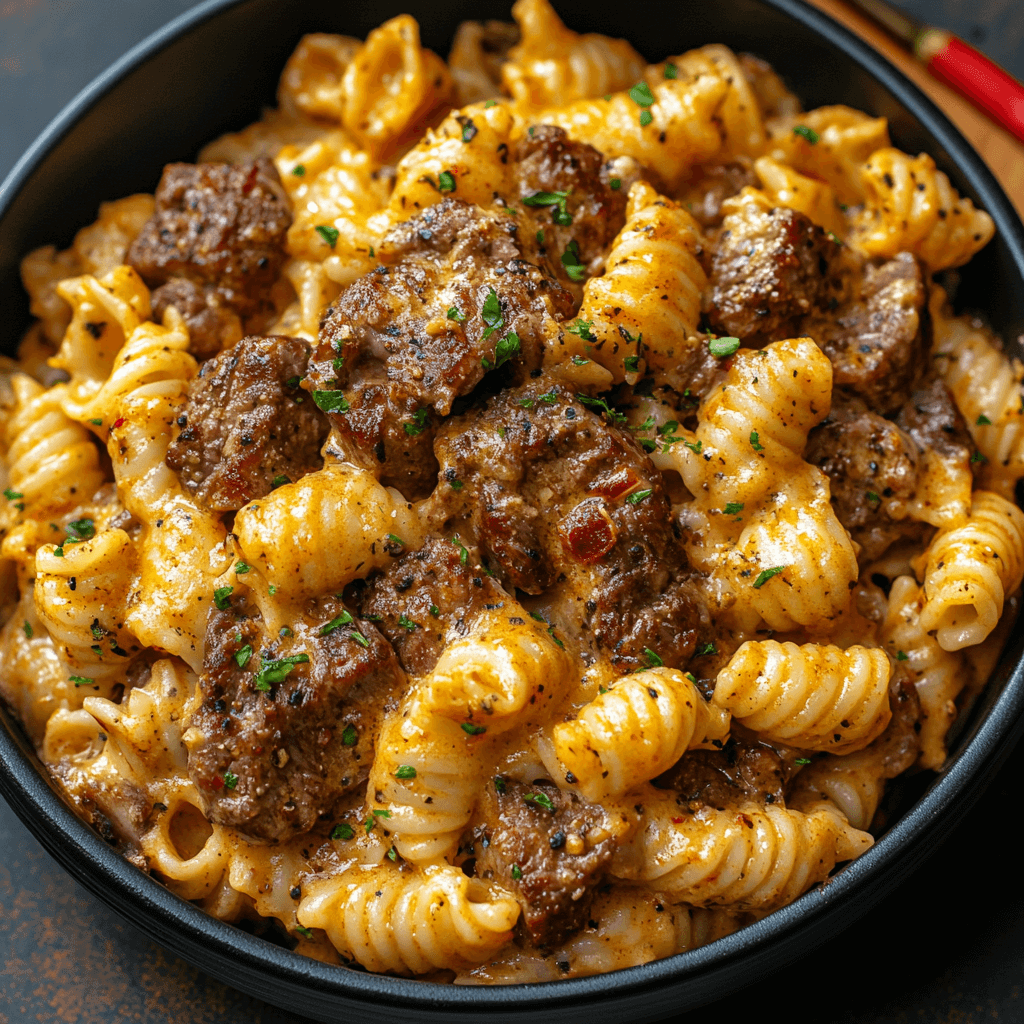
Creamy Paprika Steak Shells is a delicious homemade dinner that brings together tender pieces of steak, perfectly cooked pasta shells, and a rich Parmesan cream sauce. Every bite combines savory beef, smoky paprika, fresh garlic, and creamy cheese to create a satisfying meal that feels like something you would enjoy at your favorite restaurant. This easy steak pasta recipe is ideal for anyone who loves comforting meals with plenty of flavor but does not want to spend hours preparing dinner.
If you are searching for an easy creamy steak pasta recipe for busy weeknights, this dish deserves a place on your dinner menu. It takes approximately 30 minutes from start to finish and uses simple ingredients that are easy to find at most grocery stores. The steak is quickly seared in a skillet before being combined with a smooth garlic Parmesan cream sauce. Cooked pasta shells are then added, allowing their shape to capture the delicious sauce and create a flavorful dish in every serving.
One of the best things about Creamy Paprika Steak Shells is the balance of flavors. Smoked paprika brings a gentle smoky taste and beautiful color, while garlic adds an aromatic savory touch. Heavy cream and Parmesan cheese create a velvety sauce that coats the pasta without overpowering the natural flavor of the beef. Whether you are cooking for your family, preparing a cozy weekend dinner, or looking for something special to serve guests, this creamy steak pasta is a wonderful choice.
Why You Will Love This Creamy Steak Pasta Recipe
There are plenty of reasons to make this easy steak and pasta recipe part of your regular meal rotation. First, it is quick enough for busy evenings when you need something satisfying without complicated preparation. With approximately 30 minutes of cooking time, you can prepare a filling homemade dinner using one skillet for the steak and sauce, along with a pot for boiling the pasta. The straightforward cooking process makes it suitable for both beginner and experienced home cooks.
Another reason to enjoy this recipe is its restaurant-style flavor. Seared steak, smoked paprika, garlic, beef broth, and Parmesan cream sauce create a combination that tastes rich and carefully prepared. The steak develops a delicious browned exterior while remaining tender inside, and the sauce brings all the ingredients together. Instead of relying on complicated techniques or hard-to-find ingredients, this dish achieves its wonderful flavor through simple cooking methods and well-balanced seasonings.
This recipe is also a great choice for families because it combines two popular dinner favorites: steak and pasta. The small pasta shells are easy to serve and hold plenty of creamy sauce, while the tender beef adds a hearty element. Adults can appreciate the smoky paprika and savory Parmesan flavors, while children may enjoy the familiar combination of cheesy pasta and bite-sized steak. It is a comforting meal that can make an ordinary evening feel a little more special.
How to Make Creamy Paprika Steak Shells
Step 1: Cook the Pasta Shells
Begin by bringing a large pot of salted water to a rolling boil. Add the shell pasta and cook according to the instructions on the package until it reaches an al dente texture. The pasta should be tender but still have a slight firmness when bitten. Avoid cooking it for too long because the shells will be added to the hot sauce later, where they will continue to absorb some moisture.
Once the pasta is ready, drain it thoroughly and set it aside. Reserving a small amount of pasta water is useful in case the finished sauce becomes too thick. Pasta water contains starch released during cooking, which can help loosen the sauce while maintaining its creamy texture. Preparing the pasta first makes the remaining cooking process easier because the steak and sauce can be prepared without interruption.
Step 2: Season and Sear the Steak
While the pasta cooks, prepare the steak by cutting it into evenly sized bite-sized pieces. Pat the pieces dry with paper towels before seasoning them. Removing excess surface moisture helps the beef brown properly when it touches the hot skillet. Season the steak with salt, black pepper, and smoked paprika, making sure the pieces are coated evenly on all sides.
Heat the olive oil in a large skillet over medium-high heat. Once the oil is hot, carefully add the steak pieces in a single layer. Allow them to sear for approximately 2–3 minutes per side, depending on their size and thickness. The goal is to develop a beautifully browned exterior while keeping the inside tender and juicy. Avoid overcrowding the pan because too many pieces at once can release moisture and prevent proper browning.
When the steak is cooked to your preferred doneness, transfer it to a plate and allow it to rest while preparing the sauce. Keeping the steak separate during this stage helps prevent overcooking. The juices released while resting can also be returned to the skillet later, adding even more flavor to the finished creamy pasta.
Step 3: Prepare the Garlic Butter Base
Reduce the skillet heat to medium and add the butter. Allow it to melt into the flavorful juices left behind by the steak. Add the minced garlic and cook for approximately one minute, stirring gently until fragrant. This short cooking time is important because garlic can become bitter if it browns too much or burns against the hot surface of the skillet.
The combination of melted butter, garlic, and the remaining steak drippings creates the foundation for the sauce. Stirring the garlic gently helps distribute its flavor throughout the skillet. There is no need to add another pan or prepare a separate sauce because the same skillet already contains the savory browned bits that make this recipe especially delicious.
Step 4: Make the Creamy Paprika Sauce
Pour the heavy cream and beef broth into the skillet, stirring to combine them with the garlic butter mixture. Use a wooden spoon to gently scrape the bottom of the pan, lifting any browned pieces left from cooking the steak. These browned bits contain concentrated flavor and help give the sauce a deeper, more satisfying taste.
Bring the mixture to a gentle simmer and cook for approximately 3–4 minutes. During this time, the liquid will begin to reduce and develop a slightly thicker consistency. Avoid allowing the sauce to boil aggressively because a gentle simmer is better for maintaining a smooth cream-based mixture. Stir occasionally to prevent anything from sticking to the bottom of the skillet.
Step 5: Add Parmesan Cheese and Combine Everything
Once the sauce has thickened slightly, reduce the heat to low and add the grated Parmesan cheese. Stir continuously until the cheese melts into the cream mixture. The sauce should become smooth, rich, and creamy. Using freshly grated Parmesan whenever possible helps the cheese melt more evenly and reduces the possibility of a grainy texture.
Return the cooked pasta shells and seared steak pieces to the skillet. Include any juices collected on the plate because they add extra beef flavor to the sauce. Gently toss everything together until the pasta and steak are evenly coated. Make sure the sauce reaches the inside of the pasta shells so that every portion contains a delicious combination of creamy sauce, tender beef, and pasta.
Step 6: Garnish and Serve
Remove the skillet from the heat once everything is thoroughly combined and heated through. Sprinkle chopped fresh parsley over the top to provide a fresh appearance and a pleasant contrast to the rich cream sauce. Serve the Creamy Paprika Steak Shells immediately while the sauce is warm and the steak remains tender.
For the best presentation, serve the pasta in warm individual bowls or place the entire dish in a large serving dish at the center of the table. Make sure each portion includes plenty of steak pieces and creamy pasta shells. This hearty homemade dinner is delicious on its own, but it also pairs beautifully with fresh salad, vegetables, or warm bread.
Expert Tips for Perfect Creamy Steak Pasta
Avoid Overcooking the Steak
One of the most important steps in this recipe is cooking the steak properly. Cut the beef into evenly sized pieces so that they cook consistently, and make sure the skillet is hot before adding the meat. Searing quickly helps create a browned exterior while preserving tenderness inside. Remember that the steak will be returned to the skillet later, so avoid leaving it over the heat longer than necessary.
Do Not Skip the Pan Drippings
The browned bits remaining in the skillet after searing the steak are an important part of the recipe. They contain concentrated savory flavor that helps transform ordinary cream and broth into a delicious sauce. When adding the liquid ingredients, scrape the bottom of the skillet gently to release those flavorful pieces. This simple technique, known as deglazing, makes a noticeable difference to the finished dish.
Use Freshly Grated Parmesan
Freshly grated Parmesan is generally the better choice for homemade cream sauces. It melts more smoothly and blends into the warm cream more easily than many pre-shredded alternatives. Add the cheese after lowering the heat and stir until completely incorporated. Keeping the temperature gentle helps prevent the sauce from becoming grainy or separating.
Keep the Sauce at a Gentle Simmer
Cream-based sauces need a little attention while cooking. Allow the heavy cream and beef broth to simmer gently rather than boiling rapidly. Stirring occasionally helps the ingredients combine evenly and prevents the sauce from sticking. If the mixture becomes thicker than expected, a small splash of reserved pasta water can help restore a smoother consistency.
Allow the Steak to Rest
After searing the steak, transfer it to a plate instead of immediately mixing it into the sauce. Allowing the meat to rest briefly gives its juices time to redistribute. This helps the steak retain moisture when it is added back to the pasta. Returning the collected juices to the skillet also adds another layer of savory flavor.
How to Store Leftover Steak Shells
If you have leftover Creamy Paprika Steak Shells, allow the dish to cool before transferring it to an airtight food storage container. Place the container in the refrigerator and store the leftovers for approximately 3–4 days. Keeping the pasta covered helps maintain its quality and prevents it from absorbing unwanted refrigerator odors. For the best taste and texture, refrigerate the leftovers promptly rather than leaving the cooked pasta at room temperature for an extended period.
How to Reheat Creamy Paprika Steak Pasta
The best way to reheat this dish is in a skillet over low heat. Transfer the desired portion to the skillet and warm it slowly, stirring occasionally. Cream-based sauces can become thicker during refrigeration, so add a small splash of milk, beef broth, or water to loosen the mixture. Continue heating until the pasta and steak are warmed through, taking care not to overheat the sauce.
A microwave can also be used when you need a quicker reheating method. Place a portion in a microwave-safe dish and heat at approximately 50% power. Stir every 30 seconds to distribute the heat and help the sauce warm evenly. If the pasta appears dry, add a little liquid before continuing. Avoid using high heat for extended periods because it can affect the texture of the cream sauce.
Frequently Asked Questions
Can I Make Creamy Paprika Steak Shells in Advance?
This recipe is best prepared shortly before serving because the steak is most tender and the cream sauce has its best consistency when freshly made. However, you can make preparation easier by measuring the ingredients, cutting the steak into bite-sized pieces, mincing the garlic, and grating the Parmesan ahead of time. When everything is ready, the cooking process becomes quick and straightforward.
Which Steak Is Best for Creamy Steak Pasta?
Sirloin and ribeye are both suitable options for this recipe. Sirloin is a practical choice because it offers good flavor and tenderness, while ribeye provides additional richness from its marbling. The most important thing is to cut the beef into evenly sized pieces and avoid overcooking it. Proper searing helps create a delicious browned exterior while keeping the steak juicy.
Can I Use Another Type of Pasta?
Medium pasta shells are ideal because their shape captures the creamy sauce, but other pasta shapes can also work. Penne, rotini, and farfalle are suitable alternatives if you do not have shell pasta available. The cooking time will depend on the pasta shape, so follow the package instructions and cook until al dente before combining it with the sauce.
Healthy Creamy Paprika Steak Shells
 Recipe by admin1
Creamy Paprika Steak Shells is a rich and comforting steak pasta recipe featuring tender, juicy steak bites, perfectly cooked pasta shells, and a smooth smoked paprika Parmesan cream sauce.
10
minutes20
minutes30
minutesIngredients
12 oz shell pasta
1 lb steak (sirloin or ribeye), cut into bite-sized pieces
Salt and black pepper to taste
1 tablespoon olive oil
1 tablespoon butter
3 cloves garlic, minced
1 ½ teaspoons smoked paprika
1 cup heavy cream
½ cup beef broth
½ cup grated Parmesan cheese
Chopped fresh parsley for garnish
Directions
- Cook the Pasta: Bring a large pot of salted water to a boil. Cook the shell pasta according to the package directions until al dente. Drain and set aside.
- Season the Steak: Pat the steak pieces dry with paper towels. Season evenly with salt, black pepper, and smoked paprika.
- Sear the Steak: Heat olive oil in a large skillet over medium-high heat. Add the steak pieces in a single layer and sear for 2–3 minutes per side until browned but still tender. Transfer to a plate and set aside.
- Cook the Garlic: Reduce the skillet heat to medium and add the butter. Once melted, stir in the minced garlic and cook for approximately one minute until fragrant.
- Prepare the Cream Sauce: Pour in the heavy cream and beef broth. Stir while scraping the browned bits from the bottom of the skillet. Bring to a gentle simmer and cook for 3–4 minutes until slightly thickened.
- Add Parmesan Cheese: Reduce the heat to low and stir in the grated Parmesan cheese until completely melted and the sauce becomes smooth.
- Combine the Ingredients: Return the cooked pasta shells and seared steak to the skillet. Add any collected steak juices and gently toss until everything is evenly coated in the creamy sauce.
- Garnish and Serve: Remove from the heat, sprinkle with chopped fresh parsley, and serve immediately while warm.