Chicken and cabbage make a surprisingly satisfying combination. Both ingredients are inexpensive, easy to prepare, and work especially well in a single skillet. With a few basic seasonings, they turn into a warm and filling dinner without requiring a complicated sauce or a long cooking process.
This chicken and cabbage stir fry is ready in about half an hour. The chicken is cooked first so it can develop some flavor without becoming overcooked. It is then set aside while the cabbage and onion soften in butter. Garlic and paprika are added near the end, giving the vegetables a warm and savory finish before everything is brought together again.
The result is a simple homemade meal with tender chicken, soft cabbage, lightly browned onion, and plenty of garlic and paprika flavor.
Why Chicken and Cabbage Work So Well Together
- Cabbage has a mild flavor when it is raw, but cooking changes its texture and taste considerably. When it is sautéed in a skillet with onion and butter, it becomes soft, tender, and slightly sweet.
- Chicken adds substance to the dish and makes it filling enough to serve as a complete main meal. Bite-sized pieces are especially useful because they cook quickly and can easily be mixed through the cabbage once everything is finished.
- The recipe does not depend on a large number of sauces or seasonings. Olive oil, butter, salt, pepper, garlic, and paprika are enough to give the chicken and vegetables plenty of flavor.
Start With the Chicken
- Begin by cutting the chicken breasts into bite-sized pieces. Keeping the pieces relatively similar in size helps them cook evenly.
- Place a skillet over medium-high heat and add the olive oil. Add the chicken pieces and season them with salt and pepper.
- Cook the chicken for about 5 to 7 minutes, stirring fairly often. The goal is simply to cook the chicken through at this stage. There is no reason to leave it in the skillet longer than necessary because it will be added back to the dish later.
- Once the chicken is cooked, transfer it to a paper towel-lined plate.
- Removing the chicken at this point gives the cabbage enough room to cook properly and prevents the chicken from being cooked repeatedly while waiting for the vegetables to become tender.
Prepare the Onion
- Use the same skillet for the vegetables. There is no need to wash it after cooking the chicken.
- Add the butter and chopped onion to the skillet. Cook the onion for around 3 minutes, stirring occasionally.
- The onion will begin to soften and may develop a little color as it cooks. This adds flavor to the skillet without requiring any additional ingredients.
- Cooking the onion before adding the cabbage also gives it a chance to become tender and blend naturally into the finished dish.
Get the Cabbage Ready
- While the onion is cooking, prepare the green cabbage.
- Remove the core and chop the cabbage into pieces. The pieces do not have to be perfectly identical. This is a simple skillet meal, and the cabbage will soften as it cooks.
- A medium cabbage is used for the recipe. Around 2 pounds before removing the outer leaves and core is a useful guide.
- Once chopped, the cabbage may seem like far too much for the skillet. That is normal.
- Cabbage contains a great deal of water, so it reduces significantly as it cooks. The pieces at the bottom of the pan will soften first, making room for the rest of the cabbage.
Let the Cabbage Cook Down
- Add the chopped cabbage to the skillet with the softened onion.
- Keep the skillet uncovered and cook the cabbage for approximately 10 to 15 minutes. Stir it fairly often so the pieces cook more evenly.
- At first, the skillet may look crowded. Continue stirring and tossing the cabbage as the bottom layer begins to wilt.
- As the cabbage cooks, its volume will decrease considerably. The pieces will become softer and easier to move around the pan.
- The exact cooking time can depend on the texture you prefer. For softer cabbage, allow it to cook toward the longer end of the suggested time. If you prefer more texture, it can be removed from the heat once it reaches the desired tenderness.
Season the Vegetables Properly
- Cabbage has a fairly mild flavor, so salt and pepper are important here.
- Rather than trying to determine the final seasoning before the cabbage has cooked down, taste the mixture toward the end. The flavor will be different once the cabbage has softened and the onion has cooked.
- The butter helps give the vegetables a richer taste, while the onion adds mild sweetness. Salt and pepper bring those flavors forward.
- There is no need to add a complicated seasoning blend. The simple combination used in this recipe is enough.
Add Garlic and Paprika
- Once the cabbage is tender, add the minced garlic and paprika.
- Stir well so the seasonings are distributed throughout the cabbage and onion mixture.
- Garlic adds a noticeable savory flavor, while mild paprika gives the dish warmth and a familiar paprika taste. Since these ingredients are added near the end, they do not need a long cooking time.
- Stir everything together until the garlic and paprika are evenly incorporated.
- This is also a good time to check the seasoning. If the cabbage needs additional salt or pepper, add it gradually and taste again.
Return the Chicken
- The cooked chicken can now go back into the skillet.
- Add it to the cabbage mixture and stir everything together. Since the chicken has already been cooked, it only needs a few minutes to heat through.
- Keep the skillet over the heat and stir occasionally until the chicken is hot and evenly distributed throughout the cabbage.
- This final step brings all the flavors together. The chicken, cabbage, onion, garlic, butter, olive oil, and paprika become one simple skillet meal.
Pay Attention to the Texture
- One of the easiest ways to get this recipe right is to cook the cabbage according to the texture you enjoy.
- Some people prefer cabbage very soft and tender, while others like it to retain a little bite.
- Because the recipe allows approximately 10 to 15 minutes for cooking the cabbage, there is some flexibility. Start checking it as it cooks rather than relying only on the clock.
- The same idea applies to the chicken. It should be cooked through but should not be left cooking unnecessarily at the beginning. Removing it while the cabbage cooks helps keep the chicken from becoming overdone.
Taste Before Serving
- Before serving, taste the finished skillet.
- This final check is especially useful because cabbage makes up a large portion of the dish. Add more salt or pepper if needed and stir well.
- Once everything is hot and properly seasoned, the meal is ready to serve.
- There is no separate sauce to prepare and no complicated finishing step. The flavor comes directly from the ingredients cooking together in the skillet.
Simple Serving Ideas
- The chicken and cabbage can be served on their own as a complete meal.
- For something creamy on the side, sour cream can be served with the finished dish. If a more substantial meal is wanted and keeping the dish low-carb is not a concern, rice can also be served alongside it.
- A simple side salad is another option.
- Because the main dish already contains chicken and a generous amount of cabbage, there is no need to prepare several complicated side dishes.
Easy Seasoning Changes
- The recipe uses mild paprika, which keeps the flavor gentle and straightforward.
- For a slightly different result, hot paprika or smoked paprika can be used instead.
- The amount of paprika can also be adjusted according to taste. Garlic can be increased as well if a stronger garlic flavor is preferred.
- These small changes do not alter the basic method. The chicken is still cooked first, the vegetables are softened separately, and everything is combined at the end.
Chicken Breast or Chicken Thighs
- Boneless, skinless chicken breasts are used in the recipe and work particularly well because they cook quickly when cut into bite-sized pieces.
- Chicken thighs can also be used if preferred.
- Regardless of the cut, avoid cooking the chicken longer than necessary. The chicken is added back to the skillet at the end, so the first cooking stage only needs to take it to the point where it is cooked through.
Don’t Be Concerned When the Pan Looks Full
- The amount of cabbage can make the skillet look extremely crowded when it is first added.
- This is one of the most important things to remember when preparing the dish.
- Do not assume that all the cabbage will remain at its original volume. As it heats, the cabbage begins to wilt. Stirring helps move the cooked pieces around while allowing the uncooked pieces to reach the bottom of the skillet.
- After several minutes, the cabbage becomes much easier to handle.
- A medium cabbage weighing around 2 pounds before removing the outer leaves and core is a useful guide, but there is no need to obsess over an exact measurement.
Making the Most of Leftovers
- This dish can be refrigerated if there are leftovers.
- Allow the cooked chicken and cabbage to cool before transferring it to a covered container. Store it in the refrigerator for 3 to 4 days.
- When ready to eat, reheat the leftovers until they are hot.
- The simple nature of this dish makes it useful for meals that need to be prepared ahead. It can be cooked once and enjoyed again later without needing to prepare another complete meal.
Freezing the Dish
- Freezing is not recommended for this recipe.
- The chicken itself is not the main concern. Cabbage can change in texture after being frozen and thawed, which may make the finished dish less appealing.
- For that reason, refrigeration is the better storage option. Keeping the leftovers refrigerated and using them within 3 to 4 days preserves the texture better.
What Makes This Recipe Practical
- This recipe is useful because it keeps the cooking process straightforward.
- There are no complicated sauces to prepare, no long ingredient list, and no special cooking technique. The chicken is quickly cooked in olive oil, the onion is softened in butter, and the cabbage is allowed to cook down until tender.
- Garlic and paprika are added toward the end, and the chicken is returned to the skillet.
- The entire process happens in one skillet, making cleanup easier as well.
A Comforting Homemade Dinner
- The finished dish has the kind of simple flavor that works well for an ordinary dinner.
- The chicken provides protein and substance, while the cabbage makes the meal generous without requiring expensive ingredients. The onion adds sweetness as it cooks, butter gives the vegetables richness, and garlic and paprika add the final layer of flavor.
- The result is warm, filling, and straightforward.
- It is also naturally low-carb as written, making it suitable for a meal where a lower-carbohydrate option is preferred.
Final Steps Before Serving
- Once the chicken has been returned to the skillet, allow everything to heat together for a few minutes.
- Check the seasoning one final time.
- If necessary, add more salt and pepper and stir well.
- Then serve the chicken and cabbage while hot.
- The finished skillet should have tender chicken mixed throughout soft cabbage and onion, with garlic and paprika evenly distributed through the dish.
- A little sour cream can be served alongside if desired, while rice or a simple salad can also be added depending on the type of meal being prepared.
- This is a simple recipe built around everyday ingredients and an uncomplicated cooking method. The chicken is cooked separately, the cabbage gets enough time to soften, and everything comes together at the end for a warm and satisfying skillet dinner.
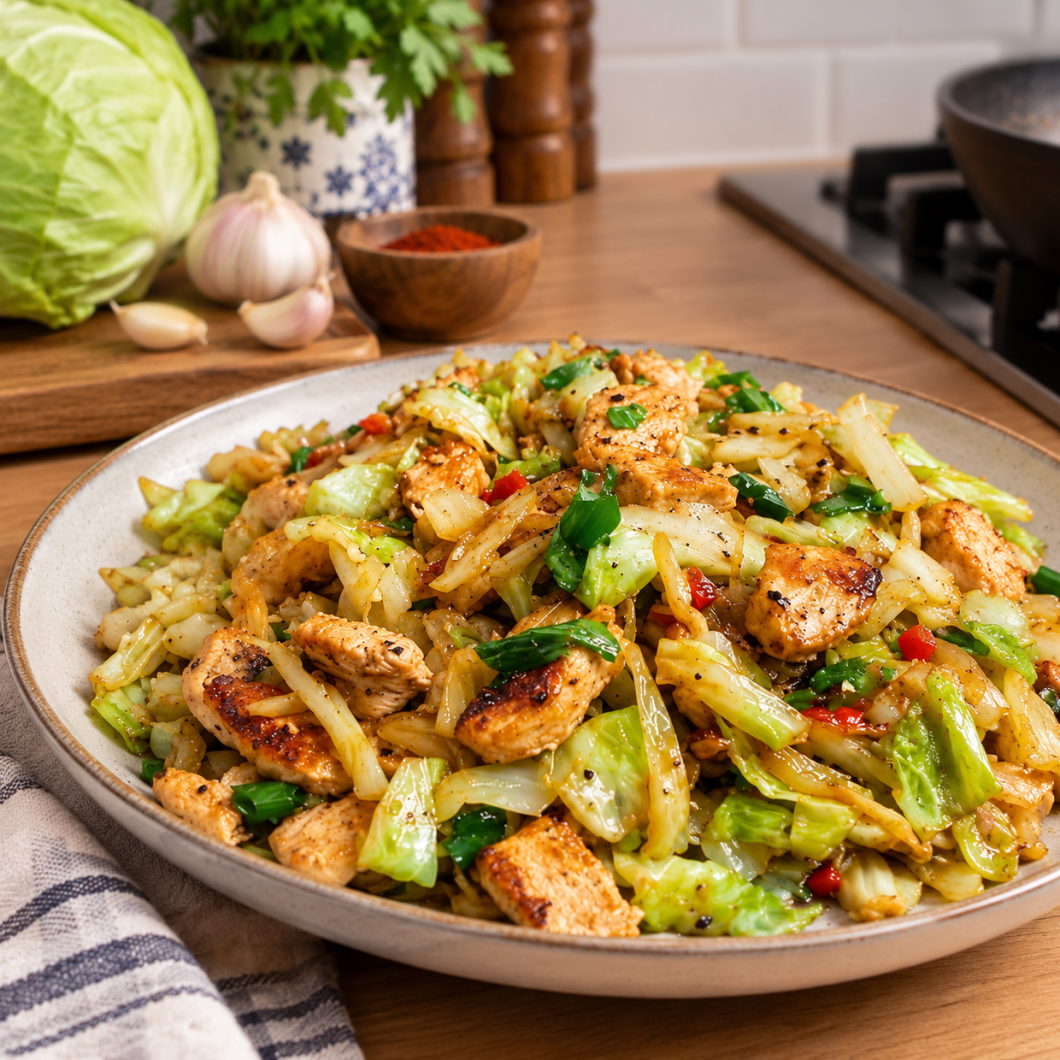
High Protein Chicken and Cabbage Stir Fry
 Recipe by admin1
A simple and comforting skillet meal made with tender bite-sized chicken, soft green cabbage, onion, garlic, butter, olive oil, and mild paprika. This easy dinner comes together in about 30 minutes.
4
servings10
minutes25
minutes256
kcal35
minutesIngredients
2 large chicken breasts, cut into bite-size pieces
1 tablespoon olive oil
Salt & pepper, to taste
1 tablespoon butter
1 medium onion, chopped
1 medium green cabbage, cored and chopped
2 cloves garlic, minced
1 teaspoon paprika
Directions
- Add the olive oil and chicken to a skillet. Season with salt and pepper. Cook over medium-high heat for about 5–7 minutes, stirring fairly often, until the chicken is just cooked through.
- Transfer the cooked chicken to a paper towel-lined plate and set aside.
- Add the butter and chopped onion to the same skillet. Sauté for about 3 minutes, until the onion begins to soften and lightly brown.
- Add the chopped cabbage. Cook uncovered for about 10–15 minutes, stirring fairly often, until the cabbage reaches your preferred tenderness. The cabbage will wilt down as it cooks.
- Stir in the minced garlic and paprika, making sure they are evenly mixed through the cabbage and onion.
- Return the cooked chicken to the skillet. Cook for a few minutes, stirring occasionally, until everything is heated through.
- Taste and add more salt and pepper if needed. Serve immediately.
Notes
- A cabbage weighing around 2 pounds before removing the outer leaves and core works well.
- Mild paprika can be replaced with hot paprika or smoked paprika if preferred.
- Since the dish contains a large amount of cabbage, taste before serving and adjust the salt as needed.
- Leftovers can be stored in a covered container in the refrigerator for 3–4 days.
- Freezing is not recommended because the cabbage may change texture after thawing.
Nutrition Facts
- Total number of serves: 4
- Calories: 256kcal
- Fat: 10g
- Saturated Fat: 3g
- Cholesterol: 80mg
- Sodium: 199mg
- Potassium: 856mg
- Carbohydrates: 17g
- Fiber: 6g
- Sugar: 11g
- Protein: 27g
- Vitamin A: 590mcg
- Vitamin C: 87mg