Fresh beetroot juice is one of those simple homemade drinks that brings beautiful colour, natural sweetness, and refreshing flavour together in one glass. Made with fresh beetroot, apple, carrot, lemon, ginger, and cold water, this juice has a lovely balance of earthy, sweet, and citrusy flavours. Its deep ruby-red colour makes it especially appealing, while the combination of fruits and vegetables gives it a fresh taste that is enjoyable at breakfast or any time of the day.
Making beetroot juice at home is easier than it might seem. You do not need special cooking skills or complicated ingredients. A regular kitchen blender or a juicer is enough to prepare it. The most important part is choosing fresh ingredients and balancing the flavour so that the natural earthiness of beetroot does not overpower the other ingredients.
I like to keep the preparation straightforward. The beetroot provides the main flavour and colour, the apple adds natural sweetness, and the carrot gives the juice a mild sweetness that blends beautifully with the beetroot. Fresh lemon juice brightens everything, while a small piece of ginger adds a gentle warmth.
The result is a refreshing homemade drink that can be served chilled, poured over ice, or enjoyed immediately after preparation.
What Makes Homemade Beetroot Juice Special?
- Homemade beetroot juice has several advantages over many ready-made bottled drinks. You can prepare it with fresh produce, control the sweetness, and decide whether you prefer a smooth or slightly thicker consistency.
- Another reason to make it at home is that the ingredients are easy to find. Fresh beetroot, carrots, apples, lemons, and ginger are commonly available at grocery stores and vegetable markets.
- There is also plenty of room to adjust the flavour. If you enjoy sweeter juices, you can use a naturally sweet apple or add some orange. For a more refreshing taste, cucumber and mint are lovely additions. If you prefer a slightly stronger flavour, a little extra ginger can make the drink more interesting.
- Here are a few reasons to try this recipe:
- It uses fresh and simple ingredients.
- It does not require artificial colours or preservatives.
- The sweetness comes naturally from fruits and vegetables.
- You can prepare it with a blender or juicer.
- The consistency can be adjusted easily.
- It works well as a breakfast or afternoon drink.
- It can be served chilled or with ice cubes.
Understanding the Ingredients
- The secret to a delicious beetroot juice is using ingredients that complement one another. Beetroot has a distinctive earthy flavour, so combining it with naturally sweet and slightly acidic ingredients helps create a more balanced drink.
- Fresh Beetroot
- Beetroot is the main ingredient in this recipe. It gives the juice its deep reddish-purple colour and naturally sweet, earthy flavour.
- Choose two medium-sized beetroot that feel firm and heavy for their size. Their skin should be relatively smooth, without mould, soft patches, or unpleasant smells.
- Medium-sized beetroot is generally easier to handle than very large ones. It also works well when combined with apple and carrot because its flavour is less likely to overpower the entire drink.
- Apple
- Apple Sliced on a Cutting Board
- Apple is an important part of this combination because it balances the earthy taste of beetroot. It adds natural sweetness and gives the juice a pleasant fruity flavour.
- One medium-sized apple is enough for this recipe. You can use a sweet apple if you prefer a naturally sweeter drink.
- Wash it properly, remove the core and seeds, and cut it into smaller pieces before blending.
- Carrot
- Carrot adds another layer of natural sweetness without making the juice taste too sugary. Its mild flavour blends particularly well with beetroot and apple.
- Use one medium carrot. Wash it thoroughly and peel it if the outer skin is rough or damaged.
- Fresh Lemon Juice
- When To Use Bottled Lemon Juice Over Fresh
- Lemon juice brings a fresh citrus flavour that makes the drink taste brighter. It also helps balance the sweetness of the apple and carrot.
- One tablespoon of freshly squeezed lemon juice is a good starting point. If you enjoy a sharper citrus flavour, you can add a little more after tasting.
- Fresh Ginger
- Ginger adds a gentle warmth and a slightly spicy flavour. You only need half an inch for the entire recipe.
- It is best to use a small amount because ginger has a strong taste. Too much can overpower the sweetness of the beetroot and apple.
- Cold Drinking Water
- Cold water helps the ingredients blend smoothly and allows you to control the consistency.
- Start with half a cup and add more if necessary. If you prefer a thicker juice, use less water. For a lighter drink, increase the quantity gradually.
Optional Ingredients
- You can also use a few additional ingredients depending on your taste:
- Half an orange for extra citrus sweetness.
- Half a cucumber for a lighter, refreshing flavour.
- One teaspoon of honey if additional sweetness is needed.
- A few fresh mint leaves for a cooling finish.
- A small pinch of black salt for a savoury touch.
- Extra lemon juice for more tanginess.
- Four to five ice cubes for serving.
- These additions are optional. The main recipe already has a balanced combination of ingredients.
Choosing Fresh Beetroot for Better Flavour
- Fresh vegetables make a noticeable difference in homemade juice. When buying beetroot, look for roots with firm skin and a rich reddish-purple colour.
- Avoid beetroot that looks wrinkled, excessively dry, or damaged. Soft spots and unpleasant smells are also signs that the vegetable may no longer be fresh.
- If the leaves are still attached, check that they look fresh rather than wilted. Remove the leaves before storing the roots if necessary.
- It is also worth remembering that beetroot can stain your hands and kitchen surfaces. Using a separate chopping board or wearing kitchen gloves can make preparation easier.
Kitchen Equipment You Will Need
- You do not need an expensive appliance to prepare this recipe.
- For the blender method, gather:
- Kitchen blender
- Sharp kitchen knife
- Vegetable peeler
- Chopping board
- Fine-mesh strainer
- Large jug
- Serving glasses
- Spoon
- For the juicer method, you will need:
- Vegetable juicer
- Sharp knife
- Chopping board
- Serving jug
- Drinking glasses
- A blender is a convenient choice if you enjoy making different homemade juices and smoothies. It also allows you to keep the pulp in the drink if you prefer a thicker texture.
- A juicer is useful when you want a thinner drink without much pulp.
How to Prepare Fresh Beetroot Juice at Home
- Step 1: Wash the Vegetables and Fruit
- Start by washing the beetroot, carrot, and apple under cool running water.
- Because beetroot grows underground, its outer surface may contain soil and dirt. Rub the skin gently with your hands or use a clean vegetable brush to remove any remaining dirt.
- Wash the carrot carefully, especially around the ends. Give the apple a good rinse as well.
- Once everything is clean, place the ingredients on a chopping board.
- Step 2: Peel and Prepare the Beetroot
- Use a vegetable peeler to remove the outer skin from both beetroot.
- Although the skin is edible, peeling usually produces a smoother-tasting juice. It is particularly helpful when the beetroot has rough or earthy-tasting skin.
- Cut each beetroot into small cubes. Smaller pieces make blending easier and help prevent large pieces from remaining in the mixture.
- Take care while cutting because the natural beetroot pigment can leave stains on your hands and utensils.
- Step 3: Prepare the Apple and Carrot
- Wash the apple and remove its core and seeds. Cut it into small wedges or cubes.
- Next, prepare the carrot. Peel it if necessary and cut it into smaller pieces.
- Try to keep the pieces reasonably similar in size so that they blend evenly.
- At this stage, all the main fruits and vegetables should be ready for the blender.
- Step 4: Prepare the Lemon and Ginger
- Peel half an inch of fresh ginger and chop it into small pieces.
- Cut the lemon in half and squeeze out one tablespoon of juice. Remove any seeds that fall into the juice.
- Fresh lemon works particularly well in this recipe because its sharp citrus flavour balances the natural sweetness of beetroot, carrot, and apple.
- Step 5: Add the Ingredients to the Blender
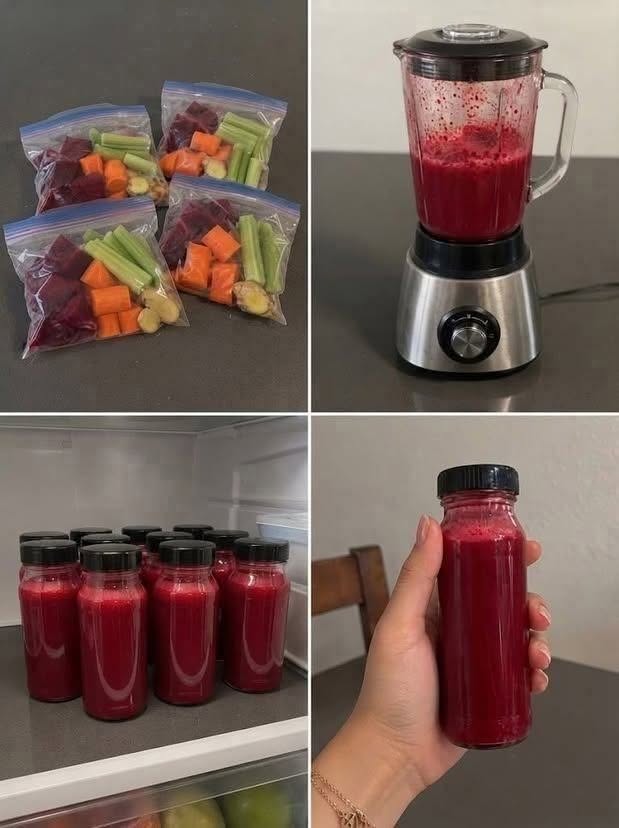
- Place the chopped beetroot, apple, carrot, and ginger into the blender jar.
- Add half a cup of cold drinking water.
- Secure the blender lid properly before switching it on. Begin at a low speed and gradually increase the speed.
- Blend for approximately one to two minutes, or until the ingredients become a smooth mixture.
- If the mixture looks too thick, add a little more cold water and blend again.
- It is better to add water gradually rather than pouring in too much at the beginning. This gives you more control over the final consistency.
- Step 6: Strain the Mixture
- Place a fine-mesh strainer over a large jug.
- Slowly pour the blended mixture into the strainer and allow the liquid to pass through.
- Use the back of a spoon to gently press the pulp. This helps extract more liquid without making a mess.
- If you want a particularly smooth juice, you can use a clean muslin cloth instead of a regular strainer.
- However, straining is completely optional. Leaving the pulp in the drink gives it a thicker texture and retains more of the ingredients’ natural fibre.
- Step 7: Add the Fresh Lemon Juice
- Pour the freshly squeezed lemon juice into the strained beetroot mixture.
- Stir everything gently until the flavours are combined.
- Taste a small amount. If the juice tastes too earthy, add a little more lemon juice or use some orange juice if you have chosen to include it.
- If the flavour is too concentrated, add a little cold water.
- Step 8: Adjust the Sweetness
- Beetroot, apple, and carrot already provide natural sweetness.
- For most people, this combination is sweet enough without adding anything extra.
- However, if you prefer a sweeter drink, you can stir in one teaspoon of honey. Continue mixing until it dissolves completely.
- You can also use a little extra apple or orange juice for natural fruit sweetness.
- There is no need to add sugar to the basic recipe.
- Step 9: Chill and Serve
- Pour the finished juice into clean serving glasses.
- Add four to five ice cubes if you like your drink extra cold. A few fresh mint leaves or a thin lemon slice can also be used as a garnish.
- Give the juice a final stir and serve immediately.
- Fresh beetroot juice is now ready to enjoy with breakfast or as a refreshing drink during the day.
Making Beetroot Juice with a Juicer
- If you have a vegetable juicer, you can prepare the same recipe without using a blender or strainer.
- Begin by washing the beetroot, carrot, and apple thoroughly. Peel the beetroot if desired and remove the apple core.
- Cut the ingredients into pieces that fit comfortably into the juicer opening.
- Feed the beetroot, carrot, apple, and ginger into the machine one at a time.
- Collect the extracted juice in a clean jug. Once all the ingredients have been processed, add the freshly squeezed lemon juice.
- Stir gently and taste the mixture.
- If it is too strong, add a little cold water or orange juice. Pour into glasses and serve immediately.
- The main difference between the two methods is the texture. A juicer separates much of the pulp automatically, while a blender produces a thicker mixture that can be strained according to your preference.
Health and Nutrition Benefits of Beetroot Juice
- Beetroot is a nutritious vegetable that contains naturally occurring dietary nitrates, folate, potassium, and colourful plant compounds.
- When included as part of a varied diet, beetroot juice can contribute to overall fruit and vegetable intake.
Naturally Occurring Dietary Nitrates
- Beetroot contains dietary nitrates that the body can convert into nitric oxide. Nitric oxide plays a role in regulating blood vessel function and blood flow.
- Research suggests that beetroot juice may help support healthy blood pressure in some people. However, it should never be considered a replacement for prescribed medication or medical treatment.
Provides Important Nutrients
- Beetroot contains folate, which supports normal cell division and the formation of healthy red blood cells.
- It also provides potassium, a mineral involved in normal muscle function and fluid balance.
Contains Natural Plant Compounds
- The rich red-purple colour of beetroot comes mainly from natural pigments called betalains.
- These compounds have antioxidant properties and are being studied for their potential biological benefits.
A Refreshing Alternative to Sugary Drinks
- Homemade beetroot juice can be a refreshing alternative to commercially sweetened beverages, especially when prepared without added sugar.
- Because this recipe uses apple and carrot, it also provides natural fruit and vegetable sugars.
Approximate Nutrition Information
- The nutritional content depends on the size of the ingredients and whether the juice is strained.
- When the recipe is divided into three servings, each glass provides approximately:
| Nutrient | Approximate amount |
|---|---|
| Calories | 75–100 kcal |
| Carbohydrates | 17–23 g |
| Natural sugars | 12–16 g |
| Protein | 1–2 g |
| Fat | Less than 1 g |
| Fibre | Depends on straining |
| Potassium | Varies |
| Folate | Varies |
Straining removes much of the natural fibre from the ingredients. Unstrained juice generally retains more fibre.
Important Precautions
Although beetroot juice can be enjoyed by many people, there are a few things to keep in mind.
- People with a history of calcium oxalate kidney stones may need to limit beetroot because it contains oxalates.
- Beetroot juice may lower blood pressure slightly in some people. Those with low blood pressure or taking blood pressure medication should discuss regular consumption with a healthcare professional.
- People with diabetes should remember that fruit and vegetable juices can contain concentrated natural sugars.
- Beetroot may cause urine or stools to appear pink or reddish. This is sometimes called beeturia and is generally harmless. However, unexplained blood should be medically assessed.
- If you are new to beetroot juice, begin with a small serving and see how your body responds.
How to Store Homemade Beetroot Juice
- Fresh beetroot juice tastes best immediately after preparation. However, you can store it for a short time if you have made extra.
- Transfer the juice into a clean, airtight glass container. Refrigerate it promptly at 4°C or below.
- For the best flavour and freshness, try to consume it within 24 hours.
- Natural ingredients may separate while sitting in the refrigerator. This is completely normal, so simply shake or stir the juice before serving.
- Avoid leaving freshly prepared juice at room temperature for extended periods.
- If the juice develops an unusual smell, taste, or appearance, discard it.
Can Beetroot Juice Be Frozen?
- Yes, beetroot juice can be frozen in a suitable freezer-safe container.
- Leave a little space at the top because liquids expand when frozen. When you want to drink it, thaw it in the refrigerator and stir well before serving.
- Keep in mind that freezing and thawing may slightly change the flavour and texture.
What to Serve with Fresh Beetroot Juice
- This juice is particularly enjoyable with breakfast, but it also works well alongside a light lunch.
- Some serving ideas include:
- Wholegrain toast with scrambled eggs.
- Homemade oatmeal.
- Greek yoghurt with fresh fruit.
- Vegetable sandwiches.
- Homemade breakfast muffins.
- Boiled eggs with wholegrain bread.
- Fresh fruit salad.
- A light vegetable omelette.
- Serving beetroot juice alongside a meal can make breakfast more satisfying than drinking juice alone.
Healthy Fresh Beetroot Juice
 Recipe by admin1
A refreshing homemade beetroot juice made with fresh beetroot, apple, carrot, lemon, and ginger. Naturally sweet, colourful, and easy to prepare using a blender or juicer.
4
servings15
minutes100
kcal15
minutesIngredients
2 medium-sized fresh beetroots
1 medium-sized apple
1 medium carrot
1 tablespoon freshly squeezed lemon juice
½ to 1 cup cold drinking water
½ inch fresh ginger, peeled
Directions
- Wash the beetroot, apple, and carrot thoroughly under cool running water.
- Peel the beetroot and cut it into small cubes.
- Remove the apple core and seeds, then chop the apple into smaller pieces.
- Peel the carrot if necessary and cut it into pieces.
- Peel and chop the fresh ginger. Squeeze one tablespoon of lemon juice.
- Add the beetroot, apple, carrot, and ginger to a blender.
- Pour in ½ cup of cold water and blend for 1–2 minutes until smooth.
- Add more water if needed to adjust the consistency.
- Strain the mixture through a fine-mesh strainer or muslin cloth.
- Stir in the freshly squeezed lemon juice.
- Taste and adjust with extra lemon juice, cold water, or honey if desired.
- Pour into glasses, add ice cubes if preferred, and serve immediately.
Notes
- Use fresh, firm beetroot for the best flavour.
- Add water gradually to control the consistency.
- Straining is optional. Leave the pulp in for a thicker juice with more fibre.
- Apple and carrot provide natural sweetness, so additional sugar is unnecessary.
- Orange, cucumber, and mint can be added for different flavour combinations.
- For the juicer method, process the beetroot, apple, carrot, and ginger, then stir in lemon juice.
- Store leftover juice in an airtight glass container in the refrigerator at 4°C or below and consume within 24 hours.
- Stir or shake before serving because natural separation is normal.
Nutrition Facts
- Total number of serves: 4
- Calories: 100kcal
- Carbohydrates: 23g
- Sugar: 16g
- Protein: 2g