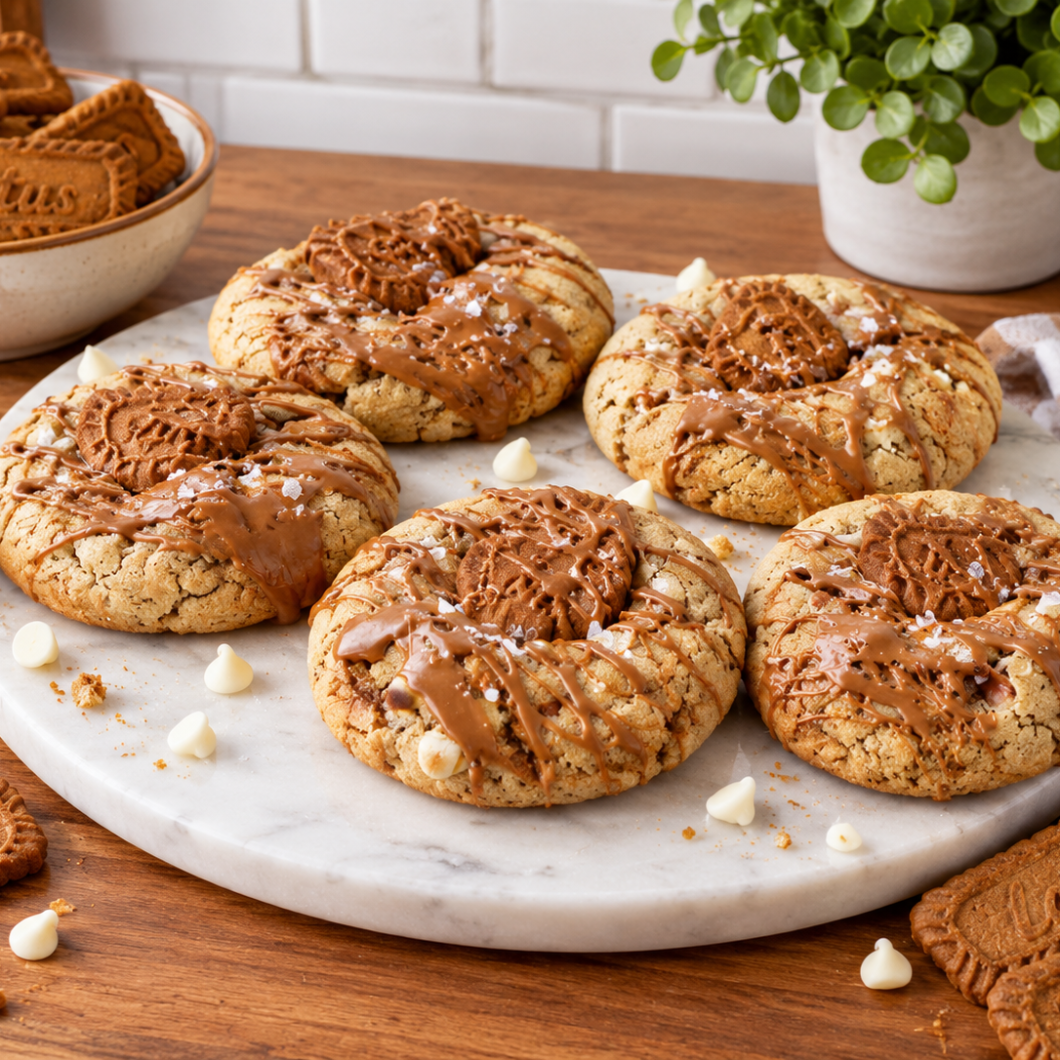
Cookie Butter Sourdough Cookies are soft, thick, chewy treats made with sourdough discard, brown sugar, cinnamon, white chocolate chips, and crushed Biscoff® cookies. Each cookie combines the warm flavor of spiced caramel cookies with creamy cookie butter and sweet white chocolate.
The centers stay tender while the edges develop a lightly golden finish, making these cookies especially satisfying for anyone who loves Biscoff-inspired desserts.
This recipe is also a useful way to turn extra sourdough discard into something special. Instead of throwing away leftover starter, you can incorporate it into a rich cookie dough that delivers a subtle depth of flavor.
The sourdough discard works beautifully alongside brown sugar, vanilla, cinnamon, and cookie butter without overpowering the dessert. The result is a bakery-style cookie that feels indulgent while remaining straightforward to prepare at home.
Why You’ll Love These Sourdough Discard Cookies
There is plenty to like about these sourdough discard cookies, especially if you enjoy soft and chewy cookies with plenty of texture. The dough contains crushed Biscoff® cookies, which create small crunchy and tender pieces throughout the cookies. White chocolate chips add creamy sweetness, while cinnamon provides a gentle warmth that complements the caramel-like flavor of the cookie butter.
The cookies are also generously sized, making them ideal when you want a substantial dessert rather than a small bite. The recipe produces large cookies with a soft interior and lightly browned edges. Once baked, the cookies are finished with melted cookie butter and an additional piece of Biscoff® cookie. A small sprinkle of coarse sea salt balances the sweetness and gives the finished cookies an appealing contrast.
What Makes Cookie Butter So Good in Cookies?
Cookie butter has a naturally rich, spiced flavor that works exceptionally well in baked goods. Its flavor is often associated with caramelized biscuits, cinnamon, brown sugar, and warm spices, so it fits naturally into a cookie dough containing cinnamon and brown sugar. In this recipe, cookie butter is used as a finishing drizzle, giving every bite an additional layer of sweetness and spice.
The combination becomes even more appealing when paired with white chocolate. White chocolate has a creamy sweetness that softens the stronger caramel and spice notes of the cookie butter. Meanwhile, the crushed Biscoff® cookies provide texture and reinforce the signature spiced-cookie flavor. Together, these ingredients create a dessert that tastes rich, festive, and distinctly different from a traditional chocolate chip cookie.
The Role of Sourdough Discard
Sourdough discard is particularly useful in cookie recipes because it can add moisture and subtle fermented depth without requiring the dough to rise like bread. This recipe uses 75 grams of sourdough discard, making it an excellent option when you have extra starter left after feeding your sourdough culture.
Because the discard is incorporated into a rich cookie dough containing butter, sugar, flour, and chocolate, its flavor remains balanced. The optional refrigeration period also gives the dough time to rest before baking. If you prefer to plan ahead, the dough can be refrigerated overnight, allowing you to bake fresh cookies the following day.
How to Make Cookie Butter Sourdough Cookies
Cream the butter and sugars
Begin by placing the softened butter, brown sugar, and granulated sugar into a large mixing bowl. Cream them together until the mixture becomes smooth and well blended. This step helps distribute the butter and sugars evenly throughout the dough and provides the foundation for the cookies’ soft texture.
Using softened butter is important because it combines more easily with the sugars. Butter that is too cold can make mixing difficult, while excessively melted butter can change the final texture of the cookies. Aim for butter that is soft enough to mix smoothly but is not liquid.
Add the wet ingredients
Once the butter and sugars are creamy, beat in the egg, vanilla extract, and sourdough discard. Continue mixing until these ingredients are incorporated and the mixture looks evenly combined.
The vanilla adds a familiar bakery-style aroma, while the sourdough discard contributes moisture and a subtle depth of flavor. Mixing these ingredients thoroughly at this stage helps create a consistent dough before the dry ingredients are added.
Combine the dry ingredients
Add the all-purpose flour, baking soda, cinnamon, and salt to the bowl. Mix until the dry ingredients are just incorporated. Avoid overmixing once the flour has been added, as excessive mixing can develop the gluten and result in cookies that are less tender.
The cinnamon is especially important because it reinforces the warm, spiced character of the Biscoff® cookies and cookie butter. Baking soda helps the cookies develop their characteristic spread and lightly browned edges, while salt enhances the flavors of the sugar, chocolate, butter, and spices.
Add white chocolate and Biscoff® cookies
Fold the white chocolate chips and crushed Biscoff® cookies into the dough. Work gently enough to distribute them evenly without unnecessarily mixing the dough.
The crushed cookies provide small pockets of texture throughout each cookie. Some pieces become softer during baking while others retain a little crunch. White chocolate chips melt into creamy pockets, creating a pleasant contrast with the spiced cookie pieces.
Shaping the Cookie Dough
For large bakery-style cookies, use a #16, or 4-tablespoon, cookie scoop to portion the dough. Place the portions onto a lined cookie sheet, leaving enough space between them for spreading during baking. Roll each portion between your palms to form a tall cylinder.
The taller shape helps create a substantial cookie with a generous center. If you prefer smaller cookies, a 2-tablespoon scoop can be used instead. Smaller portions will naturally require attention during baking because they may cook more quickly than the larger portions specified in the original recipe.
After shaping, cover the cookie dough and refrigerate it for at least 30 minutes. For the best make-ahead option, refrigerate the dough overnight. Chilling helps the dough firm up before baking and makes it easier to handle.
Why Chilling the Dough Matters
Refrigerating cookie dough can make a noticeable difference in the final result. Chilled dough is firmer, which helps the cookies maintain their shape as they enter the oven. It can also make the dough easier to portion and shape, particularly when using large amounts of butter.
The overnight option is convenient for holiday baking and busy schedules. You can prepare the dough in advance, keep it refrigerated, and bake the cookies when needed. This makes the recipe particularly useful for gatherings, cookie exchanges, parties, or homemade food gifts.
Baking the Cookies
Preheat the oven to 350°F before baking. Arrange six large cookies at a time on a lined baking sheet and bake for approximately 15 to 16 minutes. Watch the edges carefully as the cookies approach the end of their baking time.
The cookies should appear lightly browned around the edges, while the center should have lost its wet sheen. They may still look somewhat soft in the middle when removed from the oven, which is desirable for a chewy cookie. Allowing them to cool gives the structure time to set while preserving a tender interior.
Avoid judging doneness only by the color of the center. Large cookies can remain soft in the middle while the edges are sufficiently baked. Removing them when the edges are lightly browned helps prevent the finished cookies from becoming dry or overly firm.
Finishing With Cookie Butter
The finishing drizzle is one of the most appealing parts of these cookie butter cookies. Melt the cookie butter until it reaches a consistency that is easy to drizzle, then spread or drizzle it over the baked cookies. The warm cookie butter adds another layer of creamy, spiced flavor to the finished dessert.
For an attractive presentation, place a larger piece of Biscoff® cookie in the center of each cookie after adding the drizzle. A small sprinkle of coarse sea salt provides a savory contrast to the sweetness and makes the flavors taste more balanced.
Texture and Flavor
These cookies are designed to be soft and chewy rather than thin and crisp. The combination of softened butter, sugars, sourdough discard, and the correct baking time helps create a rich texture. The edges develop a lightly browned finish, while the centers remain tender.
Flavor is equally important. Brown sugar contributes caramel-like sweetness, granulated sugar provides additional sweetness and structure, and cinnamon supplies warmth. White chocolate brings a creamy element, while crushed Biscoff® cookies and cookie butter create the recognizable spiced biscuit character.
Tips for Successful Sourdough Cookies
Use softened butter
Softened butter is easier to cream with the sugars and helps produce a consistent dough. It should be soft enough to mix without difficulty but should not be completely melted. This small preparation step can make the mixing process smoother and more predictable.
Avoid overmixing the flour
Once the flour is added, mix only until the ingredients are combined. Overworking the dough can make cookies tougher than intended. Gentle mixing is especially helpful when your goal is a soft and chewy texture.
Chill for at least 30 minutes
The minimum refrigeration period gives the dough time to firm up. If your schedule allows, an overnight rest provides a convenient make-ahead option. Keep the dough covered while refrigerated so it does not dry out or absorb unwanted refrigerator odors.
Leave enough space on the baking sheet
Large cookies need room to spread. Baking six at a time helps prevent the cookies from merging together and allows hot air to circulate around each portion. A lined baking sheet also makes cleanup easier and helps prevent sticking.
Serving Suggestions
Cookie Butter Sourdough Cookies are delicious as an everyday dessert, but their generous size and decorative topping also make them suitable for special occasions. Serve them with coffee, tea, milk, or another favorite drink. The warm cinnamon and cookie butter flavors make them particularly inviting during autumn and winter.
For holiday gatherings, arrange the cooled cookies on a serving platter with the Biscoff® pieces and cookie butter drizzle visible on top. They can also be included in a homemade cookie assortment alongside other traditional favorites. Because the cookies have a rich flavor, one large cookie can be a satisfying dessert on its own.
Storage and Make-Ahead Notes
These cookies are especially convenient when prepared in stages. The dough can be shaped and refrigerated before baking, making it easier to serve fresh cookies later. The overnight chilling option is useful when preparing desserts ahead of a gathering.
Once baked, allow the cookies to cool before storing them. Keeping them in a suitable airtight container can help preserve their soft texture. If you are preparing them for gifting, make sure the cookies have cooled completely before packaging so condensation does not affect their texture.
Frequently Asked Questions
Can I use sourdough discard in cookies?
Yes. Sourdough discard works well in many cookie recipes because it can contribute moisture and a subtle fermented flavor. In these cookies, the discard is balanced with butter, sugar, vanilla, cinnamon, white chocolate, and Biscoff® cookies, creating a rich dessert rather than a strongly sour-tasting cookie.
Do I have to refrigerate the cookie dough overnight?
No. The recipe calls for at least 30 minutes of refrigeration, while overnight chilling is an optional longer rest. The shorter chilling period is suitable when you want to bake the cookies the same day, while overnight refrigeration is convenient when preparing the dough ahead.
Can I make smaller cookies?
Yes. The original instructions provide an alternative of using a 2-tablespoon cookie scoop for smaller cookies. Because smaller cookies bake more quickly than the large version, monitor them carefully as they approach the end of baking.
Why are Biscoff® cookies added to the dough?
The crushed Biscoff® cookies contribute their distinctive spiced biscuit flavor and add texture. Small cookie pieces throughout the dough make the finished cookies more interesting than a plain cookie butter cookie and reinforce the caramelized, cinnamon-forward flavor profile.
Sourdough Butter Cookies
 Recipe by admin1
Soft and chewy sourdough discard cookies made with cinnamon, white chocolate chips, crushed cookies, and cookie butter.
20
servings10
minutes15
minutes343
kcal30
minutes55
minutesIngredients
226 grams butter, softened (1 cup)
220 grams brown sugar (1 cup)
150 grams granulated sugar (¾ cup)
1 large egg (50 grams)
12 grams vanilla extract (1 tablespoon)
75 grams sourdough discard (⅓ cup)
420 grams all-purpose flour (3 cups)
5 grams baking soda (1 teaspoon)
2 grams cinnamon (1 teaspoon)
3 grams salt (½ teaspoon)
170 grams white chocolate chips (1 cup)
85 grams Biscoff® cookies, crushed (1 cup)
130 grams Biscoff® cookie butter (½ cup)
Directions
- Place the softened butter, brown sugar, and granulated sugar in a large bowl. Cream them together until the mixture is smooth and well combined.
- Add the egg, vanilla extract, and sourdough discard. Beat until the wet ingredients are thoroughly incorporated.
- Add the all-purpose flour, baking soda, cinnamon, and salt. Mix gently until the dry ingredients are just combined with the wet mixture.
- Fold the white chocolate chips and crushed Biscoff® cookies into the dough, distributing them evenly throughout.
- For large cookies, use a #16, 4-tablespoon cookie scoop to portion the dough onto a lined cookie sheet. Roll each portion between your palms to form a tall cylinder. A 2-tablespoon scoop can be used for smaller cookies.
- Cover the shaped dough and refrigerate for at least 30 minutes. For the optional longer fermentation, refrigerate the dough overnight.
- Preheat the oven to 350°F.
- Bake six large cookies at a time for 15–16 minutes, or until the edges are lightly browned and the cookies have lost their wet sheen.
- Melt the cookie butter and drizzle it over the baked cookies.
- Place a larger Biscoff® cookie piece in the center of each cookie and finish with a sprinkle of coarse sea salt.
Nutrition Facts
- Total number of serves: 1
- Calories: 343kcal
- Fat: 16g
- Carbohydrates: 46g
- Fiber: 1g
- Sugar: 26g
- Protein: 4g