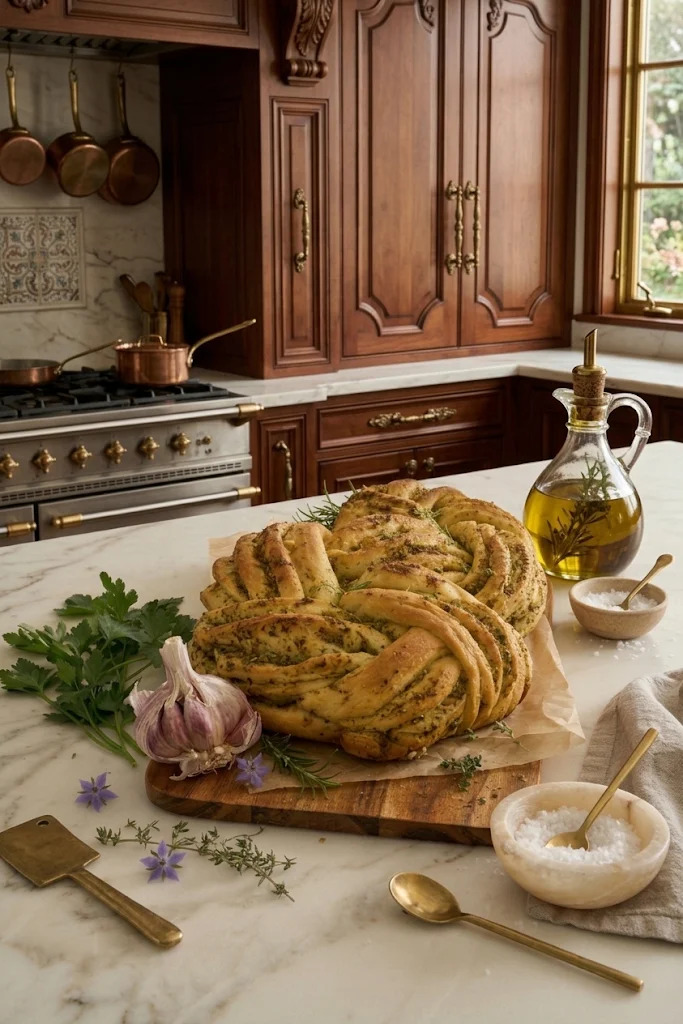
If you enjoy homemade sourdough bread with a rich garlic flavor, fresh herbs, and a soft, buttery texture, this Sourdough Herb and Garlic Twist Loaf is a recipe worth trying. It combines the natural flavor of sourdough with a delicious garlic butter filling, creating a beautiful twisted bread that looks impressive on the table. Each slice features soft bread with flavorful ribbons of garlic, Parmesan cheese, and aromatic herbs.
This savory sourdough bread is perfect for family dinners, weekend baking, barbecues, potlucks, and special gatherings. Although the twisted shape looks like something from a professional bakery, the preparation is surprisingly simple. You only need to prepare the dough, spread the herb butter filling, roll it into a log, cut and twist the strands, and allow the shaped loaf to rise before baking.
The combination of fresh garlic, creamy butter, and green herbs creates a wonderful aroma while the bread bakes. Its golden exterior and tender interior make it delicious on its own or alongside soups, pasta dishes, grilled vegetables, and other homemade meals.
What Makes This Sourdough Garlic and Herb Bread Special?
One of the best things about this homemade sourdough garlic bread is its appearance. Instead of making an ordinary loaf, the dough is rolled with a flavorful filling and twisted to reveal beautiful layers. The result is a decorative savory bread that looks attractive when served whole and becomes even more inviting when pulled apart.
The flavor is another reason this recipe stands out. Fresh garlic provides a strong savory taste, while Parmesan cheese adds a delicious salty and slightly nutty quality. Fresh herbs bring brightness and fragrance, balancing the richness of the butter. Together, these ingredients create a filling that spreads evenly through the bread and gives every slice plenty of flavor.
Another advantage is that you do not need expensive baking equipment. A mixing bowl, kitchen scales, a baking tray, parchment paper, and a sharp knife are enough to prepare this recipe. You can knead the dough by hand or use a stand mixer if you prefer. The twisting technique is straightforward once you understand how to shape the dough.
Understanding the Sourdough Dough
The foundation of this recipe is an enriched sourdough dough made with bread flour, sourdough starter, milk, water, butter, and salt. Unlike a basic sourdough loaf made primarily with flour and water, this dough contains milk and butter, giving the finished bread a softer texture and richer flavor.
Bread flour is particularly useful because its protein content helps develop the gluten structure needed to support the filling and maintain the twisted shape. It also gives the loaf enough strength to rise without becoming too fragile during shaping.
The sourdough starter provides natural fermentation. For the best results, use an active starter that has recently been fed and is bubbly and close to its peak. A healthy starter helps the dough rise and contributes the familiar mild tanginess associated with homemade sourdough bread.
Milk adds moisture and tenderness, while melted butter enriches the dough. Salt balances the flavor and supports the overall structure. Slightly warming the milk and water can encourage fermentation, particularly because the butter and milk make this dough richer than a traditional lean sourdough recipe.
Preparing the Garlic and Herb Butter Filling
The garlic herb butter is the main source of flavor in this twisted sourdough loaf. It combines softened salted butter with finely chopped fresh herbs, minced garlic, and grated Parmesan cheese. When spread across the dough, this mixture creates flavorful layers that become visible after the rolled dough is cut.
Fresh herbs such as parsley, thyme, basil, rosemary, and sage work particularly well. You can use a combination of these herbs depending on what is available in your kitchen. Parsley provides a fresh green flavor, thyme adds an earthy aroma, and basil brings a slightly sweet herbal note.
Garlic gives the filling its distinctive savory taste. Fresh cloves are recommended because they provide a strong and natural garlic aroma. Chop them very finely so they distribute evenly throughout the butter. If fresh garlic is unavailable, prepared minced garlic or garlic powder can also be used according to the ingredient notes.
Parmesan cheese adds depth and a pleasant savory finish. Mixing the cheese directly into the softened butter helps distribute its flavor throughout the filling. Make sure the butter is soft enough to spread easily but not completely melted, as a thick consistency makes shaping much easier.
Helpful Tips for Perfect Sourdough Garlic Bread
The condition of your sourdough starter makes a noticeable difference to the final result. An active, bubbly starter generally provides more predictable fermentation than an inactive starter. Feed your starter several hours before mixing the dough and use it when it is sufficiently active.
Temperature is another important factor. Slightly warm milk and water help encourage fermentation, but avoid using very hot liquids because excessive heat can damage the natural yeast and bacteria in your starter.
When preparing the filling, chop the herbs and garlic finely. Large pieces can make spreading difficult and may cause uneven layers. Softened butter is also easier to distribute than cold butter, so allow it to reach room temperature before mixing.
During shaping, keep the cut surfaces of the two strands facing upward. This helps display the green herbs and garlic butter, producing a more decorative loaf. Finally, allow enough time for the second proof. Baking dough before it becomes sufficiently puffy can result in a heavier texture.
Using Sourdough Discard Instead of Active Starter
If you have sourdough discard available, you can still prepare this savory garlic herb bread. The alternative method uses 100 grams of sourdough discard along with one teaspoon of commercial yeast.
Because discard is generally less active than a freshly fed starter, the added yeast helps the dough rise. The remaining preparation and shaping process can follow the same general method.
Keep in mind that fermentation time may differ depending on the condition of your discard, the yeast, and the temperature of your kitchen. Check the dough regularly and allow it to become appropriately risen before moving to the next stage.
Different Ways to Enjoy This Savory Twist Loaf
Although the garlic and herb version is delicious, the same shaping technique can be used with other savory fillings. Sun-dried tomatoes and fresh basil create a Mediterranean-inspired combination, while shredded cheddar and diced jalapeños provide a richer, slightly spicy flavor.
For an earthy variation, try chopped Kalamata olives with fresh rosemary. Caramelized onions and thyme offer a sweet and savory combination, while Parmesan cheese with freshly ground black pepper creates a stronger cheese flavor.
You can also combine pesto with toasted pine nuts or use roasted garlic with shredded cheddar. These alternatives make it easy to create different versions of twisted sourdough bread for family meals and gatherings.
Baking the Sourdough Twist in a Loaf Pan
If you prefer a more traditional loaf shape, this recipe can also be prepared in a loaf pan. After twisting the dough strands together, gently arrange the dough inside a suitable loaf tin.
You may need to twist the strands slightly tighter and gently adjust their shape so they fit comfortably inside the pan. Allow the dough to proof in the tin until it becomes puffy before baking.
This approach creates a loaf with a babka-style appearance, making it convenient for slicing and serving. The garlic butter and fresh herbs remain distributed throughout the bread, so you still enjoy the same savory flavor.
How to Store and Freeze Sourdough Herb and Garlic Twist
Freshly baked sourdough garlic bread tastes best when served warm on the day it is prepared. For the best texture, try to bake it as close to serving time as possible. The loaf should remain reasonably fresh for approximately 12 hours after baking when stored appropriately.
If the bread has cooled and you want to serve it warm again, place it in a preheated oven for a short time until heated through. Avoid overheating it because this can dry out the soft interior.
To freeze the loaf, allow it to cool completely first. Wrap it securely in aluminum foil and place it inside a freezer-safe zip-lock bag. It can be stored in the freezer for up to two months.
When ready to enjoy, thaw the bread at room temperature. Keep it wrapped in foil and warm it gently in the oven until heated through. This method helps preserve its soft texture and delicious garlic butter flavor.
Frequently Asked Questions
Can I Prepare Sourdough Garlic Twist Bread Ahead of Time?
Yes. You can shape the loaf ahead of baking and use refrigeration to slow down the final proof. After twisting the dough, leave it at room temperature for approximately one hour, then cover it with plastic wrap and refrigerate for up to 12 hours. Before baking, allow it to return to room temperature and become sufficiently puffy.
Which Fresh Herbs Work Best?
Parsley, thyme, basil, rosemary, and sage are excellent choices. You can use one herb or combine several varieties to create a more complex flavor. Fresh herbs are especially useful because they provide the green ribbons that make the inside of the twisted loaf visually appealing.
Can I Use Garlic Powder Instead of Fresh Garlic?
Yes. Fresh garlic provides a stronger natural flavor, but garlic powder or garlic granules can be used when fresh cloves are unavailable. The recipe notes also suggest using two tablespoons of minced garlic as an alternative.
Why Is My Sourdough Dough Taking So Long to Rise?
Sourdough fermentation depends on several factors, including starter activity, room temperature, and the richness of the dough. Milk and butter can make fermentation slower than with a basic sourdough recipe. Give the dough enough time to rise and look for visible expansion rather than following a strict timetable.
Can I Make This Bread Without a Stand Mixer?
Absolutely. You can knead the dough by hand on a clean work surface. Allow approximately 10 minutes for kneading until the dough becomes soft, smooth, and elastic. A stand mixer is convenient but not essential.
What Can I Serve with Garlic and Herb Sourdough Bread?
This savory loaf works wonderfully with creamy soups, pasta, grilled chicken, roasted vegetables, salads, and barbecue dishes. It is also a popular choice for sharing at potlucks, family gatherings, and weekend meals
Sourdough Garlic Herb Twist Bread
 Recipe by admin1
A soft, buttery sourdough bread filled with fresh garlic, aromatic herbs, Parmesan cheese, and salted butter. Shaped into a beautiful twist and baked until golden brown, this savory homemade loaf is perfect for sharing at family dinners, barbecues, and gatherings.
12
servings1
hour45
minutes275
kcal720
minutes1
hour45
minutesIngredients
- For the Bread Dough
500 g bread flour
100 g active sourdough starter
200 g milk, slightly warm (around 37°C)
50 g warm water
50 g butter, melted (salted or unsalted)
8 g salt
- For the Garlic and Herb Filling
100 g salted butter, softened at room temperature
3 cloves garlic, finely diced
50 g grated Parmesan cheese
1 bunch fresh herbs (thyme, basil, parsley, sage, etc.)
Directions
- Add warm water, slightly warm milk, and active sourdough starter to a large mixing bowl. Stir until the starter is mostly dissolved.
- Add bread flour, melted butter, and salt. Mix until a rough dough forms. Cover and rest for approximately one hour.
- Transfer the dough to a clean surface and knead for approximately 10 minutes by hand or 5 minutes using a stand mixer, until smooth and elastic.
- Return the dough to a covered bowl and allow it to rise until it increases in size by approximately 50%.
- Finely chop the garlic and fresh herbs. Combine with softened salted butter and grated Parmesan cheese until evenly mixed.
- Transfer the dough to a clean surface and shape it into a rectangle approximately 25 × 8 inches (64 × 20 cm).
- Distribute the garlic and herb butter evenly over the dough, leaving a one-inch strip along the top edge uncovered.
- Roll the dough tightly from the long edge into a log. Seal the seam and position it underneath.
- Using a sharp knife or dough scraper, cut lengthwise through the log, leaving a small section attached at one end.
- Gently twist the two strands together, keeping the cut sides facing upward to display the filling.
- Form the twisted dough into an S shape by curling both ends inward toward the center.
- Place the loaf on a parchment-lined baking tray. Cover with a damp kitchen towel and allow it to rise until puffy.
- Heat the oven to 200°C (392°F). For fan-assisted or hotter ovens, use 180°C (356°F).
- Bake on the lower oven shelf for approximately 40 minutes or until golden brown and cooked through.
- Remove from the oven and brush the warm loaf with excess butter if desired. Serve warm.
Notes
- Replace active starter with 100 g sourdough discard and add one teaspoon of commercial yeast.
- Fresh parsley, thyme, basil, rosemary, and sage work well. Approximately one cup of fresh herbs before chopping is recommended.
- Use two tablespoons of minced garlic or an equivalent amount of garlic granules or powder.
- Plant-based milk and vegan butter can be used. The suggested butter alternative is 50 g olive oil or vegan butter.
- Salted butter is recommended for the filling. Either salted or unsalted butter works in the dough.
- Brush the loaf with egg wash before baking if you prefer a darker golden finish. The original version does not require egg wash.
- The twisted dough can also be placed in a loaf tin before its final proof.
- Refrigerate the shaped loaf for up to 12 hours after approximately one hour of room-temperature proofing. Allow it to return to room temperature and become puffy before baking.
- Best enjoyed fresh, ideally within 12 hours.
- Cool completely, wrap in aluminum foil, place in a freezer-safe bag, and freeze for up to two months. Thaw at room temperature and reheat wrapped in foil.
Nutrition Facts
- Total number of serves: 12
- Calories: 275kcal
- Fat: 12g
- Carbohydrates: 33g
- Sugar: 1g
- Protein: 7g