If you are looking for an easy lemon dessert that requires very little preparation, these homemade lemon truffles are a wonderful choice. Made with a smooth white chocolate ganache, fresh lemon zest, and a simple confectioners’ sugar coating, these bite-sized treats have a rich, creamy texture with a bright citrus flavor. Best of all, this is a no-bake lemon truffle recipe, so there is no need to turn on the oven.
These lemon truffle balls are especially useful when you want a dessert that looks elegant without requiring complicated baking techniques. The mixture comes together from a handful of simple ingredients, and after chilling, it can be shaped into small balls and coated with powdered sugar. The combination of sweet white chocolate and fresh lemon creates a balanced flavor that feels light and refreshing while still delivering the richness you expect from a traditional truffle.
Because they can be prepared ahead of time, homemade lemon truffles are suitable for many occasions. They can be served at summer gatherings, afternoon tea, holiday parties, Easter celebrations, or Christmas cookie exchanges. Their small size also makes them convenient for dessert platters, where guests can enjoy one or two without needing a fork, plate, or large serving.
Why These Lemon Truffles Are So Easy
One of the biggest advantages of this lemon truffle recipe is its simplicity. Traditional desserts can involve several mixing bowls, baking pans, complicated decorating techniques, and precise oven temperatures. These truffles take a much simpler approach. The white chocolate and cream are combined to create a creamy ganache, while lemon zest supplies the fresh citrus character that makes the dessert distinctive.
The recipe also does not require special equipment. A basic heatproof bowl, saucepan or microwave-safe method for warming the cream, a spoon or spatula, and a tool for shaping the chilled mixture are enough. This makes the recipe accessible even if you do not regularly bake desserts or keep a large collection of kitchen equipment.
Another benefit is that the truffles do not need to be baked. That makes them particularly convenient during warm weather when you would rather avoid heating the kitchen. They are also helpful during holidays when the oven may already be occupied with cakes, cookies, pies, or other dishes.
The Flavor of White Chocolate and Lemon
White chocolate provides the sweet, creamy foundation for these truffles. Unlike dark chocolate, which brings a deeper cocoa flavor and noticeable bitterness, white chocolate has a mild sweetness that allows the lemon zest to stand out. The result is a dessert with a delicate citrus flavor rather than an intensely sour taste.
Fresh lemon zest is important because it adds concentrated lemon aroma without introducing extra liquid into the ganache. The fragrant oils found in the outer layer of the lemon peel provide much of the recognizable lemon character. For this reason, finely grating the yellow portion of the peel works particularly well.
If you prefer a stronger lemon flavor, the amount of lemon zest can be increased according to the original recipe guidance. A larger amount creates a more pronounced citrus taste while keeping the creamy white chocolate base intact. Avoid grating too deeply into the white part of the peel because it can contribute an unpleasant bitterness.
Choosing the Right White Chocolate
The quality of the white chocolate matters considerably in this recipe. Since white chocolate is one of the main components of the ganache, its flavor and melting characteristics directly affect the finished truffles. The supplied recipe information specifically identifies Callebaut chocolate, Trader Joe’s white chocolate baking chips, and Ghirardelli white chocolate chips as tested options.
Not every white chocolate chip behaves in exactly the same way. Different products can contain different amounts and types of cocoa butter, milk ingredients, sugar, and other components. These differences can affect how smoothly the chocolate melts and how firmly the ganache sets after chilling.
For the most reliable results, choose a quality white chocolate product that melts smoothly. If using white chocolate chips, avoid assuming that every brand will produce exactly the same texture. The ganache should become smooth and creamy rather than grainy or separated.
Understanding the Heavy Cream
Heavy cream, which is also commonly sold as heavy whipping cream, is responsible for helping create the soft and creamy ganache at the center of these lemon truffles. The original recipe specifies cream containing at least 36 percent milk fat. This detail is useful because the fat content contributes to the rich texture and helps the chocolate and cream form a smooth mixture.
When preparing the ganache, the cream should be handled carefully. It needs to become hot enough to melt the white chocolate effectively, but it should not be allowed to become unnecessarily overheated. Once combined, gentle mixing helps the ingredients come together into a glossy mixture.
The final texture should be soft and creamy rather than watery. Chilling is what transforms the ganache from a pourable mixture into something firm enough to scoop and shape into individual truffle balls.
Fresh Lemon Zest Makes the Difference
Fresh lemon zest is the ingredient that gives these white chocolate truffles their distinctive character. One large lemon can provide approximately one tablespoon of zest, according to the supplied recipe information. If you enjoy a stronger lemon flavor, the recipe notes that the zest can be increased to two tablespoons.
For the best texture, grate the lemon zest finely. Large pieces of peel can make the truffles less smooth, while finely grated zest distributes the lemon flavor more evenly throughout the white chocolate ganache.
When zesting the lemon, concentrate on the yellow outer skin and avoid removing too much of the white pith underneath. The yellow portion contains the aromatic lemon oils that are desirable in the recipe, while the white portion tends to be more bitter.
How the White Chocolate Ganache Comes Together
The foundation of these truffles is a simple white chocolate ganache. Begin by placing the white chocolate in a suitable heatproof bowl. Warm the heavy cream separately until it is hot, then combine it with the chocolate. Allowing the hot cream to soften the chocolate before stirring can help create a smoother mixture.
Stir gently until the chocolate melts and the mixture becomes creamy and uniform. Once the ganache is smooth, add the lemon zest and mix it through thoroughly. The zest should be evenly distributed so that every truffle receives some of the fresh citrus flavor.
The ganache then needs time to chill. This stage is essential because the mixture must become firm enough to scoop and shape. Rushing the chilling process can make the mixture difficult to handle and may result in soft, uneven truffle balls.
Shaping the Lemon Truffle Balls
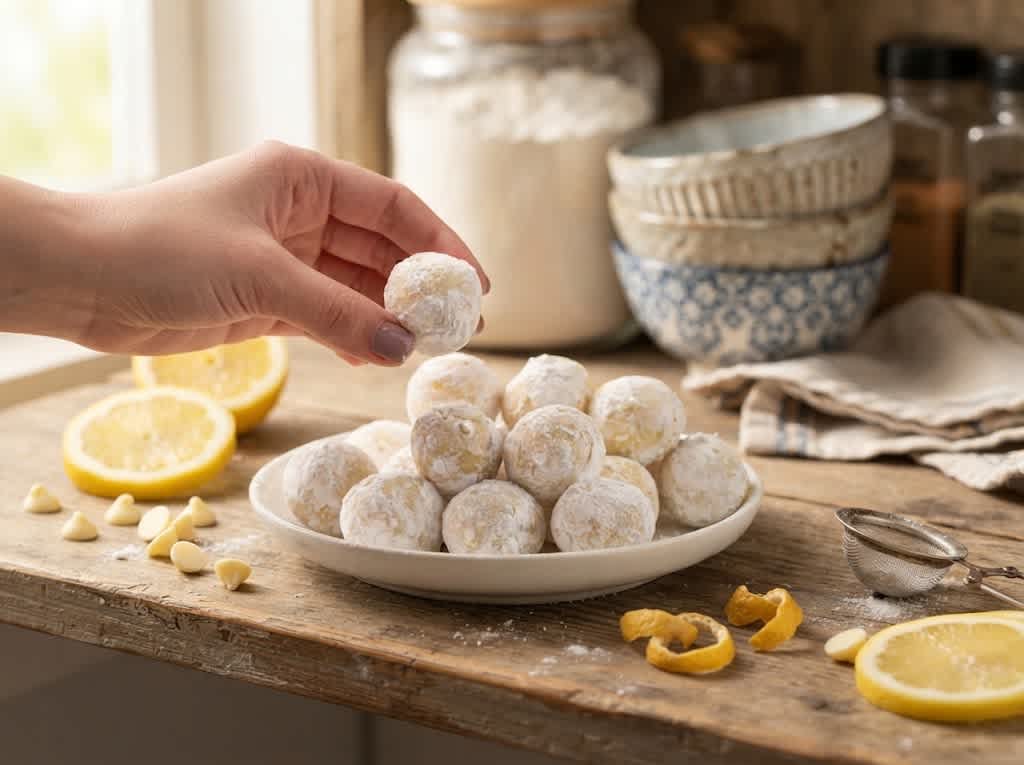
Once the ganache has chilled sufficiently, it can be portioned into small pieces and rolled between your hands to form round truffles. Keeping the portions relatively similar in size helps create an attractive presentation and ensures that the treats are easy to serve.
If the mixture becomes too soft while shaping, return it to the refrigerator for additional chilling. This is especially helpful in a warm kitchen. Working in smaller batches can also make the process easier because the remaining ganache stays chilled while you shape the truffles.
The finished balls do not need to look perfectly identical. A slightly handmade appearance suits these homemade lemon truffles well, particularly when they are being served as part of a dessert platter or holiday treat selection.
Adding the Confectioners’ Sugar Coating
Confectioners’ sugar, also called powdered sugar, provides the simple finishing touch for these lemon truffle balls. After the truffles have been shaped, gently roll them in the sugar so that the exterior is lightly covered.
The white coating gives the truffles a clean, elegant appearance and adds a delicate sweetness to the outside. It also makes the lemon truffles look especially attractive when arranged on a serving plate or placed in small paper candy cups.
If you prefer a less sweet finish or simply want to reduce the number of ingredients used, the confectioners’ sugar coating can be skipped. The truffles will still have the creamy white chocolate and lemon flavor that makes them appealing.
When to Serve Lemon Truffles
These no-bake lemon truffles can be served throughout the year. During summer, their small size and bright lemon flavor make them suitable for picnics, garden parties, afternoon gatherings, and casual entertaining. Since there is no baking involved, they are also convenient when you want to prepare dessert without heating the oven.
During the holiday season, lemon truffles can be included on Christmas cookie trays alongside traditional cookies and candies. Their pale appearance provides a nice visual contrast to darker chocolate desserts, colorful candies, and decorated cookies.
They can also work beautifully for Easter celebrations. The combination of white chocolate and lemon has a fresh spring-like quality, while the individual truffle format makes them easy to arrange on a dessert table.
Make-Ahead Dessert for Entertaining
One of the most practical qualities of this recipe is that the truffles can be prepared ahead of serving. Once shaped and properly chilled, they can be kept refrigerated until needed. Preparing them in advance can make entertaining much easier because the dessert is already portioned and ready to place on a serving platter.
This is particularly useful when preparing several dishes for a gathering. Instead of waiting until the last moment to make dessert, you can prepare the lemon truffles earlier and focus on the rest of the meal or party setup.
For the best presentation, keep the truffles chilled until close to serving time. Their creamy texture is easier to maintain when they are stored properly and protected from excessive heat.
Frequently Asked Questions About Lemon Truffles
Can I make lemon truffles without baking?
Yes. These are specifically designed as no-bake lemon truffles. The recipe uses a white chocolate ganache rather than a baked mixture, making it a convenient dessert when you want something quick and simple without using an oven.
What gives these truffles their lemon flavor?
Fresh lemon zest provides the primary lemon flavor. The supplied recipe indicates that one large lemon produces approximately one tablespoon of zest, while increasing the amount can provide a stronger citrus flavor.
Can I skip the powdered sugar?
Yes. Confectioners’ sugar is used as an exterior coating and can be omitted. The lemon truffles will still contain the white chocolate, heavy cream, and lemon zest that create the main flavor and texture.
Why is the quality of white chocolate important?
White chocolate makes up a major part of the ganache, so its melting behavior and flavor influence the finished dessert. The supplied recipe specifically tested several white chocolate products and recommends using a quality option.
Can these truffles be made for holidays?
Absolutely. Their small size makes them suitable for Christmas dessert trays, Easter treats, parties, afternoon gatherings, and other celebrations. They are also convenient because they can be prepared without occupying oven space.
Homemade Lemon Truffles
Creamy Homemade Lemon Truffles made with white chocolate, cream cheese, fresh lemon juice, and lemon zest.
12
servings10
minutes120
minutes2
hours10
minutesIngredients
1 cup white chocolate chips or chopped white chocolate
4 oz cream cheese, softened
2 tablespoons fresh lemon juice
1 tablespoon lemon zest
1/2 teaspoon vanilla extract
Pinch of salt
Powdered sugar or shredded coconut, for rolling
Directions
- Melt the white chocolate in a microwave or double boiler until completely smooth.
- In a separate bowl, beat the softened cream cheese with fresh lemon juice, lemon zest, vanilla extract, and salt until creamy.
- Add the melted white chocolate and mix until fully combined.
- Refrigerate the mixture for approximately 2 hours, or until firm enough to shape.
- Scoop portions of the chilled mixture and roll them into approximately 1-inch balls.
- Roll each truffle in powdered sugar or shredded coconut until coated.
- Return the finished lemon truffles to the refrigerator and keep chilled until ready to serve.
Nutrition Facts
- Total number of serves: 1
- Calories: 89kcal
- Fat: 3g
- Carbohydrates: 10g
- Fiber: 0g
- Sugar: 10g
- Protein: 1g