If you love the bright flavor of fresh lemon and the rich, creamy texture of cheesecake, these Creamy Lemony Truffles are a simple dessert worth making. They combine softened cream cheese, coconut cream, coconut oil, lemon juice, and lemon stevia to create a cool, smooth filling that can be shaped into small bite-sized truffles. Because there is no oven involved, this easy no-bake dessert comes together quickly and is especially convenient when you want something refreshing without spending much time in the kitchen.
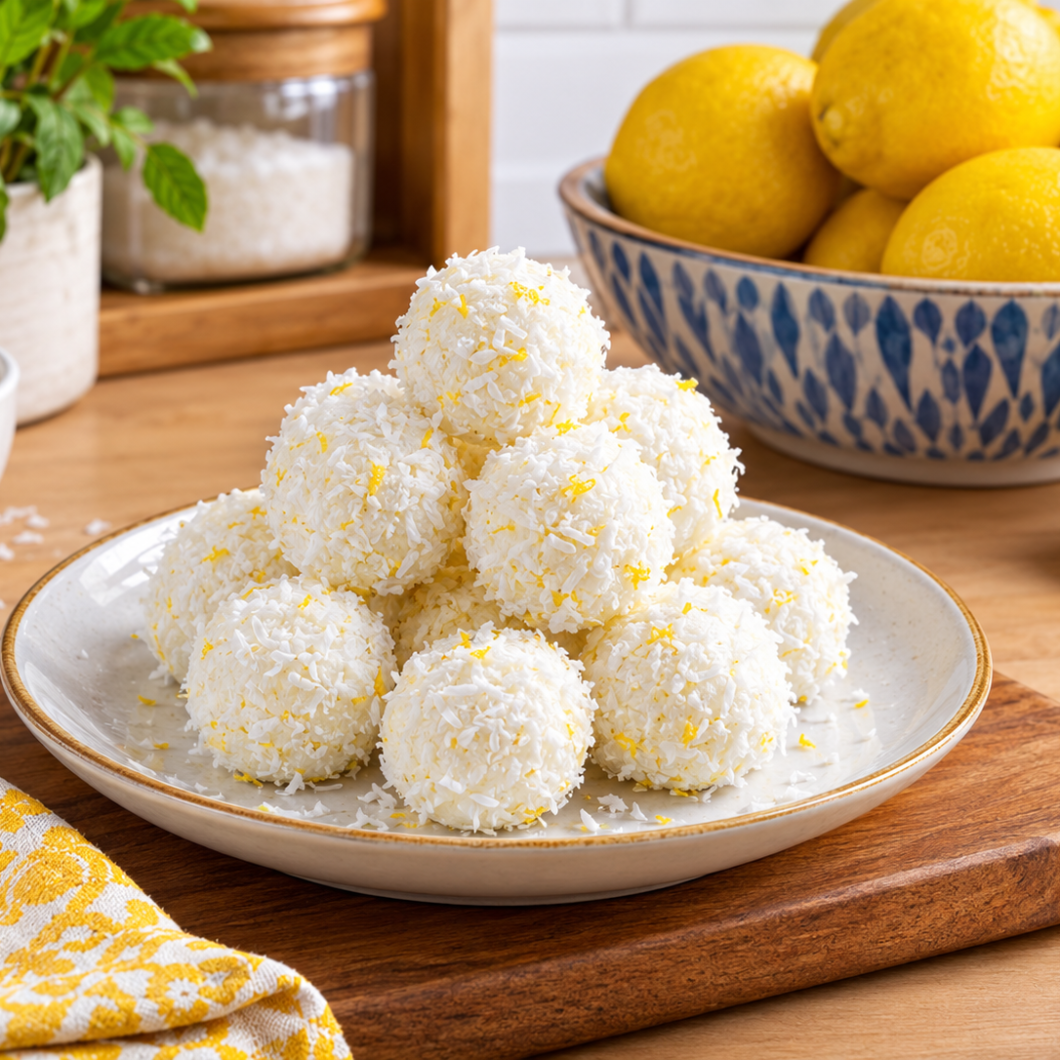
These lemon cheesecake truffles are designed for anyone looking for a dessert that fits several dietary preferences at once. They are sugar free, keto, gluten free, grain free, and nut free, making them a useful option when traditional desserts do not fit your eating style. The small serving size also makes them easy to enjoy as a controlled sweet treat. Each finished truffle has a creamy center with a gentle coconut note and a fresh lemon coating that gives the dessert its distinctive citrus character.
Why You’ll Love These Lemon Truffles
One of the best things about this no-bake lemon dessert is how uncomplicated the preparation is. There is no crust to bake, no water bath to prepare, and no lengthy cooking process. The cream cheese and coconut oil are blended until smooth, followed by coconut cream, salt, lemon juice, and lemon stevia. Once the mixture is chilled, shredded coconut is incorporated and the mixture is shaped into small balls before being coated with lemon zest and additional shredded coconut.
The texture is another reason these cheesecake truffles stand out. Coconut cream helps create a lighter consistency than you might expect from a simple cream cheese mixture, while coconut oil contributes richness and helps the chilled truffles hold their shape. The result is a soft, creamy bite rather than a heavy or overly dense confection. Chilling the mixture before shaping is an important part of the process because it makes the mixture easier to handle and gives the finished truffles a firmer texture.
Fresh Lemon Flavor in Every Bite
Lemon is the main flavor in this recipe, so the amount can be adjusted according to your preference. The recipe begins with one tablespoon of lemon juice, while lemon liquid stevia adds additional sweetness and reinforces the citrus flavor. Because everyone’s preference for lemon desserts is different, tasting the mixture before chilling gives you an opportunity to decide whether the flavor needs adjustment.
For people who enjoy a strong lemon cheesecake flavor, the bright citrus taste works particularly well with the creamy base. Those who prefer a milder dessert can keep the lemon flavor more subtle. The important point is to taste the mixture before refrigerating it because once the truffle mixture has been chilled and shaped, making adjustments becomes much more difficult.
What Makes These Truffles Keto Friendly?
These truffles are a convenient option for people following a low-carbohydrate or keto-style eating plan. The recipe uses lemon liquid stevia rather than conventional granulated sugar, helping keep the carbohydrate content low. According to the provided nutrition information, three truffles contain approximately 2 grams of carbohydrates, although nutritional values can vary depending on the specific brands and ingredients used.
The small size of the truffles also makes portion control straightforward. Rather than preparing a large dessert and cutting individual portions, you can shape the mixture into 18 small pieces. The recipe lists three truffles as one serving, allowing you to enjoy a few bites without needing to estimate a serving from a larger cheesecake or dessert dish.
Ingredients You’ll Need
The ingredient list is short, which makes these truffles particularly convenient for a quick dessert. Softened cream cheese provides the creamy cheesecake foundation, while melted coconut oil contributes richness and helps the mixture become firm after chilling. Coconut cream adds a light coconut character and helps create the soft texture that distinguishes these truffles from denser energy balls.
Lemon juice supplies fresh acidity, while lemon liquid stevia provides sweetness and additional citrus flavor. A small pinch of salt balances the sweetness and helps the lemon flavor stand out. Unsweetened shredded coconut is used inside the truffle mixture as well as in the outer coating. Finally, lemon zest gives the coating a fresh aroma and an attractive finishing touch.
How to Make Creamy Lemony Cheesecake Truffles
Step 1: Blend the Cream Cheese and Coconut Oil
Begin with softened cream cheese so it blends easily. Place the cream cheese and melted coconut oil in a stand mixer and blend until the mixture is smooth. Taking time to achieve a smooth consistency at this stage is important because any remaining lumps can make the finished truffles less uniform.
The coconut oil should be melted before adding it to the cream cheese. If it is extremely hot, allow it to cool slightly before combining it with the cream cheese. The goal is a smooth mixture rather than a mixture in which the ingredients separate.
Step 2: Add the Lemon and Coconut Ingredients
Once the cream cheese mixture is smooth, blend in the coconut cream, salt, lemon juice, and lemon liquid stevia. Continue mixing until everything is evenly incorporated. The mixture should have a creamy consistency with the lemon and coconut ingredients distributed throughout.
This is the stage where you can taste the mixture and decide whether the lemon flavor and sweetness suit your preference. If you want a more pronounced citrus taste, the recipe allows the lemon flavor to be adjusted. This simple tasting step gives you greater control over the final flavor without changing the basic recipe.
Step 3: Add Shredded Coconut and Chill
Stir the unsweetened shredded coconut into the mixture. Once it is evenly distributed, refrigerate the mixture for approximately 30 minutes. Chilling is essential because it allows the mixture to become firm enough to scoop and shape.
Do not skip the refrigeration step if the mixture seems too soft immediately after mixing. A short period in the refrigerator makes the consistency easier to work with and helps the truffles maintain their shape when rolled. Preparing the coating while the mixture chills is a convenient way to make the process more efficient.
Step 4: Prepare the Coconut Lemon Coating
While the truffle mixture is chilling, combine the lemon zest and unsweetened shredded coconut in a small bowl. Mix them together so the zest is distributed throughout the coconut. This simple coating provides a fresh citrus aroma and adds a little texture to the outside of each truffle.
The coating also gives the finished dessert a more polished appearance. Instead of leaving the cheesecake mixture plain, rolling each ball in the coconut and lemon zest creates a delicate outer layer that complements the creamy center.
Step 5: Shape the Truffles
After chilling, use a 1/2 tablespoon to scoop portions of the mixture. Form each portion into a small ball using your hands, then roll it in the prepared coconut and lemon zest coating. Continue until you have formed 18 truffles.
Place each finished truffle on a parchment-lined baking sheet. Keeping the truffles similar in size helps make the servings more consistent and gives the finished dessert a neat appearance. If the mixture begins becoming difficult to handle while shaping, briefly returning it to the refrigerator can help firm it up again.
How to Store Lemon Cheesecake Truffles
These are best kept refrigerated until you are ready to serve them. The chilled environment helps maintain the texture and shape of the truffles while also keeping the cream cheese-based mixture fresh. Store them in a suitable covered container so they are protected from other refrigerator odors.
Because these are small, no-bake desserts, they are convenient to prepare ahead of time. You can make the truffles, chill them, and keep them refrigerated until dessert time. Their bite-sized format also makes them suitable for serving on a dessert plate, adding to a low-carb snack selection, or enjoying as a small sweet treat after a meal.
Tips for the Best Results
For the smoothest texture, use softened cream cheese rather than adding it directly from the refrigerator. Softened cream cheese blends more easily with melted coconut oil and helps prevent small lumps from remaining in the mixture. It is also useful to make sure the coconut oil is melted and ready before beginning the mixing process.
Pay attention to the consistency of the coconut cream. Coconut cream is the thick portion that separates from coconut milk when the can is chilled. Depending on the brand, the amount of thick cream available can vary. A thicker coconut cream generally works well for achieving the intended light but creamy texture.
Making Coconut Cream at Home
If you do not have ready-to-use coconut cream, you can obtain the thick portion from a can of coconut milk. Leave the opened can uncovered in the refrigerator overnight. The thicker coconut portion should settle toward the top while the more watery liquid moves downward. You can then spoon out the thickened cream for use in the recipe.
Different brands of canned coconut milk can separate differently, so the amount of cream available will not always be identical. If you have extra liquid left after removing the thicker portion, it can be reserved for another use, such as adding it to a smoothie. The consistency of the coconut cream can influence the final texture of the truffles.
Can Coconut Butter Be Used?
If canned coconut milk is not available, coconut butter can be considered as an alternative, but it will change the final result. Coconut butter tends to create a somewhat denser and drier texture compared with coconut cream. The finished truffles may therefore not have exactly the same light consistency as those made with coconut cream.
For the intended creamy texture, coconut cream remains the preferred ingredient in this recipe. However, knowing that coconut butter can be used as an alternative may be helpful when working with ingredients already available in your kitchen.
Sweetener Options
Lemon liquid stevia is included in the original recipe and is optional according to taste. Liquid stevia works particularly well in a no-bake mixture because it blends easily throughout the creamy ingredients. It also allows you to adjust sweetness without introducing conventional sugar.
If you prefer another suitable sweetener, the amount can be adjusted according to your preferred level of sweetness. Since different sweeteners vary significantly in strength, taste, and texture, it is best to add an alternative gradually and taste the mixture before chilling.
Serving Ideas
These lemon cheesecake truffles are naturally suited to small dessert portions. The recipe produces 18 truffles, with three truffles listed as a serving. Their small size makes them easy to arrange on a serving plate for guests or keep refrigerated for individual portions.
They are particularly appealing during warmer weather because they are served chilled and have a bright lemon flavor. The combination of creamy cream cheese, coconut, and lemon creates a refreshing dessert that feels lighter than many traditional baked cheesecake recipes. They can be served on their own without additional toppings because the lemon-coconut coating already provides a finished presentation.
Nutrition Information
According to the provided nutritional information, one serving consists of three truffles and contains approximately 139 calories, 2 grams of carbohydrates, 1 gram of protein, and 14 grams of fat. The same serving provides approximately 10 grams of saturated fat, 20 milligrams of cholesterol, 61 milligrams of sodium, and 60 milligrams of potassium.
The listed nutrition information also includes approximately 1 gram of sugar, 255 IU of vitamin A, 1.7 milligrams of vitamin C, 19 milligrams of calcium, and 0.3 milligrams of iron. These values are provided as recipe estimates and may vary depending on the exact ingredients and brands used.
Keto Creamy No-Bake Lemon Bliss Truffles Keto
 Recipe by admin1
Creamy, refreshing no-bake lemon cheesecake truffles made with cream cheese, coconut cream, coconut oil, lemon juice, lemon liquid stevia, and unsweetened shredded coconut.
6
servings10
minutes139
kcal10
minutesIngredients
4 ounces cream cheese, softened
2 tablespoons coconut oil, melted
2 tablespoons coconut cream from the can
Pinch salt
1 tbsp lemon juice
1–2 tsp lemon liquid stevia or to taste
2 tablespoons coconut, shredded, unsweetened
- Outer Coating
1/2 tbsp lemon zest
1/4 cup coconut, shredded, unsweetened
Directions
- Add the softened cream cheese and melted coconut oil to a stand mixer. Blend until the mixture becomes smooth and creamy.
- Add the coconut cream, salt, lemon juice, and lemon liquid stevia. Blend again until all of the ingredients are thoroughly combined.
- Taste the mixture and adjust the lemon juice and lemon stevia according to your preferred level of citrus flavor and sweetness.
- Stir in the unsweetened shredded coconut until it is evenly distributed throughout the mixture.
- Refrigerate the mixture for 30 minutes so it becomes firm enough to shape.
- While the mixture chills, combine the lemon zest and unsweetened shredded coconut in a small bowl to make the outer coating.
- Using a 1/2 tablespoon measure, scoop portions of the chilled mixture and shape each portion into a ball.
- Roll each truffle in the lemon zest and shredded coconut coating until the outside is evenly covered.
- Place the finished truffles on a parchment-lined baking sheet.
- Keep the lemon cheesecake truffles refrigerated until ready to serve.
Nutrition Facts
- Total number of serves: 1
- Calories: 139kcal
- Fat: 14g
- Carbohydrates: 2g
- Sugar: 1g
- Protein: 1g