This Anti-Inflammatory Veggie Soup with Turmeric is a simple one-pot soup made with red lentils, potatoes, carrots, celery, tomatoes, spinach, and a handful of warm spices. The combination makes a filling soup with plenty of texture and flavor, while the fresh parsley and lemon juice added at the end give it a lighter, fresher finish.
I like recipes like this because everything can be cooked in one large pot. There is no need to cook the lentils separately or use any special equipment. Once the vegetables are prepared, the rest of the recipe comes together on the stove with very little fuss.
The soup is especially nice when you want something warm and comforting but still want plenty of vegetables in the meal. The red lentils help make the broth hearty, while the potatoes give the soup a soft, satisfying texture. Carrots and celery add their own flavor, and the combination of cumin, turmeric, paprika, ginger, and black pepper gives the pot a warm and savory aroma.
Getting the Ingredients Ready
- Before starting, I like to prepare everything so it is ready to go into the pot at the right time. Finely dice the onion and mince the garlic. Slice the carrots and celery, then peel and cube the potatoes. The potatoes should be cut into reasonably even pieces so they cook at about the same rate.
- Peel and grate the ginger, then rinse the dry red lentils thoroughly. Have the vegetable broth, tomato paste, crushed tomatoes, spinach, parsley, and lemon juice ready as well.
- Preparing everything first makes the cooking much easier. Once the pot is on the stove, the vegetables and spices can be added without having to stop and prepare another ingredient.
Starting with the Vegetables and Spices
- Place a large pot over medium heat. Add the diced onion, minced garlic, sliced carrots, celery, cubed potatoes, cumin, turmeric, paprika, grated ginger, salt, and freshly ground black pepper.
- Add a splash of water and cook everything for about five minutes. Stir frequently while the vegetables begin to soften and the spices become fragrant.
- There is no need to rush this stage. Keep the heat moderate and stir often. If the mixture begins to stick to the bottom of the pot, add a little more water and continue cooking.
- This short cooking step brings the vegetables and spices together before the liquid is added. The ginger, cumin, turmeric, and paprika create a warm aroma, while the onion and garlic provide the savory base for the soup.
Adding the Tomato and Vegetable Broth
- After the vegetables and spices have cooked for about five minutes, pour in the low-sodium vegetable broth. Add the tomato paste and crushed tomatoes as well.
- Stir everything thoroughly, making sure the tomato paste mixes into the broth. Bring the soup to a boil.
- Once the liquid is bubbling, add the rinsed dry red lentils. Stir them into the soup so they are spread evenly throughout the pot.
- The red lentils are important to the texture of this soup. As they cook, they soften and help give the broth a naturally thicker, heartier consistency. There is no need to prepare them separately.
Letting the Soup Simmer
- Once the lentils have been added, reduce the heat to low and cover the pot. Let the soup simmer for about 15 minutes.
- This is when the vegetables become tender and the lentils cook through. The potatoes should be easy to pierce with a fork when the soup is ready.
- Keep an eye on the consistency as the soup cooks. Red lentils naturally absorb liquid, so the soup can become thicker as it simmers. If it becomes thicker than you prefer, a little additional vegetable broth or water can be added.
- Try not to overcook the potatoes. They should be tender but still hold their shape rather than completely breaking apart into the broth.
Finishing with Spinach
- When the lentils and potatoes are cooked, taste the soup. Adjust the salt and black pepper if needed.
- Add the baby spinach and simmer for another five minutes. The spinach will wilt down into the hot soup and become tender.
- This is added near the end because baby spinach cooks quickly. Adding it too early would give it much more time to soften, while adding it near the end keeps its texture more noticeable.
- Once the spinach has wilted, turn off the heat. Stir in the finely chopped fresh parsley and lemon juice.
- The parsley adds a fresh herbal flavor, while the lemon juice gives the soup a slightly tangy finish. These final ingredients help balance the earthy flavors of the lentils and spices.
Serving the Soup
- Ladle the finished soup into bowls and serve it warm.
- The soup can be enjoyed on its own, since the combination of potatoes, vegetables, lentils, and broth makes it satisfying. It can also be served with bread, rice, millet, or quinoa.
- A simple sandwich or grilled cheese can also be served alongside it if you want a more substantial meal.
- The soup has a naturally hearty texture from the lentils and potatoes, so the side dish does not need to be complicated. Something simple works well with the flavorful broth.
Getting the Texture Right
- One of the easiest ways to improve the final soup is to pay attention to the size of the vegetables.
- Cut the potatoes, carrots, and celery into reasonably similar pieces. If some pieces are very large while others are very small, they will cook at different rates. Smaller pieces will become tender sooner, while larger pieces may need additional cooking.
- The potatoes are especially useful for judging when the soup is ready. Test one with a fork toward the end of the cooking time. It should be tender without completely falling apart.
- The consistency can also be adjusted according to preference. If you like a thicker soup, allow it to simmer a little longer while keeping an eye on the vegetables. For a thinner soup, add more vegetable broth or water.
Checking the Seasoning
- Before serving, always taste the soup.
- Vegetable broth and crushed tomatoes can vary in flavor and saltiness, so the amount of seasoning that works perfectly can depend on the ingredients being used.
- Start with the salt already included in the recipe and adjust gradually if necessary. Freshly ground black pepper can add more warmth, while the lemon juice helps brighten the finished soup.
- The lemon juice is best stirred in after the heat is turned off so its fresh flavor remains noticeable.
Simple Changes Using the Listed Variations
- The provided recipe also gives several ways to change the soup while keeping its basic character.
- Baby spinach can be replaced with kale or another leafy green. Kale is firmer than spinach, so it needs additional cooking time. Sturdier greens should be added earlier than delicate spinach.
- The dry red lentils can also be replaced with canned brown lentils or chickpeas. Since canned legumes are already cooked, they require less cooking time. The potatoes and vegetables should still be checked for tenderness before serving.
- Additional vegetables can also be included, such as sweet potato, peas, bell pepper, butternut squash, green beans, cauliflower, broccoli, or shredded cabbage. These additions can change the cooking time and texture, so they should be checked as they cook.
- Fresh rosemary or thyme can provide a different herbal flavor.
Making the Soup Richer
- The recipe can also be made richer by sautéing the vegetables in olive oil instead of water or by adding canned coconut milk.
- Coconut milk changes the texture and makes the soup creamier while adding a mild flavor that works with the spices.
- If a lighter version is preferred, some of the lentils can be replaced with additional non-starchy vegetables. Any changes to the ingredients will also change the nutritional values of the finished soup.
Storing Leftovers
- This soup works well for meal preparation because it can be cooked in one pot and divided into portions.
- Allow leftover soup to cool, then place it in an airtight container and refrigerate it. According to the provided recipe, it can be kept in the refrigerator for up to five days.
- It is normal for the soup to become thicker after refrigeration. The lentils continue to absorb some of the liquid while the soup sits.
- When reheating, simply loosen the soup with a little vegetable broth or water if needed.
Reheating
- For stovetop reheating, place the soup in a saucepan over medium-low heat. Stir occasionally until it is heated throughout.
- Individual portions can also be warmed in a microwave-safe bowl. Stir as needed to help the soup heat evenly.
- If the refrigerated soup has become quite thick, add a little broth or water before or during reheating. For a fresher finish, a little parsley or lemon juice can be added just before serving.
A Simple Soup to Keep on Hand
- This turmeric vegetable soup brings together simple vegetables, red lentils, tomatoes, warming spices, spinach, parsley, and lemon juice in one pot. The preparation is straightforward, and the cooking time is short enough to make it practical for a weeknight meal.
- The red lentils give the soup substance, potatoes make it filling, and carrots and celery add variety to every spoonful. Turmeric, cumin, paprika, ginger, and black pepper provide the main seasoning, while spinach, parsley, and lemon juice finish everything with fresh flavor.
- It is also flexible enough to fit into meal preparation. Leftovers can be refrigerated for up to five days, and the soup can easily be loosened with broth or water when reheated.
- The recipe describes it as an anti-inflammatory soup, but it should not be treated as a medical treatment. The source specifically notes that turmeric and ginger are ingredients commonly associated with anti-inflammatory eating patterns, but the soup does not guarantee a particular health outcome.
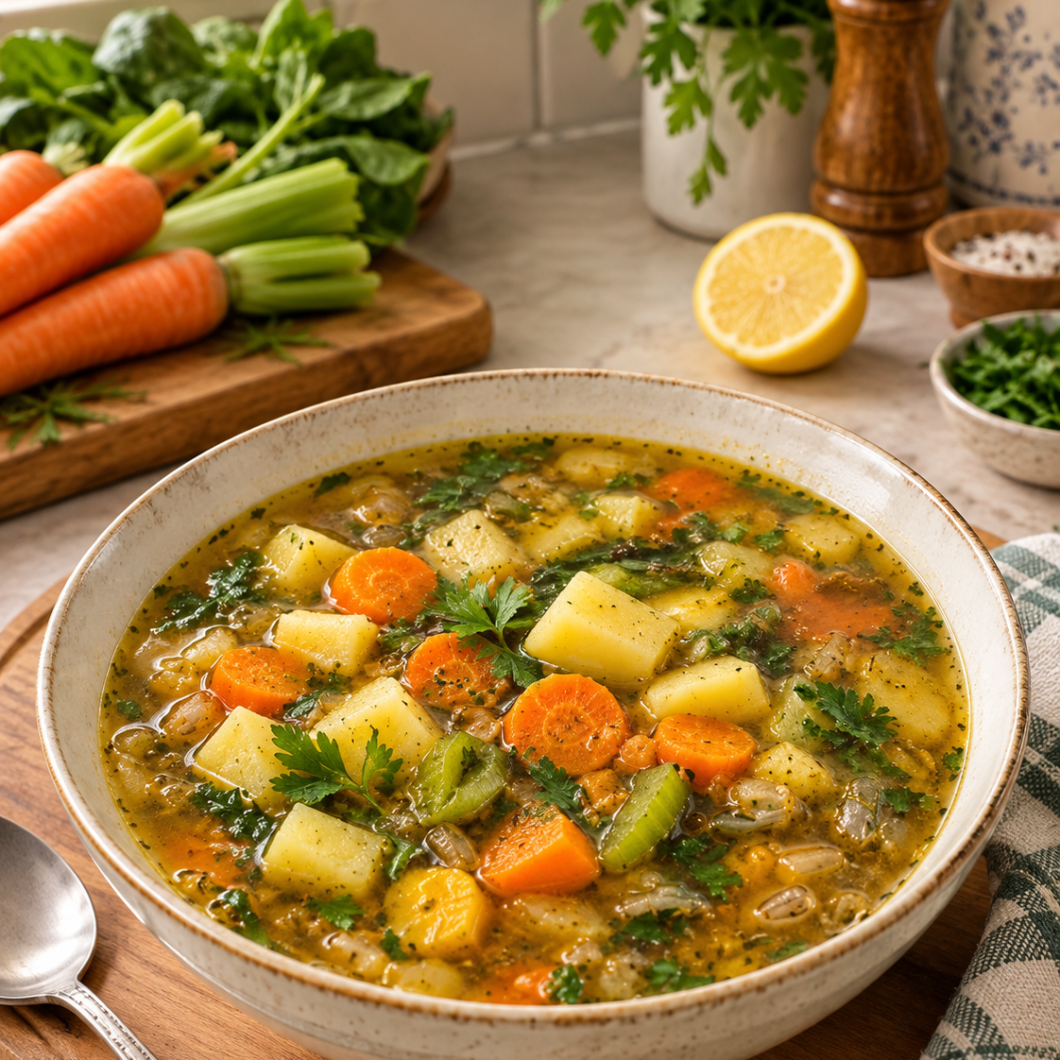
Anti-Inflammatory Vegetable Soup With Turmeric
A hearty one-pot vegetable soup made with red lentils, potatoes, carrots, celery, tomatoes, turmeric, ginger, and fresh greens. It is warm, filling, and finished with parsley and lemon juice for a fresh flavor.
4
servings10
minutes25
minutes260
kcal35
minutesIngredients
1 onion, finely diced
3 garlic cloves, minced
2 medium carrots, sliced
3 celery stalks, sliced
12 oz (340 g) potatoes, peeled and cubed
2 tsp cumin
1 tsp turmeric
2 tsp paprika
1-inch piece of ginger, peeled and grated
1 tsp salt
Freshly ground black pepper, to taste
4 cups (880 ml) low-sodium vegetable broth
1 tbsp tomato paste
8.5 oz (240 g) crushed tomatoes
6 oz (170 g) dry red lentils
2 cups (60 g) baby spinach
½ cup (14 g) fresh parsley, finely chopped
1 tbsp lemon juice
Directions
- Dice the onion, mince the garlic, slice the carrots and celery, cube the potatoes, and grate the ginger. Rinse the red lentils.
- Add the onion, garlic, carrots, celery, potatoes, cumin, turmeric, paprika, ginger, salt, and black pepper to a large pot over medium heat.
- Add a splash of water and cook for 5 minutes, stirring frequently.
- Pour in the vegetable broth and add the tomato paste and crushed tomatoes. Stir well and bring to a boil.
- Add the rinsed red lentils and stir to distribute them evenly.
- Reduce the heat to low, cover, and simmer for 15 minutes, or until the lentils are cooked and the potatoes are tender.
- Taste and adjust the salt and black pepper if needed.
- Add the baby spinach and simmer for another 5 minutes, until wilted.
- Turn off the heat and stir in the chopped parsley and lemon juice.
- Serve warm.
Notes
- Baby spinach can be replaced with kale or another leafy green.
- Red lentils can be replaced with canned brown lentils or chickpeas; adjust the cooking time because canned legumes are already cooked.
- Optional vegetables include sweet potato, peas, bell pepper, butternut squash, green beans, cauliflower, broccoli, and shredded cabbage.
- Fresh rosemary or thyme can be added for a different herbal flavor.
- For a richer soup, sauté the vegetables in olive oil or add canned coconut milk.
- Refrigerate cooled leftovers in an airtight container for up to 5 days.
- Add a little broth or water when reheating if the soup has thickened.
Nutrition Facts
- Total number of serves: 4
- Calories: 260kcal
- Fat: 2g
- Carbohydrates: 54g
- Fiber: 15g
- Sugar: 13g
- Protein: 12g