Scrambled eggs are one of those breakfasts that seem almost too simple to get wrong. Eggs go into a pan, they are stirred around, and breakfast is ready. But there is a big difference between scrambled eggs that are soft, creamy, and tender and eggs that turn dry, rubbery, and crumbly.
The good news is that making soft scrambled eggs at home does not require anything complicated. A few everyday ingredients, the right pan, and a little attention while the eggs cook are enough to make a much better breakfast.
This version keeps things simple. The eggs are mixed with milk, salt, and black pepper before going into a buttered skillet. Instead of stirring them aggressively, the eggs are gently moved around the pan so they cook into soft folds. The butter adds richness while the milk helps keep the finished eggs moist and creamy.
The whole process is quick, which makes this an easy option for busy mornings when you want something warm and satisfying without spending much time in the kitchen.
What Makes These Scrambled Eggs Different?
The biggest difference is the texture.
Good scrambled eggs should be tender rather than tough. They should hold together in soft pieces instead of breaking into tiny dry bits. When cooked properly, the eggs have a moist surface and a creamy center without leaving uncooked liquid around the edges.
The cooking method is just as important as the ingredients. High heat can make eggs cook too quickly, leaving you with a dry texture before you have time to control the consistency. A moderate heat gives you more control and allows the eggs to set gradually.
Another important detail is how the eggs are moved around the skillet. Constant circular stirring can break the eggs into very small pieces. Gentle pushing and folding creates larger, softer curds.
Ingredients You Need
This recipe uses only a handful of ingredients:
- 4 eggs
- 2 tbsp milk, any fat % (optional)
- 1/4 tsp salt
- 2 grinds black pepper
- 1 tbsp / 15g butter (or margarine or oil)
- 4 slices bread, toasted & slathered with butter, for serving
There is no need to add extra seasonings or ingredients. The simple combination allows the flavor of the eggs and butter to come through.
The milk is optional, so you can leave it out if you prefer. When included, it gives the eggs a softer and creamier texture.
Getting the Eggs Ready
Start by cracking the eggs into a bowl. Add the milk, salt, and black pepper.
Whisk everything together until the eggs are combined and the mixture looks even. There is no need to spend a long time whisking. The goal is simply to break up the yolks and whites so that the seasonings and milk are distributed throughout the mixture.
Having the eggs ready before heating the pan is helpful because scrambled eggs cook quickly. Once the butter melts and the egg mixture goes into the skillet, you want to be ready to start cooking immediately.
Choosing the Right Pan
A nonstick skillet works especially well for scrambled eggs because the eggs can be moved easily without sticking to the surface.
A well-seasoned cast-iron skillet can also be used. The important thing is to have enough room for the eggs to spread across the pan without becoming too crowded.
For four eggs, a skillet around 10 inches works well. If you are making a smaller batch, a smaller skillet gives you better control over the cooking.
A rubber spatula is also useful because its flexible edge can move across the bottom and sides of the pan without breaking the eggs apart too aggressively.
Melt the Butter First
Place the skillet over medium heat and add the butter.
Let the butter melt across the bottom of the pan. You want the skillet heated enough to cook the eggs, but not so hot that they immediately become firm when they touch the surface.
If your stove runs particularly hot, lowering the heat slightly can help. Eggs do not need intense heat to cook, and using a gentler temperature gives you more time to achieve the texture you want.
Once the butter has melted, pour the egg mixture into the skillet.
Give the Eggs a Moment
After adding the eggs, do not immediately start stirring.
Let them sit briefly so the bottom has a chance to begin setting. This short pause helps create the larger, soft pieces that make scrambled eggs pleasant to eat.
After that initial moment, take your spatula and begin moving the eggs gently.
Instead of rapidly stirring in circles, use long strokes across the skillet. Push the cooked portion away and allow the liquid egg to move into the open area of the pan.
Continue working around the edges as well. The edges often cook first, so moving them toward the center prevents them from sitting in one place for too long.
Use Gentle Folding Motions
As the eggs begin to set, you will notice soft pieces forming.
This is where folding becomes useful.
Use the spatula to gently scoop and turn portions of the egg over themselves. You are not trying to chop the eggs into tiny pieces. You want to keep the pieces soft and reasonably large.
Continue alternating between pushing and folding.
The uncooked egg will naturally spread across the exposed surface of the skillet. As it touches the hot pan, it begins to set. You can then move that portion toward the rest of the eggs.
This simple movement gives you much more control than vigorous stirring.
Watch the Texture Carefully
Scrambled eggs can go from perfectly cooked to overcooked surprisingly quickly.
Keep an eye on the mixture as you work. When the eggs have mostly come together and there is no obvious raw liquid spreading around the outside, they are close to being finished.
For soft scrambled eggs, they can still look slightly moist at this stage. The eggs will continue cooking from the heat that remains in the pan even after you remove the skillet from the stove.
That is why it is better to stop cooking slightly before the eggs reach the final texture you want.
Remove From the Heat
Once the eggs have formed soft folds, take the skillet off the heat.
Continue gently pushing and folding the eggs for a short time. The remaining heat in the skillet will help finish them without requiring additional cooking over the burner.
This final step is useful because it gives you a little more control over the texture. If you keep the eggs directly over the heat until they look completely dry, they can become firmer than intended by the time they reach your plate.
The finished eggs should look moist and soft rather than dry.
How to Tell When They Are Done
There are a few simple signs to look for.
The eggs should be fully set enough that there is no raw liquid pooling around the outside. At the same time, they should still have a soft and slightly creamy appearance.
They should not be browned or crispy.
If the eggs look dry and crumbly in the skillet, they have probably been cooked too long. Soft scrambled eggs should retain some moisture, and the individual folds should remain tender.
If you prefer your eggs more firmly cooked, you can simply continue cooking them a little longer. The important thing is to avoid letting them become dry.
Serve Them Immediately
Scrambled eggs are best served right after cooking.
For this recipe, serve the eggs with 4 slices of bread, toasted and slathered with butter. The warm toast provides a simple base for the soft eggs and makes the breakfast more filling.
Spoon the scrambled eggs over the toast or serve them alongside it.
Because the eggs continue changing texture as they sit, serving them immediately helps preserve their soft consistency.
Why Low and Controlled Heat Helps
Eggs are delicate and cook quickly. A pan that is too hot can set the outside before you have time to create the right texture.
Medium heat provides enough warmth to cook the eggs without making the process difficult to control. If your burner is particularly strong, reducing the heat can make a noticeable difference.
The goal is not to rush the eggs.
You want the mixture to gradually turn from liquid into soft folds while you move it around the pan. This gives you time to stop cooking when the eggs reach the consistency you prefer.
Avoid Over-Stirring
One of the easiest mistakes with scrambled eggs is moving them too aggressively.
Rapid stirring breaks the eggs into small pieces. Those small pieces have more exposed surface area, which can make the finished eggs seem dry and rough.
Instead, think of the spatula as a tool for moving and folding the eggs.
Push the mixture across the skillet. Let uncooked egg reach the hot surface. Then fold the cooked portions back together.
This produces a much softer texture without requiring any complicated technique.
What the Finished Eggs Should Look Like
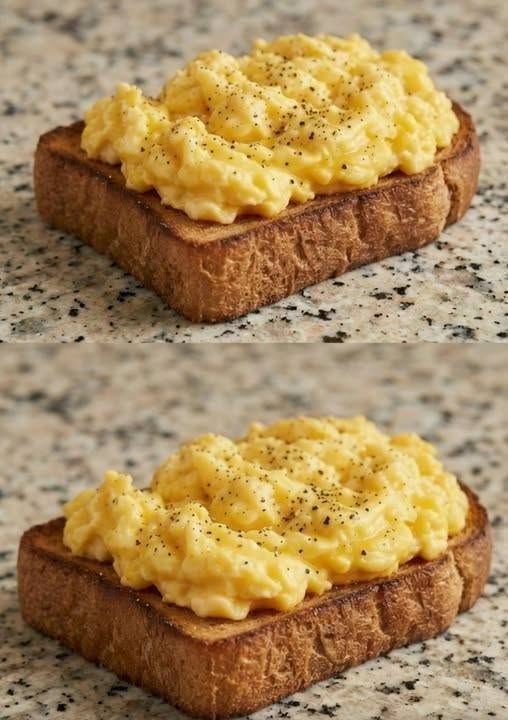
When finished, the scrambled eggs should have a soft yellow appearance with visible folds throughout.
They should not have browned edges or crispy pieces.
The texture should be moist and tender, with enough structure that the eggs stay together when transferred to the toast.
If you run the spatula through the eggs and they immediately break into dry crumbs, they have gone too far. If liquid egg runs freely around the cooked portion, they need a little more time.
The ideal point is somewhere in between: cooked enough to hold together while still soft and creamy.
A Simple Breakfast for Any Morning
There is something useful about a recipe that can be made quickly with ingredients that are already common in the kitchen.
These scrambled eggs work well for a simple weekday breakfast, a relaxed weekend meal, or a quick meal when you do not want to spend much time cooking.
The recipe does not depend on complicated sauces or a long ingredient list. The butter, eggs, milk, salt, and pepper are enough to create a satisfying dish, while the toasted buttered bread turns it into a complete breakfast.
Once you get comfortable with the cooking method, the recipe becomes even easier. The key is simply to pay attention to the pan, use gentle movements, and remove the eggs from the heat before they become dry.
Tips for Better Scrambled Eggs
A few small details can make the process easier:
- Use a nonstick skillet or a well-seasoned cast-iron pan.
- Keep the heat around medium and lower it if your stove runs hot.
- Whisk the eggs, milk, salt, and pepper before they reach the skillet.
- Allow the eggs a brief moment to begin setting after they are added to the pan.
- Use a rubber spatula to push and fold rather than aggressively stir.
- Do not wait until the eggs look completely dry before removing them from the heat.
- Let the remaining heat finish the cooking.
- Serve the eggs immediately with the toasted buttered bread.
The result is a simple plate of scrambled eggs with a soft, tender texture and buttery flavor. It takes only a few minutes from start to finish, but using the right technique makes the final dish feel much more carefully prepared.
Soft and Creamy Scrambled Eggs at Home
 Recipe by admin1
Soft and creamy scrambled eggs made with eggs, milk, butter, salt, and black pepper. The eggs are gently cooked and folded in a skillet, then served with warm toasted bread spread with butter.
2
servings2
minutes8
minutes350
kcal10
minutesIngredients
4 eggs
2 tbsp milk, any fat % (optional)
1/4 tsp salt
2 grinds black pepper
1 tbsp / 15g butter (or margarine or oil)
4 slices bread, toasted & slathered with butter
Directions
- Crack the eggs into a bowl. Add the milk, salt, and black pepper, then whisk until combined.
- Place a nonstick skillet or well-seasoned cast-iron pan over medium heat. Add the butter and let it melt.
- Pour the egg mixture into the skillet. Let it sit briefly until the bottom begins to set.
- Using a rubber spatula, gently push the eggs across the pan in long strokes. Move around the edges as well so the cooked egg moves aside and the uncooked egg reaches the hot surface.
- As the eggs begin to form soft pieces, gently fold them over. Continue pushing and folding until the eggs are mostly set but still soft and moist.
- Remove the skillet from the heat while the eggs are still slightly softer than your preferred final texture.
- Gently fold the eggs for a few more seconds. The remaining heat will finish cooking them.
- Serve immediately with the toasted bread spread with butter.
Notes
- Milk is optional, but it helps give the eggs a softer, creamier texture.
- If your stove runs very hot, reduce the heat slightly to prevent the eggs from cooking too quickly.
- Avoid vigorous circular stirring because it can make the eggs small, rough, and dry.
- Scrambled eggs should be soft and moist rather than browned or crispy.
- For four eggs, a skillet around 10 inches works well. A smaller pan is better for a smaller batch.
Nutrition Facts
- Calories: 350kcal
- Fat: 20g
- Saturated Fat: 9g
- Cholesterol: 380mg
- Sodium: 650mg
- Carbohydrates: 26g
- Fiber: 2g
- Sugar: 3g
- Protein: 18g