I love recipes that deliver classic comfort without turning dinner into an all-day project, and this one-pot cabbage roll soup does exactly that. It captures everything I enjoy about traditional cabbage rolls the savory beef, tender cabbage, rich tomato broth, and perfectly cooked rice—but skips the time-consuming process of rolling and baking cabbage leaves. Instead, everything comes together in one large pot, making it an ideal meal for busy weeknights, meal prep, or whenever I want something warm and satisfying with minimal effort.
One of my favorite things about this soup is how simple the ingredient list is. Most of the ingredients are everyday pantry and refrigerator staples, yet they create layers of rich, homemade flavor that taste like the soup has been simmering for hours. The combination of aromatic onions, garlic, seasoned beef, tomatoes, herbs, and cabbage creates a hearty meal that fills the kitchen with an irresistible aroma.
In this guide, I will walk through every step of making this comforting soup, explain why each ingredient matters, share useful cooking tips, and help you achieve the perfect texture every time. Whether this is your first time cooking cabbage or you have enjoyed cabbage rolls for years, this recipe makes the process approachable, reliable, and incredibly rewarding.
Ingredients Breakdown
Every ingredient in this recipe has an important purpose. Together, they create a balanced soup that is hearty, flavorful, and satisfying.
- Olive Oil
- I begin with olive oil because it helps soften the onions and garlic while preventing them from sticking to the pot. It also adds a subtle richness that builds the base flavor of the soup.
- White Onion
- Diced white onion brings natural sweetness and depth. As it cooks, it becomes soft and blends into the broth, creating a savory foundation that supports every other ingredient.
- Garlic
- Fresh minced garlic adds bold aroma and warmth. Cooking it briefly after the onion releases its natural oils without allowing it to burn, which keeps the flavor balanced.
- Lean Ground Beef
- Lean ground beef provides the hearty texture that makes this soup feel like a complete meal. Using lean beef keeps the soup flavorful without making it overly greasy. If there is excess fat after browning, I simply drain it before adding the remaining ingredients.
- Green Cabbage
- Green cabbage is the heart of the recipe. As it simmers, it softens beautifully while still maintaining enough structure to give every spoonful a satisfying bite. Cutting it into evenly sized pieces helps it cook uniformly.
- Long Grain Rice
- Long grain rice absorbs the flavorful broth while staying pleasantly firm. Unlike some shorter-grain varieties, it is less likely to become overly sticky, making it an excellent choice for soup.
- Tomato Sauce
- Tomato sauce creates the rich, slightly tangy broth that gives cabbage roll soup its signature taste. It blends smoothly with the beef broth to produce a comforting base.
- Beef Broth
- Beef broth deepens the savory flavor while providing the liquid needed to cook both the cabbage and rice. A quality broth makes a noticeable difference in the finished soup.
- Water
- The additional water balances the tomato sauce and broth, giving the soup the ideal consistency without becoming too thick.
- Salt
- Salt enhances every ingredient and ties all the flavors together. I always taste the soup near the end of cooking before deciding whether any extra seasoning is needed.
- Oregano
- Dried oregano contributes an earthy herbal flavor that complements the tomatoes and beef beautifully.
- Chili Flakes
- A small amount of chili flakes adds gentle warmth rather than overwhelming heat. If serving people who prefer mild food, this can easily be reduced.
- Cinnamon
- Cinnamon may seem unexpected, but it brings subtle warmth that balances the acidity of the tomatoes. The flavor remains delicate rather than sweet, giving the soup extra depth.
- Brown Sugar (Optional)
- If the tomato sauce tastes especially acidic, brown sugar helps round out the flavors. Since tomato sauces vary by brand, this ingredient is optional but helpful.
- Soy Sauce
- Soy sauce adds a touch of umami that strengthens the savory character of the broth without making it taste Asian-inspired.
Possible Substitutions
Ground turkey or ground pork can replace the ground beef if desired. Brown rice works well instead of long grain white rice but requires additional cooking time. Crushed tomatoes may be used if tomato sauce is unavailable, though the broth will have a chunkier texture. Fresh oregano can replace dried oregano by increasing the amount slightly.
Whenever possible, choose fresh cabbage, firm onions, and fresh garlic, since these simple ingredients contribute significantly to the soup’s overall flavor.
Equipment Needed
One reason I return to this recipe often is that it requires only a handful of basic kitchen tools.
- A large heavy-bottomed soup pot or Dutch oven is the most important piece of equipment. Its thick base distributes heat evenly, helping the onions cook gently and preventing the soup from scorching during the simmering stage.
- A wooden spoon or heat-resistant silicone spoon is perfect for stirring the beef and scraping the flavorful browned bits from the bottom of the pot. Those browned bits add extra depth to the broth.
- A sharp chef’s knife and a sturdy cutting board make chopping the cabbage, onion, and garlic much easier and safer. Keeping the cabbage pieces roughly the same size ensures even cooking.
- Measuring cups and measuring spoons help maintain the correct balance of broth, rice, seasonings, and tomato sauce. Accurate measurements are especially important for soups because too much or too little liquid can change the consistency.
- Finally, a ladle makes serving simple and helps distribute the broth, vegetables, rice, and beef evenly into each bowl.
- If you do not own a Dutch oven, any large stockpot with a tight-fitting lid works just as well. The goal is simply to provide enough space for the soup to simmer comfortably without boiling over.
Step-by-Step Preparation Process
Making this cabbage roll soup is straightforward, but paying attention to each stage ensures the finished dish has the best flavor and texture.
Phase 1: Build the Flavor Base (About 5 Minutes)
- Begin by heating 1 tablespoon of olive oil in a large pot over medium heat. Wait until the oil shimmers slightly before adding the diced white onion.
- Cook the onion for about three minutes, stirring occasionally. It should become soft and translucent rather than browned. This gentle cooking allows the onion’s natural sweetness to develop without creating bitter flavors.
- Next, stir in the minced garlic and cook for about 30 to 60 seconds. Garlic cooks very quickly, so keep stirring to prevent it from burning. Once the garlic becomes fragrant, it is ready for the next step.
- This simple combination of onion and garlic creates the aromatic base that gives the soup its homemade character.
Phase 2: Brown the Ground Beef (About 3 Minutes)
- Add the lean ground beef directly into the pot.
- Use your spoon to break the meat into small crumbles while stirring. Continue cooking until the beef begins to brown. It does not need to be completely cooked at this stage because it will finish cooking during the simmer.
- If your beef releases a large amount of fat, carefully drain the excess before continuing. Using lean ground beef usually keeps this step minimal while still providing rich flavor.
- Breaking the meat into even pieces ensures every spoonful contains a balanced mix of beef instead of large chunks.
Phase 3: Add the Vegetables and Rice (2 Minutes)
- Add the chopped cabbage followed by the long grain rice.
- Stir thoroughly so the cabbage begins to coat with the flavorful beef mixture. At first, the cabbage may seem like too much for the pot, but do not worry. As it cooks, it shrinks considerably and blends beautifully into the soup.
- Mixing the rice with the vegetables before adding the liquids helps distribute it evenly throughout the pot, preventing clumps later.
Phase 4: Pour in the Liquids (2 Minutes)
- Add the tomato sauce, beef broth, and water.
- Stir slowly, making sure to scrape the bottom of the pot. This releases the browned bits created while cooking the beef, adding another layer of savory flavor to the broth.
- The broth should appear rich, smooth, and evenly mixed before the seasonings are added.
Phase 5: Season the Soup (2 Minutes)
- Sprinkle in the salt, oregano, chili flakes, cinnamon, optional brown sugar, and soy sauce.
- Stir thoroughly until every seasoning is fully incorporated.
- Although cinnamon may seem unusual, it adds gentle warmth rather than sweetness. Combined with oregano and soy sauce, it creates a surprisingly balanced flavor profile that resembles traditional cabbage rolls.
- Avoid adding extra salt immediately. The broth will become slightly more concentrated as the soup simmers, so tasting near the end always gives a more accurate idea of the final seasoning.
Phase 6: Simmer Until Tender (20–23 Minutes)
- Increase the heat until the soup reaches a gentle boil.
- Once boiling, immediately reduce the heat to low, cover the pot with a lid, and allow the soup to simmer for 20 to 23 minutes.
- During this time, several important things happen. The cabbage softens, the rice absorbs the flavorful broth, and the beef finishes cooking completely. The broth also thickens slightly as the rice releases a little starch.
- Avoid lifting the lid repeatedly because each time steam escapes, the cooking time may increase.
- If you notice the soup becoming thicker than expected near the end of cooking, stir in a small amount of additional beef broth or water until it reaches your preferred consistency.
Phase 7: Final Taste Test and Serving
- Once the rice is tender and the cabbage is soft, remove the lid and stir the soup well.
- Taste a spoonful of broth before serving. If needed, adjust the seasoning with a little extra salt or another pinch of oregano or chili flakes.
- The finished soup should have tender cabbage, fully cooked rice, flavorful beef, and a rich tomato broth that lightly coats the spoon without feeling overly thick.
- Ladle the hot soup into serving bowls and finish each portion with a generous dollop of sour cream if desired. The cool cream melts gently into the hot broth, adding a smooth, tangy richness that perfectly balances the savory flavors.
- One final tip I always follow is allowing the soup to rest for about five minutes before serving. This short resting period gives the flavors time to settle together and makes every bowl taste even more comforting.
Expert Tips & Tricks
- This cabbage roll soup is already simple to prepare, but a few small techniques make a noticeable difference in both flavor and texture. Over time, I have found that paying attention to the little details creates a soup that tastes like it has been simmering for hours.
- One of the biggest tips is to avoid rushing the onions. Let them cook until they become soft and translucent before adding the garlic. This develops a naturally sweet, savory base that gives the broth much more depth.
- When browning the ground beef, break it into small crumbles instead of leaving large chunks. Smaller pieces distribute evenly throughout the soup, so every spoonful contains beef, cabbage, rice, and broth.
- Cut the cabbage into bite-sized pieces rather than large strips. Uniform pieces cook evenly and are easier to eat. Oversized cabbage pieces can remain slightly tough while smaller pieces become perfectly tender.
- The rice should be added directly to the soup instead of being cooked separately. As it cooks, it absorbs the tomato and beef flavors while releasing a little starch, giving the broth a naturally rich consistency.
- Do not skip the cinnamon. Although it may sound unusual, the small amount does not make the soup taste sweet. Instead, it softens the acidity of the tomatoes and adds warmth that resembles traditional stuffed cabbage rolls.
- Taste the soup only after it has finished simmering. The broth changes considerably during cooking, and adjusting the seasoning too early can easily result in an overly salty soup.
- If the soup becomes thicker after sitting for a while, simply stir in a splash of beef broth or hot water before serving. This brings it back to its original consistency without affecting the flavor.
- For an even richer taste, let the soup rest for five to ten minutes after cooking. This short resting period allows the flavors to blend together beautifully.
- Finally, serve each bowl with a generous spoonful of sour cream. As it melts into the hot broth, it adds a creamy tang that balances the rich tomato base perfectly.
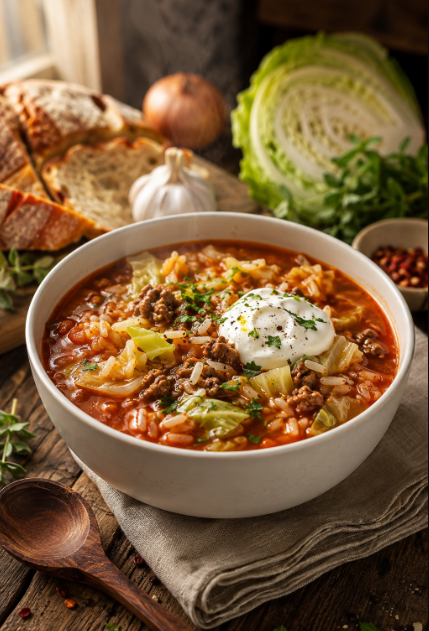
Cabbage Roll Soup in One Pot (No Rolling Needed)
 Recipe by admin1
This easy one-pot cabbage roll soup delivers all the comforting flavors of classic stuffed cabbage rolls without the extra work of rolling and baking. Made with lean ground beef, tender cabbage, rice, and a rich tomato broth, it’s a hearty family-friendly meal that’s ready in about 40 minutes.
6
servings15
minutes25
minutes345
kcal40
minutesIngredients
1 ablespoon olive oil
1 white onion, diced
3 cloves garlic, minced
1 pound lean ground beef
1 cups green cabbage, chopped
4 cups green cabbage, chopped
½ cup long grain rice
3 cups tomato sauce
4 cups beef broth
1 cup water
2 teaspoons salt
1 tablespoon dried oregano
1 teaspoon chili flakes
½ teaspoon cinnamon
1 tablespoon brown sugar (optional)
2 teaspoons soy sauce
Directions
- Heat the olive oil in a large pot over medium heat.
- Add the diced onion and cook for 3–4 minutes until softened.
- Stir in the minced garlic and cook for about 30 seconds until fragrant.
- Add the ground beef and cook, breaking it apart, until it begins to brown.
- Stir in the chopped cabbage and long grain rice.
- Pour in the tomato sauce, beef broth, and water, stirring well.
- Add the salt, oregano, chili flakes, cinnamon, brown sugar (if using), and soy sauce. Mix thoroughly.
- Bring the soup to a gentle boil.
- Reduce the heat to low, cover, and simmer for 20–23 minutes until the rice and cabbage are tender.
- Taste and adjust the seasoning if needed.
- Serve hot with a dollop of sour cream and fresh parsley if desired.
Notes
- Refrigerate leftovers in an airtight container for up to 4 days.
- Freeze for up to 3 months.
- Add extra beef broth when reheating if the rice has absorbed too much liquid.
- Ground turkey, chicken, or pork can be substituted for the ground beef.
- Brown rice may be used but requires a longer cooking time.
- Fresh thyme, parsley, or bay leaves make excellent flavor additions.
- For a spicier version, increase the chili flakes or add your favorite hot sauce.
Nutrition Facts
- Calories: 345kcal
- Fat: 16g
- Sodium: 1060mg
- Carbohydrates: 27g
- Fiber: 4g
- Sugar: 9g
- Protein: 22g




)