Chicken breast is one of those ingredients I always keep in my kitchen because it can turn into a satisfying meal in very little time. While there are countless ways to prepare it, this pan-seared version has become one of my favorite choices whenever I need dinner on the table quickly without sacrificing flavor.
The secret is not using expensive ingredients or complicated cooking methods. Instead, a handful of pantry spices create a savory crust, while a quick butter sauce made in the same skillet adds another layer of richness. Everything comes together in about 12 minutes, making it ideal for busy weeknights, last-minute meals, or even a relaxed weekend lunch.
One thing I appreciate most about this recipe is how versatile it is. The seasoned chicken is delicious enough to serve on its own, but the buttery pan sauce takes it to another level. Depending on what I have available, I sometimes make both, or I simply prepare the chicken with the seasoning blend and enjoy it without the sauce.
The ingredients are simple, yet each one has a purpose. Paprika gives the chicken a beautiful golden color, garlic and onion powders add savory depth, cumin provides a gentle earthy note, and just a little flour helps create a light, crispy coating that browns beautifully in butter.
Instead of spending hours preparing dinner, this recipe proves that a few basic ingredients can create something incredibly satisfying. Once you make it a few times, you will probably find yourself reaching for it whenever you need a dependable chicken recipe.
Why This Chicken Breast Recipe Works
- Many chicken breast recipes struggle with one common problem—they become dry and bland. This method avoids that by slicing each chicken breast into thinner pieces before cooking. Thin cutlets cook much faster than thick chicken breasts, reducing the chance of overcooking while creating a beautiful golden crust.
- Cooking over high heat also helps lock in moisture. Since each piece spends only a few minutes in the skillet, the outside develops a flavorful crust while the inside stays juicy.
- Another reason this recipe works so well is that the seasoning is balanced rather than overpowering. Every spice contributes something different without hiding the natural flavor of the chicken.
- The butter sauce also deserves attention because it uses all of the flavorful browned bits left behind after cooking the chicken. Instead of washing away those delicious flavors, they become the foundation of a rich pan sauce that perfectly complements every bite.
Ingredients You Will Need
- This recipe uses everyday ingredients that many home cooks already keep in the pantry.
- Chicken breast serves as the main ingredient. Large boneless chicken breasts are sliced horizontally to create thinner steaks that cook quickly and evenly.
- Paprika adds warmth, mild sweetness, and an attractive reddish-golden color to the crust.
- Onion powder provides a subtle sweetness and savory flavor that blends beautifully with the other spices.
- Garlic powder adds richness and enhances the overall seasoning.
- Cumin introduces a gentle earthy flavor that gives the seasoning blend extra depth without becoming overpowering.
- Salt and black pepper bring all of the flavors together.
- A small amount of all-purpose flour may seem insignificant, but it helps create a delicate coating that becomes lightly crisp during cooking.
- Unsalted butter is used both for cooking the chicken and finishing the sauce, creating a rich flavor that oil alone cannot provide.
- Dry white wine or chicken stock helps loosen the flavorful bits from the skillet while adding depth to the finished sauce.
- Fresh parsley is optional, but it brightens the finished dish with freshness and color.
Why the Flour Makes Such a Difference
- Only a small amount of flour is used, but it plays an important role in the finished texture.
- Rather than creating a thick breaded coating, it lightly covers the chicken together with the spices. As the chicken cooks, the flour helps the butter create a crisp, golden crust that seals in moisture while adding extra texture.
- It also helps the butter sauce cling to the chicken instead of immediately sliding off.
- If you have ever wondered why restaurant-style pan-seared chicken develops such an attractive crust, this simple trick is often part of the answer.
Preparing the Chicken
- Before seasoning the chicken, each breast is sliced horizontally into two thinner pieces.
- This simple step makes an enormous difference. Thin pieces cook much more evenly than thick chicken breasts, meaning you can achieve a beautiful golden exterior without drying out the center.
- There is no need to pound the chicken with a meat mallet because the thinner pieces cook quickly on their own.
- Once sliced, the seasoning mixture is prepared by combining the paprika, onion powder, garlic powder, cumin, salt, pepper, and flour in one bowl.
- Instead of dipping the chicken into separate bowls, simply sprinkle the mixture over both sides and gently press it onto the surface using your fingertips. This keeps preparation quick while ensuring every piece is evenly coated.
Cooking the Chicken
- A large non-stick skillet works best because it allows the chicken to brown evenly without sticking.
- Butter is melted over high heat until it becomes foamy. Once the butter is hot, place the chicken pieces into the skillet in a single layer.
- Although the pieces may seem close together, they will naturally shrink slightly as they cook.
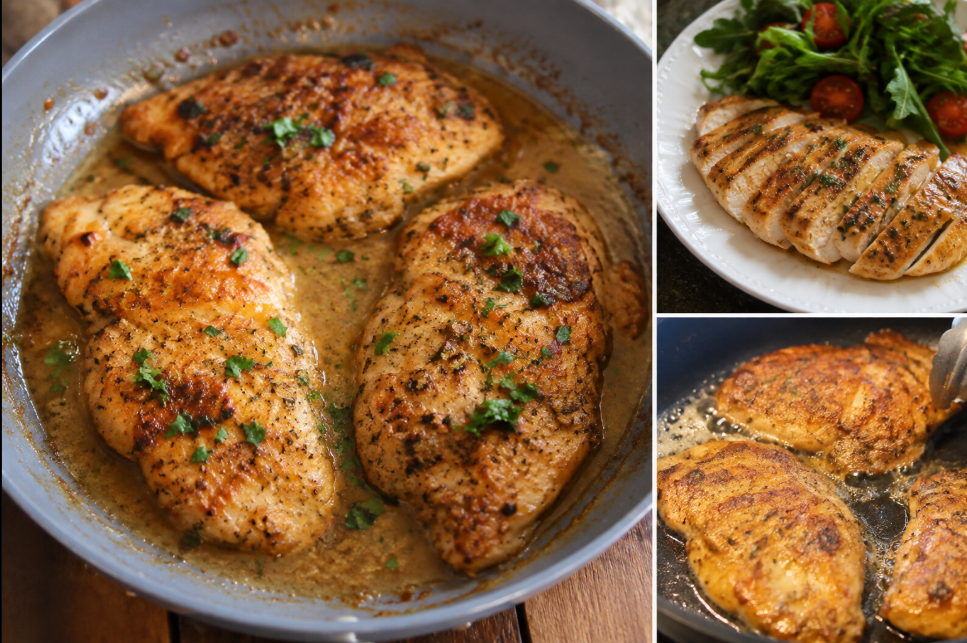
- Cook each side for about two and a half minutes. During cooking, occasionally tilt the pan so the melted butter flows underneath each piece. This helps the crust brown evenly while adding even more buttery flavor.
- The chicken is ready when both sides develop a deep golden color.
- Rather than relying only on cooking time, let the color guide you. A beautifully browned crust usually means the chicken has reached the perfect stage for juicy results.
The Importance of Resting
- One of the easiest ways to improve any chicken recipe is to allow the meat to rest after cooking.
- Once removed from the skillet, place the chicken on a plate and leave it undisturbed for about three minutes.
- During this short rest, the juices naturally redistribute throughout the meat. If the chicken is sliced immediately, much of that moisture escapes onto the plate instead of staying inside the meat.
- Those few minutes make a noticeable difference in both tenderness and juiciness.
- While the chicken rests, there is just enough time to prepare the butter sauce.
Making the Quick Butter Sauce
- One of my favorite parts of this recipe is that the sauce takes almost no effort.
- The same skillet used for cooking the chicken already contains browned bits of seasoning and butter. Those little pieces hold tremendous flavor and should never go to waste.
- Pour the dry white wine or chicken stock into the hot skillet.
- As the liquid simmers, gently scrape the bottom of the pan with a spatula to release all of those flavorful browned bits.
- Allow the liquid to reduce for about one minute until it becomes slightly concentrated.
- Finally, stir in the remaining butter until completely melted and smooth.
- The finished sauce is silky, rich, and packed with concentrated flavor despite requiring only a minute or two to prepare.
Why This Sauce Complements the Chicken
This is not a heavy cream sauce or thick gravy.
- Instead, it is a light pan sauce designed to enhance rather than cover the chicken.
- The butter provides richness, while the wine or chicken stock adds depth and balances the seasoning left in the skillet.
- Although only a small amount of sauce is produced, every spoonful carries concentrated flavor, making even a little go a long way.
- Drizzle it directly over the chicken just before serving so every bite gets a touch of buttery goodness.
Easy Ways to Serve It
- This chicken pairs well with many side dishes, making it useful throughout the week.
- Fresh green salads provide a light contrast to the buttery chicken.
- Mashed potatoes absorb the pan sauce beautifully.
- Steamed vegetables such as broccoli, green beans, asparagus, or carrots create a balanced dinner without much extra work.
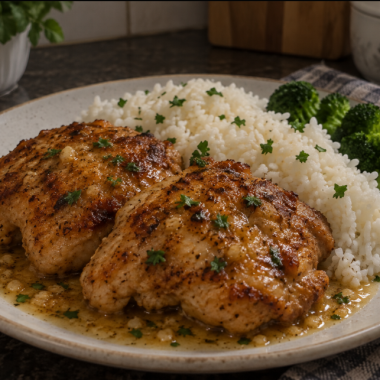
- Rice also works wonderfully because it soaks up every bit of the flavorful butter sauce.
- For a heartier meal, serve the chicken with roasted potatoes or warm bread to enjoy every last drop of sauce.
- Because the seasoning is savory rather than spicy, it complements almost any vegetable or starch.
Helpful Tips for the Best Results
- Using large chicken breasts makes slicing easier and creates evenly sized portions.
- Allow the skillet to become fully hot before adding the chicken so the crust develops immediately.
- Avoid moving the chicken too often while cooking. Leaving it undisturbed allows a beautiful golden crust to form.
- Do not overcrowd the skillet if doubling the recipe. Cooking too many pieces at once lowers the pan temperature and prevents proper browning.
- Always let the chicken rest before serving to keep it juicy.
- Use unsalted butter whenever possible so you have better control over the seasoning.
- If using white wine, choose a dry variety rather than a sweet one so the sauce remains balanced.
Simple Variations
- One of the reasons I enjoy making this recipe is how easily it can be adapted.
- Sometimes I prepare only the seasoned chicken without making the butter sauce when I want an even quicker dinner.
- Other times I season the chicken simply with salt and black pepper and let the butter sauce provide most of the flavor.
- Boneless chicken thighs can also be used instead of chicken breast. Since thighs are naturally thicker, they simply require a slightly longer cooking time.
- You can also substitute chicken stock for the white wine if you prefer not to cook with wine. The sauce will still develop a rich, savory flavor.
Storing Leftovers
- If you have leftovers, allow the chicken to cool completely before transferring it to an airtight container.
- It will stay fresh in the refrigerator for up to three days.
- For longer storage, freeze the cooked chicken for up to three months. Keep in mind that while the flavor remains excellent, the crispy coating may soften slightly after thawing.
- To reheat, warm the chicken gently in a skillet over medium-low heat or in a low-temperature oven until heated through. This helps preserve its texture better than using high heat.
Pan-Seared Country Seasoned Chicken Breast with Butter Sauce
 Recipe by admin1
A quick and flavorful chicken breast recipe made with a simple country-style seasoning and finished with a rich butter pan sauce. The chicken develops a lightly crisp golden crust while staying juicy inside, making it an easy meal for busy weeknights or whenever you want a satisfying homemade dinner using everyday pantry ingredients.
4
servings5
minutes7
minutes12
minutesIngredients
- For the Chicken
2 large chicken breasts (250–300 g / 8–10 oz each), cut in half horizontally to make 4 thin steaks
20 g (1½ tablespoons) unsalted butter (or 1½ tablespoons olive oil)
- For the Savory Seasoned Crust
1 teaspoon paprika (regular or sweet)
½ teaspoon onion powder
½ teaspoon garlic powder
¼ teaspoon ground cumin
¾ teaspoon cooking salt (kosher salt)
⅛ teaspoon black pepper
½ tablespoons all-purpose flour
- For the Butter Sauce
⅓ cup dry white wine or low-sodium chicken stock
30 g (2 tablespoons) unsalted butter
1 tablespoon roughly chopped fresh parsley (optional but recommended)
Directions
- Prepare the Chicken
Slice each chicken breast horizontally to create two thinner pieces. This gives you four evenly sized chicken steaks that cook quickly and evenly. - Make the Seasoning
In a small bowl, combine the paprika, onion powder, garlic powder, cumin, salt, black pepper, and flour until well mixed. - Season the Chicken
Sprinkle the seasoning mixture over both sides of each chicken piece. Gently press the mixture onto the surface with your fingertips so every piece is evenly coated. Shake off any excess flour mixture. - Sear the Chicken
Heat a large non-stick skillet over high heat.
Add the 20 g of butter and allow it to melt until foamy.
Place the chicken into the hot pan in a single layer.
Cook for about 2½ minutes per side, or until both sides are deep golden brown and the internal temperature reaches 67°C (153°F).
Transfer the chicken to a plate and let it rest for 3 minutes. - Make the Butter Sauce
Reduce the heat slightly to medium-high.
Pour the white wine or chicken stock into the same skillet.
Use a spatula to scrape the browned bits from the bottom of the pan while the liquid simmers.
Cook for 1 to 1½ minutes, or until the liquid has reduced by about half.
Add the remaining 30 g butter and stir until completely melted and the sauce becomes smooth. - Finish and Serve
Place the rested chicken onto serving plates.
Spoon the warm butter sauce over each piece.
Sprinkle with chopped parsley, if using, and serve immediately.
Notes
- 1. Chicken Thickness
Cutting the chicken into thinner steaks helps it cook evenly and keeps it juicy without needing to pound the meat. - 2. Flour
The small amount of flour creates a light golden crust and helps the butter sauce cling to the chicken. - 3. Wine Substitute
Chicken stock works well if you prefer not to use wine. Water can also be used, although the sauce will have a milder flavor. - 4. Butter
Unsalted butter gives the best control over seasoning and creates a richer pan sauce. - 5.Doubling the Recipe
If making a larger batch, cook the chicken in separate skillets if possible. Overcrowding the pan can prevent proper browning and may burn the flavorful bits needed for the sauce. - 6. Using Chicken Thighs
Boneless, skinless chicken thighs can replace chicken breasts. Increase the cooking time slightly until fully cooked. - 7. Sauce Quantity
This recipe makes a light pan sauce rather than a thick gravy. It is intended to lightly coat the chicken instead of covering it completely.
Nutrition Facts
- Calories: 335kcal
- Fat: 17g
- Saturated Fat: 10g
- Polyunsaturated Fat: 1g
- Monounsaturated Fat: 5g
- Cholesterol: 145mg
- Sodium: 590mg
- Potassium: 690mg
- Carbohydrates: 4g
- Fiber: 0.5g
- Sugar: 0.5g
- Protein: 39g
- Vitamin A: 540mcg
- Vitamin C: 1mg
- Calcium: 18mg
- Iron: 1.2mg