Few homemade bread recipes are as versatile, comforting, and satisfying as freshly cooked sourdough flatbread. These rustic skillet flatbreads have a beautifully chewy texture, lightly crisp golden spots, and a deep tangy flavor that only natural sourdough fermentation can create. Whether you use them for wraps, dipping into soups, serving beside grilled meats, or transforming into homemade pizzas, this easy sourdough flatbread recipe quickly becomes a staple in any kitchen.
One of the best things about making flatbread with sourdough starter is how simple and forgiving the dough is. Unlike many artisan bread recipes that require shaping expertise or advanced baking techniques, this recipe is beginner-friendly and incredibly flexible. The dough comes together with only a few pantry staples: bread flour, water, olive oil, salt, and active sourdough starter. After a slow fermentation, the dough is rolled into rounds and cooked on a hot skillet until puffed, blistered, and perfectly tender.
The result is a soft sourdough flatbread with incredible flavor, slightly smoky charred spots, and a texture that works beautifully for wraps, sandwiches, dipping, or even homemade pita chips. These flatbreads stay pliable and soft while warm, making them ideal for everything from breakfast wraps to Mediterranean-style dinners.
Why This Homemade Sourdough Flatbread Recipe Works
Traditional sourdough fermentation develops flavor naturally over time. Instead of relying on commercial yeast alone, the sourdough starter slowly ferments the dough, creating complex flavor, improved texture, and a softer bite.
The olive oil in the dough helps keep the flatbreads tender while also giving them elasticity and flexibility. This means they roll out beautifully without cracking and remain soft after cooking.
Cooking the flatbreads in a hot cast iron skillet creates the signature golden bubbles and light char marks that make homemade flatbread so irresistible. The quick cooking time locks moisture into the dough while producing a delicious slightly crisp exterior.
Unlike oven-baked bread loaves, these sourdough flatbreads cook in just minutes, making them ideal for busy families or quick homemade meals.
What Makes Sourdough Flatbread Different?
Sourdough flatbread has a more developed flavor compared to standard flatbread recipes. The natural fermentation creates a slight tanginess and deeper bread flavor while improving the texture of the dough.
Because the dough ferments slowly, it often becomes easier to digest for many people. The fermentation process also enhances the overall chewiness and creates a softer interior.
These flatbreads are thinner than traditional sandwich bread but thicker and softer than tortillas. They are sturdy enough for wraps while still remaining light and flexible.
Simple Pantry Ingredients With Big Flavor
One reason this easy sourdough flatbread recipe is so popular is because it uses very basic ingredients. You likely already have everything needed in your kitchen.
Bread Flour
Bread flour gives the flatbread structure and chewiness. The higher protein content helps develop gluten, resulting in a soft but elastic dough that puffs beautifully during cooking.
Water
Water hydrates the flour and activates gluten development. Using room-temperature water helps the dough ferment steadily.
Active Sourdough Starter
An active and bubbly sourdough starter is essential for proper fermentation. A fed starter creates better rise, flavor, and texture.
Olive Oil
Olive oil keeps the dough tender and helps create soft, pliable flatbreads. It also adds richness and subtle flavor.
Salt
Salt balances flavor and strengthens gluten structure, improving both texture and fermentation control.
The Importance of Proper Fermentation
Fermentation is what gives sourdough recipes their unique flavor and airy texture. During bulk fermentation, natural yeast and beneficial bacteria slowly develop flavor compounds and create gas bubbles in the dough.
Since this recipe uses a generous amount of sourdough starter, the dough ferments more quickly than many sourdough bread recipes. However, kitchen temperature still plays a major role.
Warm kitchens may ferment the dough in just a few hours, while cooler kitchens can take significantly longer.
Instead of relying strictly on time, watch the dough itself. Properly fermented dough becomes:
- Puffy and airy
- Slightly domed
- Soft and elastic
- Nearly doubled in size
This visual approach helps produce consistently delicious flatbread every time.
Mixing the Dough
One of the easiest parts of this recipe is the dough mixing process. All ingredients can simply be added to the bowl together.
At first, the dough appears shaggy and rough, but after resting briefly, the flour absorbs moisture and becomes easier to knead.
This resting stage, sometimes called the hydration rest, allows gluten to begin forming naturally before kneading starts.
Kneading for a Smooth Texture
Kneading develops gluten, which creates the soft and chewy texture sourdough flatbread is known for.
You can knead by hand or use a stand mixer with a dough hook attachment.
When properly kneaded, the dough becomes:
- Smooth
- Elastic
- Slightly tacky
- Soft but not sticky
If kneading by hand, expect the process to take around 10 minutes depending on technique and dough hydration.
Using a stand mixer reduces effort and speeds up the process significantly.
Why Resting the Dough Balls Matters
After dividing the dough into portions, allowing the dough balls to rest is very important.
This resting period relaxes the gluten, making the dough easier to roll out. Without resting, the dough tends to shrink back while rolling.
A short 30-minute rest results in soft flatbreads that stretch easily and maintain their shape during cooking.
Rolling the Flatbreads
The dough can be rolled thin for wrap-style flatbreads or slightly thicker for naan-style bread.
Light dusting with semolina or cornmeal helps prevent sticking while also adding subtle texture to the finished bread.
Because of the olive oil in the dough, the flatbreads remain flexible and easy to shape.
If the dough springs back while rolling, simply allow it to rest for a few more minutes before continuing.
Cooking on a Hot Skillet
A cast iron skillet or heavy frying pan works best for cooking sourdough flatbread.
High heat is essential because the flatbread needs to cook quickly. The intense heat creates bubbles and golden brown spots while sealing moisture inside.
As the dough hits the hot skillet, it begins puffing almost immediately. Air pockets form throughout the bread, creating soft layers and chewy texture.
Each side cooks very quickly, usually around one minute per side.
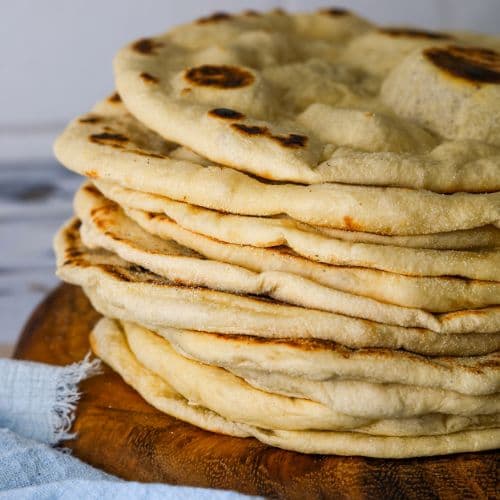
The finished flatbread should have:
- Golden blistered spots
- Light charring
- Puffy air pockets
- Soft flexible texture
Keeping Flatbreads Soft
Freshly cooked flatbreads can dry out quickly if left uncovered.
Stacking them together and wrapping in a clean tea towel traps steam and keeps the bread soft and pliable.
This simple step makes a huge difference in texture and prevents the flatbreads from becoming tough.
Delicious Ways to Serve Sourdough Flatbread
These homemade flatbreads pair beautifully with countless meals and cuisines.
Wraps and Sandwiches
Use them for:
- Chicken wraps
- Falafel wraps
- Gyros
- Breakfast burritos
- Grilled vegetable wraps
Dipping Bread
Serve alongside:
- Hummus
- Tzatziki
- Garlic yogurt dip
- Baba ganoush
- Olive tapenade
Flatbread Pizza
Leftover flatbreads make amazing quick pizzas.
Simply top with sauce, cheese, and favorite toppings before baking until crisp.
Homemade Chips
Cut into triangles, drizzle with olive oil, and bake until crisp for sourdough pita chips.
Helpful Tips for Perfect Flatbread
Use an Active Starter
A bubbly, fed starter creates the best rise and flavor.
Don’t Rush Fermentation
Proper fermentation improves texture and taste significantly.
Keep the Pan Hot
High heat creates the best bubbles and charred spots.
Avoid Too Much Flour
Too much flour while rolling can make flatbread dry.
Cook Quickly
Flatbread should cook fast to remain soft and tender.
Storage Instructions
These sourdough flatbreads store very well.
Room Temperature
Keep in an airtight container for up to 2 days.
Refrigerator
Store for up to 5 days and reheat before serving.
Freezer
Freeze stacked flatbreads with parchment paper between layers for up to 3 months.
Reheat directly from frozen in a skillet or oven.
Flavor Variations
This recipe can easily be customized.
Try adding:
- Garlic powder
- Fresh herbs
- Cracked black pepper
- Chili flakes
- Sesame seeds
- Za’atar seasoning
These additions create exciting flavor combinations while keeping the same soft texture.
Why Homemade Flatbread Is Better Than Store-Bought
Fresh homemade sourdough flatbread has superior flavor, texture, and freshness compared to packaged versions.
Homemade flatbread contains:
- No preservatives
- Better texture
- More natural flavor
- Cleaner ingredients
- Customizable seasoning
The fresh aroma and warm chewy texture are impossible to match with store-bought bread.
Soft & Chewy Homemade Sourdough Flatbread
 Recipe by admin1
These soft skillet sourdough flatbreads are chewy, tender, and packed with naturally tangy sourdough flavor. Made with simple pantry ingredients and cooked in a hot skillet, they develop beautiful golden bubbles and lightly charred spots while staying soft and flexible. Perfect for wraps, sandwiches, dipping, flatbread pizzas, soups, curries, or enjoying warm with your favorite dips.
18
servings20
minutes25
minutes225
kcal4
hours4
hours44
minutesIngredients
500 g bread flour
280 g water
200 g active sourdough starter
30 g olive oil
15 g salt
Semolina or cornmeal, for rolling
A little olive oil, for cooking
Directions
- Mix the Dough: Combine bread flour, water, active sourdough starter, olive oil, and salt in a large bowl. Mix until a rough dough forms. Cover and rest for 30 minutes.
- Knead: Knead by hand for about 10 minutes, or use a stand mixer with a dough hook until the dough becomes smooth, soft, and elastic.
- Bulk Ferment: Cover the bowl and let the dough ferment until it becomes puffy and approximately doubles in size. The exact time will depend on room temperature and starter activity.
- Divide: Transfer the dough to a lightly floured surface and divide it into approximately 50 g portions. Shape each portion into a loose ball.
- Rest: Cover the dough balls with a clean towel and let them rest for 30 minutes. This relaxes the gluten and makes rolling easier.
- Roll: Lightly dust your work surface with semolina or cornmeal. Roll each dough ball into a thin round.
- Cook: Heat a cast iron skillet or heavy frying pan over high heat. Lightly grease with a few drops of olive oil. Cook each flatbread for about 1 minute per side, or until puffed, bubbly, golden, and lightly charred.
- Keep Soft: Stack the cooked flatbreads and wrap them in a clean kitchen towel to trap steam and keep them soft and flexible.
Notes
- Use an active, bubbly sourdough starter for the best rise and flavor.
- Let the dough ferment based on its appearance rather than strictly following the clock.
- Keep the skillet very hot to encourage puffing and golden blistered spots.
- Avoid using too much flour when rolling, as excess flour can make the flatbreads dry.
- If the dough springs back while rolling, let it rest for a few more minutes.
- For larger wrap-style flatbreads, divide the dough into larger portions.
Nutrition Facts
- Calories: 225kcal
- Fat: 4g
- Carbohydrates: 40g
- Fiber: 1g
- Protein: 6g