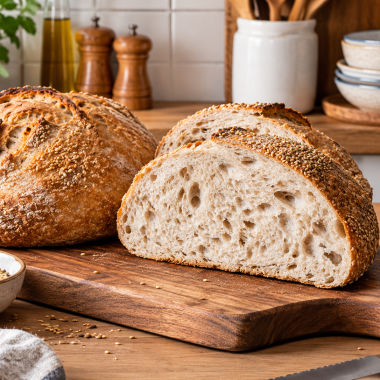
If you are searching for an easy keto bread recipe that is gluten-free, flourless, vegan, and naturally low in carbohydrates, this homemade flaxseed bread is an excellent option. Made with whole golden flaxseeds, psyllium husk powder, baking powder, salt, and hot water, this simple loaf develops a beautifully golden crust while staying soft enough inside for slicing, toasting, and sandwiches. It is especially useful for anyone following a keto, low-carb, gluten-free, wheat-free, or plant-based eating plan.
Traditional bread often depends on wheat flour, yeast, eggs, dairy, or added oils to create its familiar structure. This recipe takes a completely different approach. Ground flaxseed provides the foundation, while psyllium husk helps bind the mixture and gives the dough enough flexibility to hold its shape. Baking powder provides lift without requiring yeast or a long fermentation period. The result is a practical homemade loaf that can be prepared quickly without a mixer, bread machine, or complicated baking technique.
Why This Keto Flaxseed Bread Is Worth Making
One of the biggest advantages of this low-carb flaxseed bread is its straightforward ingredient list. You do not need almond flour, coconut flour, eggs, butter, milk, or cooking oil. Instead, the recipe relies on whole golden flaxseeds and psyllium husk to create the texture. This makes it particularly appealing when you want a bread alternative that fits several dietary preferences at once. It is also naturally sugar-free and does not require yeast, kneading, or proofing.
Flaxseeds are the key ingredient because they contain a combination of fiber, protein, and healthy fats. When finely ground, they create a flour-like mixture that works well as the base of the loaf. The finished bread has a pleasant earthy and slightly nutty taste, making it suitable for both savory and simple breakfast combinations. Because the recipe is high in fiber and very low in net carbohydrates, it can be a convenient alternative to conventional bread for people who are carefully watching their carbohydrate intake.
What Makes the Texture Different From Other Keto Breads
Many low-carb bread recipes can become dry, crumbly, heavy, or overly eggy. This recipe takes a different route by using psyllium husk powder to help create a more cohesive dough. Psyllium absorbs water and expands, allowing the mixture to become pliable enough to shape before baking. As the bread cooks, the dough rises and develops a firm outer crust while retaining a softer center.
The consistency of the dough is important. Hot water helps the ground flaxseed and psyllium absorb moisture properly, so the mixture should be stirred thoroughly before shaping. The dough does not need prolonged kneading because there is no gluten to develop. A short period of mixing and gentle hand-kneading is enough to bring everything together. This makes the recipe particularly convenient for beginners who want homemade bread without complicated baking procedures.
Choosing the Right Flaxseeds
For the best results, whole golden flaxseeds are recommended. They have a mild, pleasantly nutty flavor that works well in bread. Grinding the seeds immediately before preparing the dough also allows you to achieve a fine consistency. A finely ground flaxseed mixture generally produces a loaf that holds together better and has a smoother texture after baking.
It is important to pay attention to the form of flaxseed being used. Pre-ground flaxseed meal can vary significantly between brands, and some commercially prepared products may have been partially defatted. That can change how the ingredient behaves when mixed with water and can affect the final structure of the loaf. Grinding whole seeds yourself gives you better control over the consistency and follows the method specified for this recipe.
The Role of Psyllium Husk Powder
Psyllium husk powder plays an important structural role in this gluten-free bread recipe. Gluten normally gives wheat dough elasticity and helps bread hold together as it rises. Since this loaf contains no wheat or gluten, another ingredient is needed to provide some of that binding ability. Psyllium absorbs water and creates a flexible mixture that is easier to shape.
For this reason, the psyllium should not simply be treated as an optional addition. The specified quantity helps produce the intended texture and volume. If you have whole psyllium husk rather than powder, it should be ground into a powder before measuring. The finer texture allows it to distribute more evenly throughout the dough and contributes to a more consistent loaf.
How to Prepare the Flaxseed Bread
Start by heating the oven to 356°F/180°C. Prepare a baking sheet by lining it with parchment paper or a silicone baking mat. Having the baking surface ready before mixing the dough is helpful because the flaxseed mixture begins absorbing the hot water fairly quickly. A convection oven or an oven with a fan can help the bread develop its characteristic rise and crust.
Next, grind the whole golden flaxseeds using an electric spice grinder, coffee grinder, or small blender. Process them until they have a fine, flour-like consistency. Transfer the freshly ground flaxseed to a medium or large mixing bowl. If you are measuring already-ground flaxseed, use the specified weight rather than relying on the volume measurement because grinding changes the volume considerably.
Add the psyllium husk powder, baking powder, and salt to the ground flaxseed. Stir the dry ingredients thoroughly so that the baking powder, salt, and psyllium are evenly distributed. This step is simple but useful because an even mixture helps prevent concentrated pockets of any single ingredient in the finished bread.
Pour the hot water into the dry mixture and begin stirring immediately. The mixture will gradually become thicker as the flaxseed and psyllium absorb the water. Once the dough has cooled enough to handle, briefly knead it with your hands for up to about 30 seconds. There is no need for extended kneading because this is a flourless, gluten-free dough.
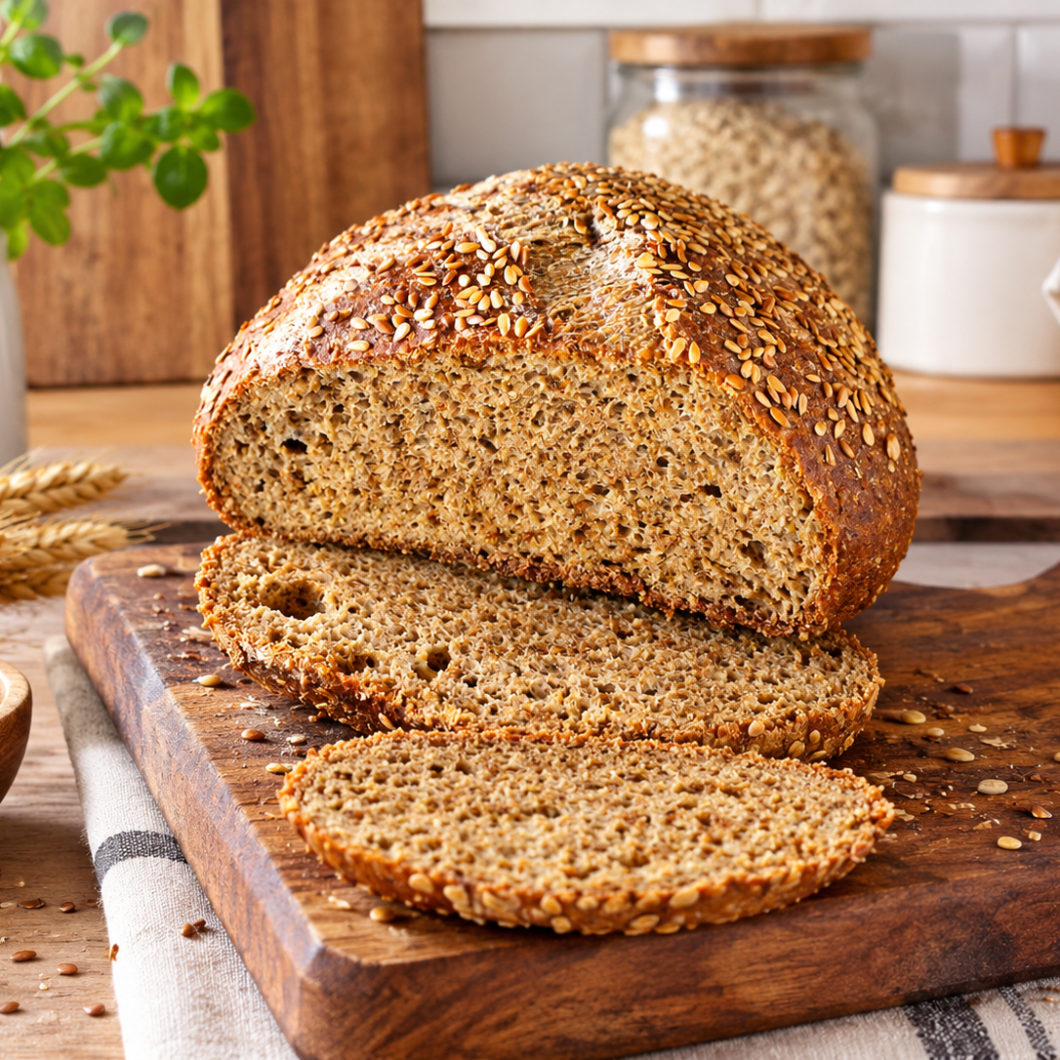
Transfer the dough to the prepared baking sheet and shape it into a round disk. Keep the surface relatively even so that the loaf bakes consistently. You can wet the top lightly and add extra whole flaxseeds as a simple finishing touch. The seeds add texture and give the finished loaf a rustic homemade appearance.
Place the shaped dough in the preheated oven and bake for approximately 50 minutes. During baking, the bread should expand significantly and develop a golden-brown exterior. Because ovens vary, the exact baking time may be somewhat different from one kitchen to another. If your loaf needs additional time to develop a firm crust, allow it to continue baking until it reaches the expected appearance and texture.
How to Know When the Bread Is Ready
A properly baked loaf should have a noticeably firm and golden exterior and should have increased substantially in size compared with the original dough. The outside should no longer look wet or soft. Since the interior continues to settle as it cools, it is important not to rush into slicing immediately after removing the bread from the oven.
Transfer the baked loaf to a wire rack and allow it to cool completely. Cooling gives the interior time to firm up, making it much easier to slice neatly. Cutting very hot bread can result in a softer or less stable center, so patience at this stage makes a noticeable difference when you want clean slices for toast or sandwiches.
Ways to Serve Keto Flaxseed Bread
There are many simple ways to use this keto-friendly bread. Toast a slice and serve it alongside breakfast, or use two slices to make a low-carb sandwich with your favorite fillings. Its earthy flavor also works well with savory toppings such as vegetables, herbs, olives, or other ingredients that complement the natural nuttiness of flaxseed.
For a quick breakfast, lightly toast a slice and pair it with a suitable spread or topping. You can also use the bread as a base for an open-faced sandwich. Because the loaf is firm on the outside, it can handle toppings without immediately becoming fragile. The bread can also be shaped differently before baking, making it possible to create smaller rolls or baguette-style portions when desired.
Easy Variations and Flavor Ideas
Although the basic recipe is intentionally simple, the flavor can be changed with suitable additions. Fresh or dried herbs can provide a more aromatic result, while spices can give the loaf a warmer savory character. Chopped olives, minced jalapeños, or sun-dried tomatoes can also be incorporated when you want something more flavorful.
If you are following a strict grain-free diet, pay attention to the type of baking powder you use. Some baking powders can contain grain-derived ingredients, so a grain-free option may be preferable when required for your particular dietary needs. The base recipe itself is designed without wheat flour and does not depend on traditional grains.
Notes for Better Results
Grind the flaxseeds finely
The consistency of the ground flaxseed matters. A finer meal generally produces dough that holds together more effectively. Grinding whole golden flaxseeds immediately before preparing the bread is the preferred approach for this recipe rather than automatically substituting commercially ground flaxseed meal.
Measure carefully
For consistent results, metric measurements are especially useful. This is particularly important if using ground flaxseed because the volume can change after grinding. Weighing the ingredient helps ensure that the balance between flaxseed, psyllium, baking powder, salt, and water remains consistent.
Use hot water
The water should be hot when it is added to the dry mixture. This helps the psyllium and flaxseed absorb moisture and form the intended dough. Once the mixture has cooled enough to touch safely, only a short amount of hand-kneading is required.
Allow the loaf to cool
Do not slice the bread immediately after baking. Cooling on a wire rack allows the structure to stabilize and makes slicing easier. This is especially important with flourless and gluten-free breads because their internal texture can continue changing after they leave the oven.
Adjust the shape if desired
The dough does not have to remain a single round loaf. You can form smaller rolls or baguette-style pieces instead. Smaller portions will generally require a different baking time, so keep an eye on their size, crust, and overall appearance during baking.
Why This Recipe Fits a Low-Carb Lifestyle
With its very low carbohydrate content and substantial fiber, this keto flaxseed bread can be useful for people looking for an alternative to conventional wheat bread. The nutritional profile makes it particularly appealing when bread is one of the foods you miss most while following a low-carb eating pattern. Instead of relying on a complicated combination of specialty flours, the recipe uses a short list of recognizable ingredients.
The high fiber content also contributes to the bread’s satisfying texture and nutritional character. Flaxseed naturally provides fiber and plant-based nutrients, while psyllium adds additional bulk and binding power. As with any dietary choice, individual nutritional needs vary, but this recipe offers a practical option for those looking to prepare a homemade bread alternative with very little carbohydrate per serving.
Keto Flaxseed Seed Bread
 Recipe by admin1
A simple homemade keto flaxseed bread made with whole golden flaxseeds, psyllium husk powder, baking powder, salt, and hot water.
11
servings10
minutes50
minutes128
kcal1
hourIngredients
1 ½ cups (240 g) whole golden flaxseed (see notes)
4 Tbsp (40 g) psyllium husk powder
2 tsp baking powder
½ tsp salt
1 ⅓ cups (320 ml) hot water
Directions
- Preheat the oven to 356°F/180°C. Use a convection oven or an oven with a fan if available. Line a baking sheet with parchment paper or a silicone baking mat.
- Place the whole golden flaxseeds into an electric spice grinder, coffee grinder, or small blender. Grind them until they become a fine, flour-like meal.
- Transfer the freshly ground flaxseed to a medium-large mixing bowl. If using ground flaxseed, measure 240 g rather than measuring the volume after grinding.
- Add the psyllium husk powder, baking powder, and salt. Stir the dry ingredients thoroughly until evenly combined.
- Pour the hot water into the bowl. Mix with a spoon until the ingredients form a thick dough.
- Once the dough is cool enough to handle, briefly knead it with your hands for up to approximately 30 seconds.
- Transfer the dough to the prepared baking sheet and shape it into a round disk.
- Lightly wet the top of the dough and sprinkle with extra whole flaxseeds if desired.
- Bake for approximately 50 minutes, or until the bread has expanded significantly and developed a golden-brown crust. Baking time may vary depending on the oven.
- Remove the bread from the oven and transfer it to a wire rack. Allow it to cool completely before slicing.
Notes
- For the best texture, grind whole golden flaxseeds into a fine meal immediately before making the bread.
- Avoid substituting store-bought pre-ground flaxseed meal because some products may be partially defatted and can behave differently in the recipe.
- If you need to avoid corn or other grains, choose a suitable grain-free baking powder.
- Whole psyllium husk should be ground into powder before measuring if psyllium husk powder is not available.
- The dough can be shaped into smaller rolls or baguette-style portions. Adjust the baking time according to the size of the pieces.
- A convection oven or oven with a fan can produce a lighter result; the bread may be denser when baked without circulating air.
- For additional flavor, suitable fresh or dried herbs, spices, sun-dried tomatoes, minced jalapeños, or olives can be added.
Nutrition Facts
- Total number of serves: 1
- Calories: 128kcal
- Fat: 9g
- Carbohydrates: 0.57g
- Fiber: 0.2g
- Sugar: 0.3g
- Protein: 4g