A Strawberry Cheesecake Swirl Sourdough Loaf brings together three flavors that work beautifully in homemade bread: tangy fermented sourdough, sweet strawberries, and rich cheesecake flavor. The loaf has a crisp, deeply baked crust on the outside and a soft, chewy crumb inside, with colorful layers of strawberry and cheesecake dough running through each slice. It is an especially appealing choice when you want something more creative than a traditional sourdough boule.
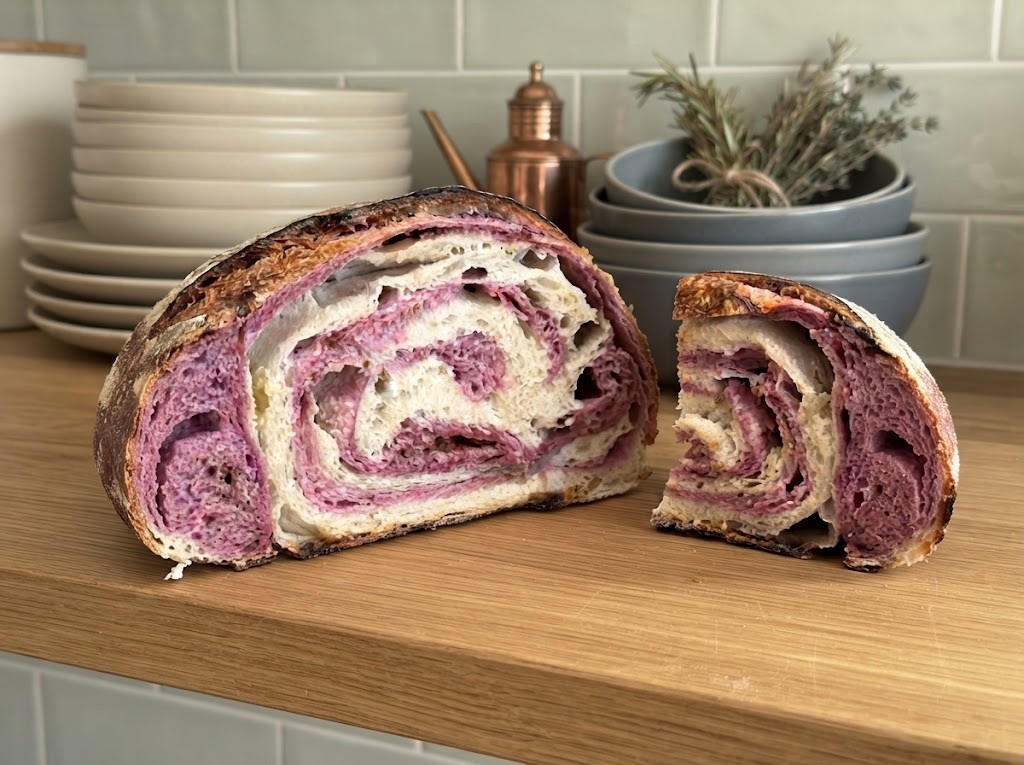
This artisan sourdough bread is made by preparing two separate doughs and combining them during shaping. One dough is flavored with strawberry extract, sugar, freeze-dried strawberries, and strawberry chips, while the second dough gets its cheesecake character from cheesecake extract, sugar, and cream cheese chips. When the two doughs are layered and rolled together, they create an attractive marbled effect that makes the finished loaf look as impressive as it tastes.
The natural fermentation process also gives this bread its characteristic sourdough flavor. Instead of relying on commercial yeast, the recipe uses active sourdough starter to ferment and develop the dough. Depending on the temperature of your kitchen and the strength of your starter, the bulk fermentation can take several hours. Planning ahead is important because this is a naturally leavened loaf that benefits from patience.
What Makes This Strawberry Sourdough Special
The combination of strawberry and cheesecake flavors makes this loaf stand apart from everyday sourdough bread. The strawberry dough delivers a fruity sweetness, while the cheesecake dough adds a creamy dessert-like character. Freeze-dried strawberries and strawberry chips provide additional strawberry flavor throughout the loaf, creating little pockets of sweetness rather than leaving the fruit flavor only in the dough itself.
The cheesecake side is equally important because it balances the fruit. Cream cheese chips add richness and help create the impression of cheesecake without turning the entire loaf into a heavy dessert bread. The subtle tang of sourdough works particularly well with these flavors, giving the loaf a more complex taste than a standard sweet bread.
Another highlight is the appearance. When the two doughs are stretched, layered, folded, and rolled together, the contrasting colors create a naturally irregular swirl. Each slice can look slightly different, which gives this homemade sourdough loaf an artisan appearance. If purple sweet potato powder is used in the strawberry dough, it can also contribute additional color to the finished bread.
Preparing the Two Sourdough Doughs
The recipe begins by making the strawberry dough and cheesecake dough separately. Keeping them in individual bowls is essential because each dough needs its own flavoring and inclusions before they are combined later. Start with the strawberry dough by mixing the active sourdough starter and water until the starter is well dispersed and the mixture looks milky.
Add the remaining strawberry dough ingredients and mix until everything comes together into a shaggy dough. The dough does not need to look smooth at this stage. Sourdough develops structure gradually through resting and stretch-and-fold techniques, so avoid trying to knead it aggressively in the beginning. Cover the bowl and allow the dough to rest.
Prepare the cheesecake dough in a separate bowl using the same basic process. Combine the active starter and water, then incorporate the sugar, cheesecake extract, bread flour, and salt. Mix until a shaggy dough forms, cover it, and set it aside for the initial resting period. Keeping both doughs at a similar consistency makes the later lamination and shaping process easier.
Using Stretch and Folds to Build Dough Strength
After the initial one-hour rest, it is time to begin developing strength in both doughs. Stretch-and-folds are particularly useful for sourdough because they help organize the gluten structure without requiring extensive traditional kneading. With each round, gently stretch part of the dough upward and fold it back over itself, working around the dough until it has been handled from several directions.
After the first round, cover both bowls and allow the dough to rest for approximately 30 minutes. During the next round of stretch-and-folds, incorporate the special inclusions. Add the freeze-dried strawberries and strawberry chips to the strawberry dough, distributing them as evenly as possible without tearing the dough.
At the same stage, add the cream cheese chips to the cheesecake dough. It is better to incorporate the pieces gradually during the folding process rather than dumping everything into one spot. Gentle handling helps keep the dough cohesive while spreading the inclusions throughout the mixture.
Complete two additional rounds of stretch-and-folds. By the end of this process, both doughs should feel stronger, more elastic, and easier to handle. The exact texture can vary depending on flour, hydration, starter activity, and room temperature, so focus on the dough’s development rather than relying only on the clock.
Bulk Fermentation
Once the stretch-and-fold process is complete, allow both doughs to bulk ferment. The suggested fermentation window is approximately 6 to 10 hours, or until the dough has doubled in size. This is one of the most important stages of sourdough baking because fermentation directly affects the loaf’s texture, flavor, and rise.
The fermentation time can vary significantly from one kitchen to another. A warm environment can speed up fermentation, while a cooler room can require considerably more time. Rather than relying exclusively on the stated hours, look for visible growth and a dough that appears aerated and active.
Do not rush into shaping simply because the minimum fermentation time has passed. If the dough has not developed enough volume, it may need additional time. On the other hand, leaving it for too long can lead to over-fermentation and a weaker structure. Watching the dough is therefore more reliable than following the clock alone.
Creating the Strawberry Cheesecake Swirl
Once both doughs have completed bulk fermentation, prepare a lightly floured work surface. Begin with the strawberry dough. Carefully transfer it onto the surface and gently stretch it out for lamination. The goal is to make the dough wider and thinner without stretching it so aggressively that it tears.
Repeat the same process with the cheesecake dough. Once both pieces are stretched, place the cheesecake dough over the strawberry dough. This creates the foundation for the distinctive swirl that will appear throughout the loaf.
Fold the layered dough into a trifold, then begin rolling it into a loaf shape. Gentle push-and-pull movements can help create surface tension and produce a reasonably tight ball. Avoid handling the dough too roughly because excessive pressure can disturb the inclusions and squeeze out some of the air developed during fermentation.
Transfer the shaped dough into a floured banneton basket. Let it sit at room temperature for approximately 30 minutes to 1 hour before moving it to the refrigerator. The dough should then be refrigerated overnight or for at least 4 to 6 hours. This cold fermentation period gives the dough additional time to develop flavor while making it easier to score and bake.
Cold Proofing for Better Flavor and Handling
Refrigerating the shaped loaf is particularly helpful for this type of sourdough because the dough contains multiple inclusions and two different dough mixtures. The cooler temperature slows fermentation and helps the loaf hold its shape.
Cold proofing also makes scoring easier. A chilled sourdough loaf generally feels firmer and less sticky, allowing you to create a clean score on the surface before baking. Since the loaf contains a decorative swirl, a controlled score can enhance its appearance without unnecessarily disturbing the internal layers.
Baking the Loaf
When you are ready to bake, preheat the Dutch oven in the oven at 450°F. Preheating the Dutch oven is important because it creates a hot baking environment that encourages strong oven spring during the first stage of baking.
Carefully turn the chilled loaf onto parchment paper or a silicone sling. Lightly flour the top and score the dough with a sharp bread lame or suitable scoring tool. Work confidently but carefully so the loaf retains its shape.
Place the loaf into the preheated Dutch oven and cover it with the lid. Bake for 35 minutes with the lid on. The covered environment traps steam released from the dough, helping the crust remain flexible while the loaf expands. After 35 minutes, remove the lid and continue baking for another 10 minutes.
The uncovered portion of baking allows the crust to develop more color and a firmer texture. Keep an eye on the loaf during this final stage because ovens vary, and the exact appearance can differ depending on the type of Dutch oven and oven performance.
Cooling Before Slicing
As tempting as it may be to cut into a freshly baked strawberry cheesecake sourdough loaf, cooling is an important final step. Allow the loaf to cool for approximately 1 to 3 hours before slicing. Cutting too early can cause the interior crumb to become gummy because the bread is still finishing its internal setting.
Once cooled, use a serrated bread knife to cut the loaf into slices. The strawberry pieces, strawberry chips, and cream cheese chips should provide flavorful pockets throughout the crumb, while the layered dough creates the characteristic swirl.
How to Serve Strawberry Cheesecake Sourdough
This loaf is versatile enough to serve as breakfast, brunch bread, an afternoon snack, or a special homemade treat. The sweet strawberry and cheesecake profile makes it particularly enjoyable on its own, but it can also be paired with simple toppings.
Serve slices alongside coffee, tea, or a glass of milk for a dessert-inspired breakfast. It can also make an attractive addition to a brunch table, especially when served with fresh strawberries or other fruit. Because the loaf already contains considerable flavor, additional toppings are optional rather than necessary.
For a simple presentation, slice the bread after it has cooled completely and arrange it on a serving board or bread platter. The contrasting strawberry and cheesecake layers make the loaf visually appealing without requiring complicated decoration.
Notes for Successful Sourdough Baking
The activity of the sourdough starter is one of the biggest factors affecting the final loaf. Use an active starter that is capable of fermenting dough efficiently. If your starter is weak or has been sitting inactive for a long period, the fermentation may take considerably longer than expected.
Temperature is another important consideration. The 6-to-10-hour bulk fermentation range is a guide rather than an absolute rule. Dough generally ferments faster in a warm kitchen and more slowly in a cool kitchen. Look for the dough to become noticeably larger and well developed before shaping.
When adding the inclusions, handle the dough gently. Freeze-dried strawberries can be fragile, and excessive pressure can break them apart. The same applies to strawberry chips and cream cheese chips. Folding them in gradually helps distribute them while maintaining the dough’s structure.
The purple sweet potato powder is optional and is primarily included for color. If you use it, mix it thoroughly with the strawberry dough ingredients so the color is evenly distributed. The strawberry extract and strawberry pieces provide the main strawberry character.
Strawberry Cheesecake Swirl Sourdough Bread
 Recipe by admin1
A sweet and tangy artisan sourdough loaf made with separate strawberry and cheesecake-flavored doughs, freeze-dried strawberries, strawberry chips, and cream cheese chips.
4
servings24
hours45
minutes201
kcal24
hours45
minutesIngredients
- Strawberry Dough
50 g Active sourdough starter
175 g Water
10 g Purple Sweet Potato powder Optional*
5 g Strawberry Extract
25 g Granulated sugar honey or brown sugar works too
250 g Bread flour
5 g salt
40 g strawberry chips for stretch + fold inclusions
80 g Freeze Dried strawberries for stretch + fold inclusions
- Cheesecake Dough
50 g Active sourdough starter
175 g Water
25 g Granulated Sugar honey or brown sugar works too
5 g Cheesecake Extract
250 g Bread Flour
5 g salt
80 g Creamcheese chips for stretch + fold inclusions
Directions
- Combine the active sourdough starter and water in a bowl and mix until the starter becomes milky and well dispersed. Add the remaining strawberry dough ingredients and mix until a shaggy dough forms. Cover the bowl and set it aside.
- In a separate bowl, combine the active sourdough starter and water until well mixed. Add the remaining cheesecake dough ingredients and mix until a shaggy dough develops. Cover and allow it to rest.
- Allow both doughs to rest, covered, for 1 hour. Perform one round of stretch and folds on each dough. Cover and rest for another 30 minutes.
- During the next round of stretch and folds, incorporate the freeze-dried strawberries and strawberry chips into the strawberry dough. Add the cream cheese chips to the cheesecake dough. Continue with two additional rounds of stretch and folds.
- Allow both doughs to bulk ferment for approximately 6 to 10 hours, or until each dough has doubled in size.
- Place the strawberry dough onto a floured surface and carefully stretch it for lamination without making it excessively thin. Repeat with the cheesecake dough. Place the cheesecake dough over the strawberry dough, then trifold the layers.
Roll the dough together and use gentle push-and-pull movements to create a fairly tight ball. Place the shaped loaf into a floured banneton basket. - Leave the shaped dough at room temperature for 30 minutes to 1 hour. Transfer it to the refrigerator and refrigerate overnight or for at least 4 to 6 hours.
- Preheat the Dutch oven in the oven at 450°F.
- Turn the chilled loaf onto parchment paper or a silicone sling. Lightly flour the surface and score the top. Carefully place the loaf into the preheated Dutch oven.
Bake covered for 35 minutes. Remove the lid and continue baking for another 10 minutes. - Remove the finished loaf from the Dutch oven and allow it to cool for 1 to 3 hours before slicing. Once cooled, cut into 16 slices and enjoy.