Keto chia pudding is one of those recipes that proves a simple breakfast does not need a long ingredient list or complicated cooking. The mixture comes together in just a few minutes, then the refrigerator does most of the work. As the chia seeds absorb the almond milk, they soften and create a thick, spoonable texture that works well for breakfast, a quick snack, or a light dessert.
The base uses chia seeds, unsweetened almond milk, vanilla extract, coconut yogurt or Greek yogurt, and an optional sugar-free sweetener. The result is creamy, lightly sweet, and easy to customize without changing the basic preparation.
This version follows the ingredient quantities from the provided recipe while using a fresh structure and wording. The original recipe lists 4 servings and gives a total preparation time of about 1 hour 15 minutes, including the resting time needed for the pudding to thicken.
Why This Chia Pudding Works So Well
There are several reasons this recipe is useful to keep in the regular breakfast rotation.
First, there is no stovetop cooking involved. Everything is mixed in a bowl or jar, allowed to rest, and then chilled. That makes it especially convenient when you want breakfast ready ahead of time.
Second, chia seeds naturally change the texture of the mixture as they sit in liquid. Instead of producing a thin drink, they create a soft gel that gives the pudding its characteristic thickness.
The recipe also has a mild flavor, which means the base can be served as it is or paired with different toppings. You can keep it simple or make it more dessert-like depending on what you have available.
The Ingredients You Need
Chia Seeds
Chia seeds are the main ingredient and are responsible for the thick texture. The recipe uses ½ cup, or 8 tablespoons, of chia seeds.
Both black and white chia seeds can be used. There is no need to prepare them in advance. They simply go directly into the mixing bowl with the almond milk.
Unsweetened Almond Milk
You will need 1¾ cups, or 420 ml, of unsweetened almond milk.
Using unsweetened almond milk keeps the flavor neutral and allows you to control the sweetness yourself. It also gives the chia seeds enough liquid to soften and swell during chilling.
Vanilla Extract
A small amount of vanilla makes a noticeable difference. The recipe calls for ½ teaspoon of vanilla extract, which adds a warm background flavor without overpowering the chia seeds.
Coconut Yogurt or Greek Yogurt
The creamy element comes from ½ cup, or 120 g, of coconut yogurt or Greek yogurt.
Coconut yogurt gives the pudding a dairy-free option, while Greek yogurt provides a slightly different creamy and tangy character. Either works with the base.
Sugar-Free Syrup or Powdered Sweetener
Sweetener is optional. The recipe specifies ½ to 2 tablespoons of sugar-free syrup or powdered sweetener of choice, adjusted according to taste.
Start with the smaller amount if you prefer a lightly sweet pudding. You can always add more later.
How to Make Keto Chia Pudding
Step 1: Start With the Chia Mixture
Place the chia seeds in a large mixing bowl. Add the unsweetened almond milk, vanilla extract, and your chosen amount of optional sweetener.
Stir everything thoroughly.
Do not rush this first mixing stage. Chia seeds can gather together when they first come into contact with liquid. A good stir helps distribute them throughout the almond milk instead of leaving concentrated clumps.
If you prefer using a jar, choose one large enough to give the mixture room to move. Add the ingredients, close the lid securely, and shake until everything is combined.
Step 2: Let the Mixture Rest
Leave the mixture alone for about 10 minutes.
This short resting period gives the chia seeds time to begin absorbing the almond milk. After the 10 minutes are up, stir the mixture again.
Pay attention to the bottom and sides of the bowl because chia seeds can settle there. Break up any visible clusters with the spoon.
This second stir is a small step, but it makes a big difference in the final texture.
Step 3: Add the Yogurt
Once the chia mixture has been stirred again, add the coconut yogurt or Greek yogurt.
Mix until the yogurt is evenly incorporated and there are no obvious streaks remaining.
At this point, the mixture will still be relatively loose. That is completely normal. The main thickening happens while the pudding rests in the refrigerator.
Step 4: Chill Until Thick
Cover the bowl or container and place it in the refrigerator.
Let the pudding chill for 1 to 2 hours, or leave it overnight if you are preparing breakfast in advance.
As it sits, the chia seeds continue absorbing liquid and the mixture becomes thick and spoonable.
If you prefer a softer consistency, you can adjust the pudding later with a little more almond milk. The original recipe notes that up to ¼ cup / 60 ml of additional almond milk can be used to loosen it.
Getting the Best Texture
Texture is probably the most important part of a good chia pudding.
If the pudding feels uneven, the problem usually comes from chia seeds clumping together before they have had enough time to absorb the liquid. The easiest way to prevent that is to stir once when the ingredients are first combined and then stir again after about 10 minutes.
A large bowl can make this easier because you have enough space to move the mixture around properly.
If you are using individual jars, you can still prepare the pudding directly in them. Just make sure the container is large enough to allow thorough stirring.
For a thinner pudding, add a small amount of almond milk after chilling and stir well. Add it gradually rather than pouring in a large amount at once.
For a thicker pudding, give it additional time in the refrigerator.
Three Easy Ways to Serve It
The plain pudding is already flavorful enough to eat on its own, but the recipe also provides three topping variations.
Chocolate Chia Pudding
For a chocolate version, the recipe uses 2 tablespoons of cacao powder, 1 tablespoon of almond butter, a good pinch of salt, 2 teaspoons of unsweetened almond milk, ½ to 2 tablespoons of sugar-free syrup, and 3 squares of dark chocolate or sugar-free chocolate weighing about 30 g.
Mix the cacao powder, almond butter, salt, sweetener, and additional almond milk into the prepared chia pudding.
For the chocolate finish, melt two squares of the chocolate and grate the remaining square. Spoon the chocolate pudding into serving jars and finish with the melted chocolate and grated chocolate.
The extra chocolate gives the pudding a more dessert-like finish without requiring a completely different base.
Berry Chia Pudding
For the berry version, use 1 cup of your chosen berries. The original recipe uses raspberries, although blueberries or blackberries can also be used.
Blend or mash the berries until they become soft and slightly broken down.
Add some chia pudding to a serving glass, followed by a layer of the berry mixture and ½ tablespoon of coconut flakes. Repeat the layers and finish with berries and coconut.
This version gives the creamy pudding a fresh fruit flavor and a little contrast in texture.
Almond Butter Chia Pudding
For the nutty variation, use 4 tablespoons of almond butter and ⅛ cup of toasted chopped nuts, with hazelnuts used in the source recipe.
Add a layer of chia pudding to each serving container. Follow it with some almond butter and chopped nuts.
Repeat the layers and finish with another spoonful of almond butter and the remaining chopped nuts.
Toasting the nuts first can bring out a deeper flavor, although the recipe works without that extra step.
Make It Ahead for Easy Breakfasts
One of the best things about chia pudding is that it can be prepared ahead of time.
Instead of making a fresh batch every morning, prepare the base and divide it between individual containers once the mixture has thickened.
Keep the containers covered in the refrigerator so they are ready when you need them.
The provided recipe notes that the pudding can be refrigerated for approximately 5 to 7 days when stored properly in airtight containers.
If you are preparing several portions at once, keep toppings separate when possible. This is especially useful for crunchy ingredients such as chopped nuts or coconut flakes because they can soften while sitting in the pudding.
Simple Tips for Better Results
Stir Twice
The first stir combines everything, while the second stir after 10 minutes helps prevent chia clumps.
Do Not Judge the Texture Too Early
Freshly mixed chia pudding is much thinner than the finished recipe. Give it enough refrigerator time before deciding whether it needs more chia seeds or liquid.
Adjust the Sweetness Slowly
Because the sweetener is optional, you can adjust it to your taste. Start with a smaller amount and increase it if needed.
Use a Large Mixing Bowl
A larger bowl gives you enough room to stir properly and makes it easier to catch clumps before they become a texture problem.
Adjust Before Serving
If the pudding becomes thicker than you like, loosen it with a little additional unsweetened almond milk.
How to Store Keto Chia Pudding
Transfer the finished pudding into airtight containers and refrigerate it.
The recipe can be portioned into individual jars or kept together in one larger container. Individual portions are particularly convenient for breakfast because they can be taken directly from the refrigerator and served.
For the best texture, stir the pudding before serving if it has been sitting for several days.
You can also prepare the base without toppings and add berries, almond butter, coconut flakes, or nuts when you are ready to eat.
A Simple Breakfast You Can Prepare in Advance
This keto chia pudding is a practical recipe because the preparation is short and the waiting time happens in the refrigerator. There is no cooking, baking, or complicated equipment required.
The basic combination of chia seeds, almond milk, vanilla, yogurt, and optional sweetener creates a creamy foundation that can be served plain or turned into chocolate, berry, or almond butter pudding.
Once the mixture has been stirred properly and chilled long enough, you have a ready-to-eat breakfast or snack waiting in the refrigerator.
The nutrition figures below are based on the base recipe as published in the provided source. Its listed nutrition per serving is 169 calories, 10 g carbohydrates, 5.2 g protein, 12.9 g fat, 8.3 g fiber, and 0.3 g sugar.
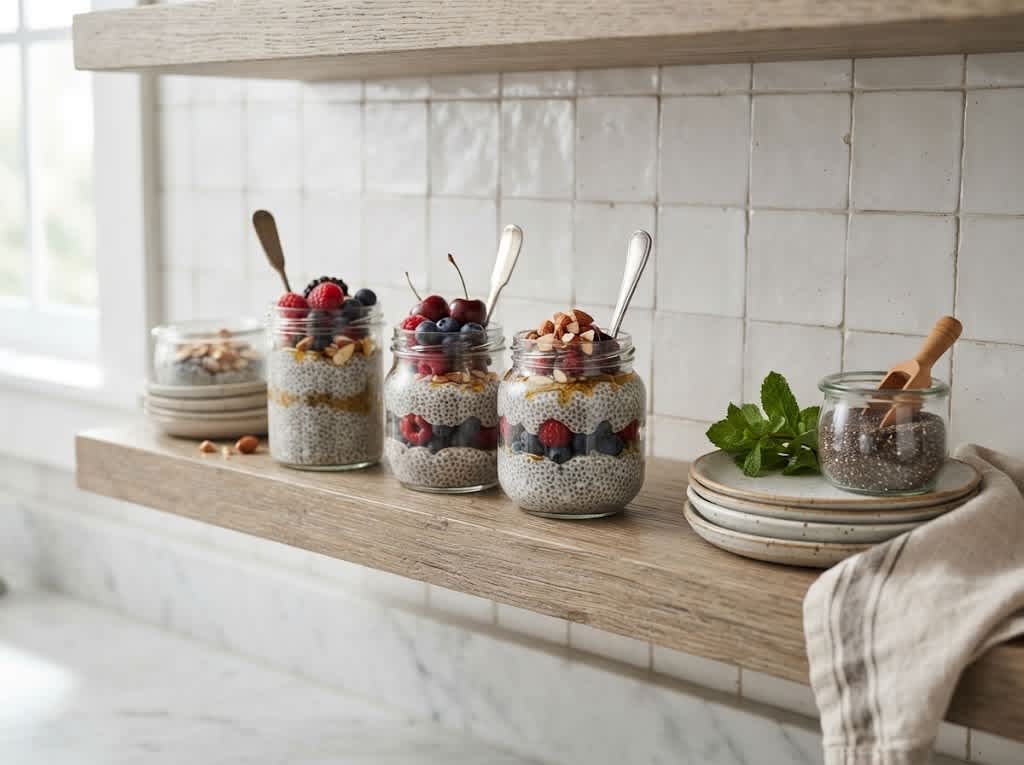
Creamy Keto Chia Pudding
A creamy low-carb chia pudding made with chia seeds, unsweetened almond milk, vanilla, yogurt, and optional sugar-free sweetener. It is easy to prepare ahead and can be served plain or finished with chocolate, berries, almond butter, coconut flakes, or nuts.
1
servings15
minutes169
kcal8
hours8
hours15
minutesIngredients
- Chia Pudding Base
– ½ cup chia seeds (8 tablespoons)
– 1¾ cups unsweetened almond milk (420 ml)
– ½ teaspoon vanilla extract
– ½ cup coconut yogurt (120 g), or Greek yogurt
– ½–2 tablespoons sugar-free syrup or powdered sweetener of choice, optional
- Optional Chocolate Topping
– 2 tablespoons cacao powder
– 1 tablespoon almond butter
– Good pinch of salt
– 2 teaspoons unsweetened almond milk, to loosen
– ½–2 tablespoons sugar-free syrup, or to taste
– 3 squares dark chocolate (90% cocoa solids) or sugar-free chocolate, 30 g
- Optional Berry Topping
– 1 cup chosen berries, mashed or blended
– 4 tablespoons coconut flakes
- Optional Almond Butter Topping
– 4 tablespoons almond butter
– ⅛ cup toasted chopped nuts
Directions
- Add the chia seeds, almond milk, vanilla extract, and optional sweetener to a large bowl. Stir thoroughly until combined.
- Let the mixture sit for about 10 minutes.
- Stir again, making sure to break up any chia clumps.
- Add the coconut yogurt or Greek yogurt and mix until evenly combined.
- Cover and refrigerate for 1–2 hours or overnight until thick and creamy.
- For a thinner consistency, stir in up to ¼ cup (60 ml) additional almond milk before serving.
- Serve plain or prepare one of the optional toppings.
- For chocolate chia pudding, mix cacao powder, almond butter, salt, sweetener, and additional almond milk into the pudding. Top with melted and grated chocolate.
- For berry chia pudding, mash or blend the berries and layer them with the chia pudding and coconut flakes.
- For almond butter chia pudding, layer the pudding with almond butter and chopped toasted nuts.
Notes
- Stir the mixture twice during the initial preparation to help prevent clumps.
- Sugar-free sweetener is optional and can be adjusted to taste.
- Store the finished pudding in airtight containers in the refrigerator.
- The provided recipe recommends refrigerator storage for about 5–7 days.
- Add crunchy toppings close to serving time for better texture.
Nutrition Facts
- Calories: 169kcal
- Fat: 12.9g
- Carbohydrates: 10g
- Fiber: 8.3g
- Sugar: 0.3g
- Protein: 5.2g